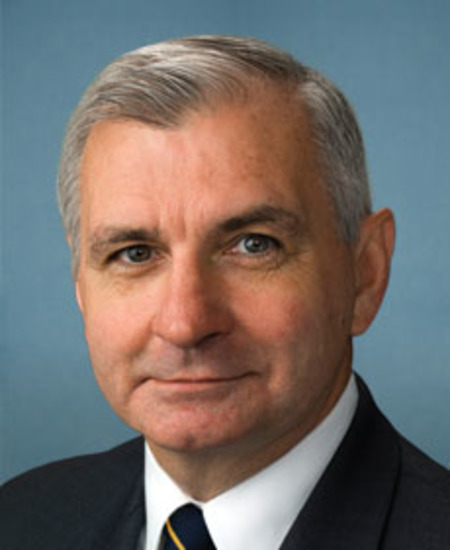
Reed Calls on Trump Admin. to Pause Proposed Rule That Would Weaken Retirement Security for America’s Workers
WASHINGTON, DC –Today, after theTrump Administration proposed a risky and unsuitable new rulethat could expose Americans’ 401(k) plans and retirement accounts to shaky and largely unregulated private markets and cryptocurrencies, U.S. Senator Jack Reed (D-RI) warned that it could weaken protection for more than 155 million American retirement savers while benefitting asset management and crypto insiders. Senator Reed is concerned the Trump Administration could end up spreading financial trouble that unfairly harms retail investors and is urging the U.S Department of Labor to hit pause.
Senator Reed, a member of the Senate Banking, Housing, and Urban Affairs Committee, stated:
“This proposal could expose Americans’ retirement savings to higher fees, more risk, less transparency, and limited recourse if things go wrong.
“It would help shield well-connected wealth managers from accountability and provide them with new outlets to sell risky and unsuitable higher-fee investment products to the masses. Morningstar warns that investors in these types of funds are likely to pay up to three times more than traditional stock and bond funds that could gobble up returns.
“Private markets have experienced rapid growth. While they can be an important source of financing for some businesses, they currently lack the guardrails and transparency needed to be more suitable for retail investors.
“I urge the Trump Administration to hit pause. The priority should be protecting the safety of people’s retirement portfolios and the soundness of our financial system. The Trump Administration needs to answer basic questions and the public needs to know: Who are all the participants in the private credit markets and what are their financial exposures to each other? What is the risk that a downturn in private credit could become a systemic risk? If that does happen, what would be the effect on the U.S. economy as a whole and will the taxpayers be asked to bail out any financial firms?”
Last week, Senator Reedsent a letter to U.S. Treasury Secretary and Chair of the Financial Stability Oversight Council (FSOC) Scott Bessent urging a “prompt review of risk that is building up in the credit markets and to assess whether these risks may become systemic.”
During Bessent’s tenure at the helm of Treasury, there have been jitters in the private credit market as the Trump Administration has already presided over a huge increase in Main Street retail investor exposure to private credit through their ordinary brokerage accounts. Today’s proposal to open private credit up to mass market retirement accounts will significantly magnify and deepen that exposure.
Other Trump-appointed regulators have followed Bessent’s lead and taken their eye off the ball.
TheNew York Timesnotes that the Federal Reserve, which is responsible for protecting the banking system from risks originating with nonbank private credit firms, “is also enacting substantial changes in how it assesses risk across the financial system and regulates banks.
“Under the leadership of Michelle W. Bowman, whom Mr. Trump elevated to be vice chair [of the Federal Reserve] for supervision last year, the Fed has announced a roughly 30 percent cut to supervisory staff in Washington and refocused the central bank’s attention to only matters that constitute a “material financial risk” to a lender’s “safety and soundness” or the financial system.
“Ms. Bowman has simultaneously loosened the regulatory reins on banks of all sizes across the country, reducing by billions of dollars the capital they are required to set aside to cover potential losses.”
Areport published last week by the Government Accountability Office (GAO)– an investigative arm of Congress – found that Trump’s U.S. Securities and Exchange Commission (SEC) cut 18 percent of its workforce in the past year, due in large part to Elon Musk’s DOGE. The area of the SEC hit hardest by departures was the Division of Investment Management, which is supposed to oversee sponsors of private credit funds, and which saw a brain drain of 24 percent of its staff.
The GAO reported that several SEC employees“believed SEC had not yet experienced the full effects of these departures” and one employee said the agency “has many ‘single points of failure’ in key areas of expertise and that it would take time to determine what expertise the agency had lost.”
Reporting byBloombergnotes that“the staff departures come as funds riding the private credit boom are now facing scrutiny and skittishness among investors.”
“The Trump Administration is opening up private credit to 155 million retirement accounts while simultaneously turning a blind eye to growing risks in this market and gutting the regulators who protect retail investors. Instead of offering up ‘retirement roulette’ and higher fees to the masses, the Trump Administration should focus on ensuring fairness, transparency, and investor protection initiatives that benefit the financial well-being of average Americans and the strength and resilience of our economy,” concluded Senator Reed.
00f11a94-044d-4d11-a299-80724140a478Issued within 24 hours
Other senators' releases published in the day before or after this one.