King Welcomes “Coherent, Government-Wide Strategy” for Cyber, Questions Nakasone on Importance of Section 702
March 07, 2023
Watch or download the questioningHERE
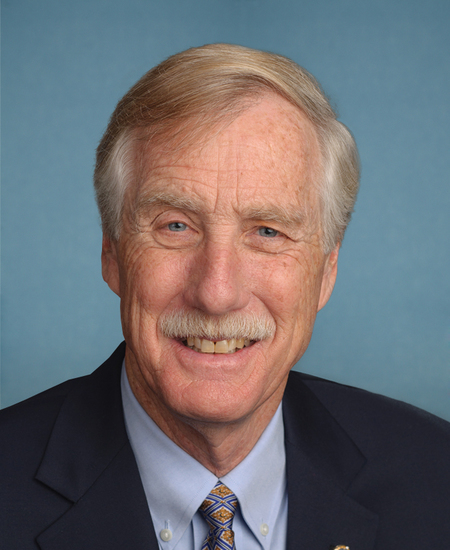
WASHINGTON, D.C.– In a hearing of the Senate Armed Services Committee (SASC), U.S. Senator Angus King (I-Maine), Co-Chair of the Cyberspace Solarium Commission, asked General Paul Nakasone – Commander of United States Cyber Command and Director of the National Security Agency – for his opinion on the new National Cyber Strategy and if there are any shortcomings in the critical policy goals. Senator Kingrecently lauded the strategy, calling it a “comprehensive” plan to secure America’s cyberspace.
“The new National Cyber Strategy was just issued last week. Are there any gaps? I don't expect you to criticize it, but do you have any suggestions you can share with us,”asked Senator King.
“I'm really pleased with the National Cyber Strategy. I think that this is something that we've long wanted in terms of what's the responsibility of both the government and the private sector and being able to meld that is critically important for us,”replied General Nakasone.“I think in the weeks to come, obviously, the Department of Defense's Cyber Strategy will nest within that. And so, I think for the first time, we'll probably have, from the government all the way down to our department, something that's very effective.”
“Think of that. A coherent, government-wide strategy,”Senator King concluded.
Also during his questioning, King asked General Nakasone about the importance ofForeign Intelligence Surveillance Act Section 702that authorizes the government to conduct targeted surveillance of foreign persons located outside the United States.
“General Nakasone, on a scale of one to 10, where 10 is essential for the national defense and one is nice to have, where would you rank section 702,”questioned Senator King.
“10 plus. And let me talk a little bit about 702. Thank you, Senator, for that question. As you know, FAA (FISA Amendments Act) 702 allows the U.S. Intelligence community to collect the information and communications offoreigntargets of interest operatingoutsidethe United States that use U.S. infrastructure and services. So, outside the United States, the intelligence community can collect againstforeigntargets of interest. It's critical for what we do,”General Nakasone replied.“What have we seen since FAA 702 was enacted in 2008 and reauthorized two times? It's disrupted terrorist plots, it's alerted us to cyber-attacks, and finally, it's uncovered CI threats. Last year, we were able to utilize this in a series of ransomware, in a series of being able to uncover what adversaries were trying to do to us against our critical infrastructure. And most importantly, as General Fenton can testify, is what we were able to do against Zawahiri. An essential piece that we need as a nation.”
“I think the key word is essential,”Senator King concurred.
As Co-Chair of the Cyberspace Solarium Commission (CSC), and a member of the Senate Armed Services and Intelligence Committees, Senator King is recognized as one of Congress’ leading experts on cyberdefense and is a strong advocate for a forward-thinking cyberstrategy that emphasizes layered cyberdeterrence. Since itofficially launched in April 2019,dozens of CSC recommendations have been enacted into law, includingthe creation of a National Cyber Director.
022722f7-bca2-4ea6-8970-6d63d10925caIssued within 24 hours
Other senators' releases published in the day before or after this one.