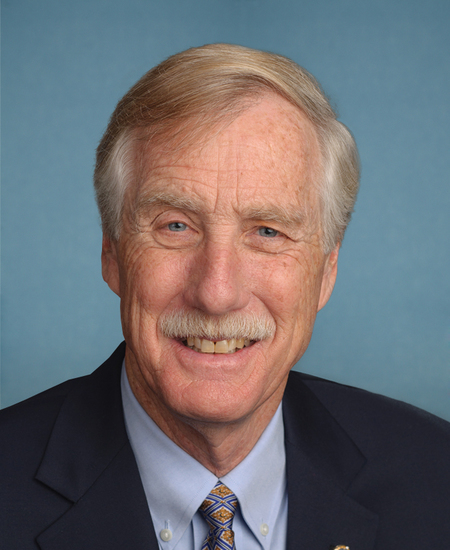
King Introduces Bipartisan Legislation to Study Impacts of Lower-Intensity Weapon Blasts on Veteran Mental Health
December 10, 2024
WASHINGTON, D.C.— U.S. Senators Angus King (I-ME) and Jerry Moran (R-KS), members of the Senate Veterans’ Affairs Committee, have introduced legislation to help the Department of Veterans Affairs (VA) better understand the effect of repetitive low-level weapon blast injuries on veterans’ mental health. The bipartisanPrecision Brain Health Research Act of 2024would direct the VA and other research partners to comprehensively study the impact of these blasts and translate the findings into care and treatment plans. This legislation is designed to be a complement to Senator King’sBlast Overpressure Safety Actthat would direct the Department of Defense (DoD) to enact a range of measures to help mitigate and protect servicemembers from high-intensity blast overpressure.
The legislation builds off the Precision Brain Health Initiative in theCommander John Scott Hannon Mental Health Care Improvement Act of 2019. Today’s bill would require the VA to create a ten-year research plan to establish the effects of repetitive low-level blast injuries, where benchmarks must be reported to Congress, in order to develop further legislation for veterans who suffer with the effects of these repetitive blast exposures.
“Brain injuries are a common, yet misunderstood and often undetectable, injury — and they can be traced to large blasts in small amounts or smaller blasts that add up over time, so we need to address them in all their forms,”said Senator King.“We have a duty to expand our understanding of the impact these blasts have on mental health, and to protect the long-term health and well-being of our military community. Here in Maine we know all too well the horrible tragedies that can occur when brain injuries are left untreated. This commonsense bill builds off of previous efforts to ensure we deliver on our promise to provide our servicemembers, veterans and their families the very best care and support.”
“Recent studies have tied low-level blasts, which servicemembers are exposed to during training and in combat, to high rates of brain and mental health conditions, as well as suicides,”said Senator Moran.“This legislation will help us start to better understand why and how blast exposures are impacting servicemembers and veterans and make certain VA is able to quickly incorporate these findings into clinical care for our veterans to receive a diagnosis and a treatment plan. This legislation will help make certain veterans have the evidence-based health care and benefits they deserve, and I look forward to its passage.”
The full text of the bill can be foundhere.
Following the Lewiston shooting, Senator King has been working with his colleagues to increase mental health funding and address brain injuries. This summer he wrote a letter to the Department of Defense (DoD) Secretary Lloyd Austin urging the Department to expedite protection of servicemembers from weapon blasts and TBIs. Prior to that letter heurged leaders of the Appropriations Committeeto support the strongest possible funding for the Traumatic Brain Injury and Psychological Health Research program within the DoD Congressionally Directed Medical Research Program (CDRMP).
Representing a state with one of the highest rates of veterans per capita, Senator King is a staunch advocate for America’s servicemembers and veterans. A member of the Senate Veterans’ Affairs Committee (SVAC) and the Senate Armed Services Committee (SASC), he works to ensure American veterans receive their earned benefits and that the VA is properly implementing various programs such as thePACT Act,theState Veterans Homes Domiciliary Care Flexibility Act,theJohn Scott Hannon Actand the introduction of thebipartisan TAP Promotion Act. Last year, King introducedbipartisan legislationto support veterans with mental traumas, as well as celebrated President Bidensigning his legislation into law, which increases benefits for veterans and military families.
###
1604b4e8-b0bd-4071-b463-364ac283ab20