2025 YEAR IN REVIEW: Senator Peters Continues Working Across the Aisle to Deliver for Michigan
Peters Led Efforts to Invest in Michigan’s Defense Installations, Protect Veterans Benefits, Expand Access to Opioid Addiction Treatments, and More
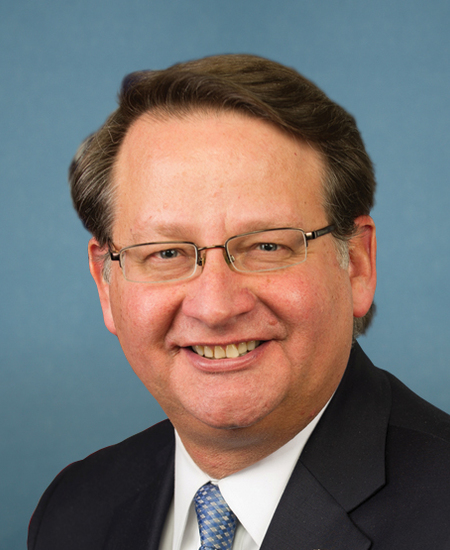
WASHINGTON, DC– In 2025, U.S. Senator Gary Peters (MI) continued fighting to deliver bipartisan, commonsense solutions to strengthen communities across Michigan. Despite being in the minority party, Peters successfully advanced and passed numerous bipartisan bills, and secured wins that will have a positive impact for Michiganders for years to come. This includes the major announcement that Selfridge Air National Guard Base will receive an F-15EX fighter jet mission, as well as the enactment of numerous Peters-led bills to expand opioid addiction treatment for young adults, protect burial benefits for military families, and continue to invest in safeguarding the Great Lakes ecosystem. In addition to these legislative accomplishments, Peters remained committed to holding the Administration accountable and fighting back against Republican efforts to cut health care benefits that Michigan families depend on.
“Fighting for Michiganders will always be my top priority in Congress, and I’m proud of the progress we made on issues important to our state,”said Senator Peters. “Throughout my entire career, I’ve always found the best way to get things done is by reaching across the aisle and finding common ground. As we look to next year, I’m going to continue honoring that commitment by partnering with anyone willing to roll up their sleeves and help improve the lives of Michiganders, whether that’s protecting health care benefits, supporting American manufacturing, or lowering prices for working families.”
Peters has beenrepeatedlynamed one of themost effectiveand bipartisan senators. In the 118th Congress, Peters earned the highest effectiveness score for a U.S. Senator ever recorded in the fifty years the Center for Effective Lawmaking has tracked this data. He also becomes the first Senator in more than four decades to benamedmost effective three times in a row. Peters alsoauthored more bills signed into lawduring the 117th Congress (2021-2022) than any Senator in more than 40 years, according to the Congressional Research Service and the Senate Historical Office.
Below is a recap of Senator Peters’ key accomplishments and efforts in 2025:
SECURING MAJOR INVESTMENTS IN MICHIGAN’S MILITARY FACILITIES & DEFENSE SECTOR
After Years of Advocacy, Peters Secured 21 F-15EX Fighters at Selfridge Air National Guard Base:In April, Peters welcomed the announcement that Selfridge Air National Guard Base would receive a squadron of21 F-15EXs– a next-generation fighter aircraft. This announcement followed years of advocacy and efforts by Peters to secure a new fighter mission for Selfridge and protect the future of the base. This announcement came after Petersannouncedlast year that Selfridge will receive a squadron of KC-46A aircraft tankers. Following the announcement of the new fighter mission, Petersadvocated for continued investment at Selfridge Air National Guard Baseto support basing of the F-15EX fighters, as well as the KC-46A tankers.
Helped Craft and Pass Annual National Defense Bill:In December, Peters secured several provisions and major funding wins in theannual national defense bill. This bill includes numerous provisions secured and authored by Peters to strengthen our national security and support Michigan’s military assets, including:
FIGHTING TO PROTECT QUALITY, AFFORDABLE HEALTH CARE FOR MICHIGANDERS
Fighting Back Against Republican Efforts to Cut Medicaid:Peters has consistently led the charge to fight back against Republican efforts to cut funding to Medicaid. In February, Peters led 46 of his colleagues inurging Republican leadership not to make cuts to Medicaidin order to pay for tax breaks for the ultra-wealthy. Despite push back from voters and Congressional Democrats, Republicans pushed through with a bill that cuts funding Medicaid and adds more than $3 trillion to the deficit,in order to cut taxes for billionaires. Peters fought back against this and also helped introduce and advocate for theProtecting Healthcare and Lowering Costs Act,which would repeal Republicans’ devastating health care cuts.
Fighting to Protect the Affordable Care Act and Keeping Health Care Affordable:In January, Peters again cosponsored and helped reintroduce theHealthcare Affordability Act, legislation that would make permanent thePremium Tax Credits (PTCs)that were created by theAffordable Care Act (ACA).Throughout the year, Peters has been one of the most outspoken advocates in the Senate fighting to extend these tax cuts and keep health care affordable for all Americans. During the government shutdown, Petersintroduced a commonsense proposalto end the shutdown and pass a one-year extension of the Affordable Care Act tax credits in any deal to reopen the government. InDecember, Peters also fiercely advocated for a proposal to extend theAffordable Care Acttax credits before Republicans voted down this proposal.
Legislation to Improve Opioid Addition Treatment for Adolescents Signed into Law:In December, Peters’Youth Prevention and Recovery Reauthorization Actwas signed into law as a provision of the bipartisanSubstance Use-Disorder Prevention that Promotes Opioid Recovery and Treatment (SUPPORT) for Patients and Communities Reauthorization Act.Specifically, Peters’ provision reauthorizes funding to make existing substance use treatment programs available for young adults, ensuring this critical resource remains available to adolescents, families, care providers, and communities. This bill builds off previous legislation that Petersauthored into law in 2018.
STRENGTHENING HOMELAND SECURITY AND GOVERNMENT TRANSPARENCY
Through his role as Ranking Member of the Homeland Security and Governmental Affairs Committee, Peters:
Expanded Protections Against Unmanned Aircraft Threats: Peters secured a provision in theNational Defense Authorization Actthat enables state and local law enforcement to disable drones that threaten public safety and extends these authorities at the federal level. The bill would extend these authorities through 2031, ensuring the Department of Homeland Security (DHS) and Department of Justice (DOJ) can respond to drone threats near airports, stadiums, and other sensitive locations. The legislation also for the first time enables state and local law enforcement to counter dangerous drones at a number of critical events. These authorities are especially important as the U.S. prepares to host major events like the 2026 FIFA World Cup and the 2028 Summer Olympics in Los Angeles.
Investigating DOGE’s Unchecked Access to American’s Personal Data:Peters released the first in-depthcongressional oversight report of DOGE activities at federal agencies. The report included observations from oversight visits to the Social Security Administration (SSA), General Services Administration (GSA), and Office of Personnel Management (OPM), as well as deeply concerning whistleblower disclosures about DOGE personnel uploading the personal information – including Social Security numbers – of all Americans to a cloud environment without required security controls. The report showed that an internal SSA risk assessment found that there is up to a 65% risk of a catastrophic data breach as a result of this DOGE project. Peters continues to demand answers from the Trump Administration on the security of Americans’ data.
Simplifying Access to Federal Disaster Aid for Survivors:Peters authored a bipartisan bill passed by the Senate that wouldmake it easier for disaster survivors to access federal help. TheDisaster Assistance Simplification Actwould require the Federal Emergency Management Agency (FEMA) to develop a universal application across federal agencies for disaster survivors seeking federal assistance from hurricanes, floods, wildfires, and other natural disasters. This legislation would significantly help streamline this process and reduce the burden placed on disaster survivors in need of immediate assistance.
Delivering Fair Retirement Benefits for Customs and Border Protection Officers:The Senate passed Peters’ bipartisan legislation that seeks to ensure Customs and Border Protection (CBP) officersreceive the retirement benefits they were promised. TheCBPO Retirement Corrections Actaddresses a longstanding error in which Customs and Border Protection (CBP) incorrectly informed newly hired officers that they would qualify for proportional annuity benefit – meaning they would not be required to retire at a certain age or complete 20 years of service to access enhanced retirement coverage. More than a decade later, CBP rescinded those benefits, leaving at least 1,352 officers – including 67 in Michigan – facing additional requirements to secure the retirement protections they were originally promised. Peters’ bill delivered long-overdue financial security to CBP officers who have dedicated their careers to protecting our borders.
Improving Federal Emergency Response Capabilities:The Senate passed Peters’ bipartisanHelping Eliminate Limitations for Prompt (HELP) Response and Recovery Act,which would helpstrengthen DHS’s ability to respond quickly and effectively to emergencies. The bill repeals outdated DHS-specific contracting rules and helps align the department with government-wide standards under government-wide . By ensuring greater consistency and timeliness in emergency contracting, Peters’ bill boosts the federal government’s capacity to deliver needed products and services during crises.
Protecting Mail Processing Operations in the Upper Peninsula:In February, following consistent advocacy from Peters, the U.S. Postal Service announced the Iron Mountain Processing and Distribution Centerwould continue its local mail processing operations. Peters repeatedly pushed back on proposed consolidation of the USPS delivery network, including for the Iron Mountain facility, that would have significantly impacted mail service for Upper Peninsula residents. Prior to the announcement, Peterssecured a pause on proposed changes at the Iron Mountain Mail Processing and Distribution Centeruntil USPS leadership could ensure the changes would not impact local mail service. Peters has long led oversight efforts to protect mail delivery for the Upper Peninsula, including convening a hearing with USPS officials to examine proposed changes to its delivery network andsending a letter to Postmaster General DeJoyin February 2024 requesting further details into changes at the Iron Mountain Processing Center.
Advancing Efforts to Ban Member Stock Trading:Peters advanced bipartisan legislation through the Senate Homeland Security and Governmental Affairs Committee for the second Congress in a rowto bar stock trading by elected officials.. The legislation would immediately ban Members of Congress, the President, and the Vice President from buying stocks and other covered investments, and prohibit them from selling stocks 90 days after enactment. The bill would also require elected officials, their spouses, and any dependent children to divest covered assets at the start of the elected official’s next term.
Ending Improper Payments to Deceased People:The Senate unanimously passed Peters’ bipartisan legislation that wouldprevent taxpayer dollars from being spent in error on payments to deceased Americans. Specifically, the bill provides the Department of Treasury with permanent access to Social Security Administration databases of individuals who have died, which has proven successful for identifying erroneous payments.
Preventing Foreign Influence in U.S. Policy:The Senate passed two bipartisan Peters bills to help prevent foreign governments from attempting to influence U.S. policy. TheLobbying Disclosure Improvementwould require registered lobbyists working for foreign persons or organizations to disclose when they utilize an exemption under theForeign Agent Registration Actthat allows them to avoid more stringent transparency requirements. TheDisclosing Foreign Influence in Lobbying Actwould close a commonly used loophole that allows foreign adversaries – including the Chinese government – to conceal their roles in efforts to lobby the U.S. government by using closely connected organizations and businesses. The bill makes clear that lobbying organizations must disclose when foreign governments and political parties participate in their lobbying efforts, regardless of any financial contribution to the lobbying effort. The bill makes clear that lobbying organizations must disclose when foreign governments and political parties participate in their lobbying efforts, regardless of any financial contribution to the lobbying effort.
Protecting Americans’ Genetic Data from Foreign Adversaries:Peters secured a provision in theNational Defense Authorization Actthat helps prevent foreign adversaries from stealing Americans’ sensitive genetic data and personal health information. This provision, which is based on Peters’ bipartisanProhibiting Foreign Access to American Genetic Information Act, bans all biotechnology companies that are owned or controlled by a foreign adversary such as the Chinese Communist Party, and whose business practices threaten national security, from receiving U.S. taxpayer dollars through federal contracts, grants, and loans.
PROTECTING THE GREAT LAKES
Bipartisan Legislation to Strengthen Great Lakes Fisheries Headed to President’s Desk:The Senate and House of Representativespassed bipartisan legislationintroduced by Peters to bolster support for Great Lakes Fishery research and management efforts. TheGreat Lakes Fisheries Research Reauthorization Actwould reauthorize funding for the U.S. Geological Survey’s (USGS) Great Lakes Science Center for another five years, helping to ensure that they are able to continue conducting critical research that supports Great Lakes fisheries.
Led Effort to Extend the Great Lakes Restoration Initiative:Peters againled the effortto extend federal funding and protections for the Great Lakes. Peters introduced theGreat Lakes Restoration Initiative Act of 2025to reauthorize the Great Lakes Restoration Initiative (GLRI) through 2031 and increase the program’s annual funding levels from $475 million $500 million. Peters also helped secure funding for the GLRI through theFiscal Year 2026 Interior, Environment, and Related Agencies Appropriations Act.The GLRI is the most significant investment ever made to restore and protect our Great Lakes.
SUPPORTING OUR NATION’S VETERANS & THEIR FAMILIES
Legislation Protecting Burial Benefits for Military Families Signed into Law: In January, bipartisan legislation Peters introduced wassigned into lawto ensure our military families can continue to be laid to rest together in Department of Veterans Affairs (VA) national cemeteries. This law grants the VA the authority to bury the spouse or child of a servicemember in a VA cemetery in the tragic case that their death precedes that of the servicemember.
Bill Inspired by Late Michigan Veteran Signed into Law:Bipartisan legislation led by Peters was signed into law toexpand the eligibilityof VA burial benefits to terminally ill veterans who pass away at a non-VA facility while receiving hospice care. The legislation, calledGerald’s Law Act, was named after late Michigan veteran Gerald “Jerry” Elliott of Kingsford who did not receive full VA burial benefits after he made the decision to spend his final days at home instead of a VA facility.
SUPPORTING MICHIGAN MANUFACTURING & WORKFORCE DEVELOPMENT
Strengthening U.S. Manufacturing Strategy:In July, the Senate unanimously passed Peters’ bipartisanNational Manufacturing Advisory Council Actto establish the National Manufacturing Advisory Council at the Department of Commerce. This council would play a key role in developing federal manufacturing policy to help strengthen U.S. leadership in global manufacturing.
Supporting American Workers and Bolstering American Manufacturing:Peters’Strengthening Support for American Manufacturing Actwas passed by the Senate this year. The bill would strengthen federal efforts to boost domestic manufacturing by authorizing a study by the independent National Academy of Public Administration on how to maximize effectiveness across the U.S. Department of Commerce’s various manufacturing programs.
Bolstering American Semiconductor Manufacturing:In May, the Senate passed Peters’ bipartisanSecuring Semiconductor Supply Chains Act, legislation that would strengthen federal efforts to attract investment in U.S. semiconductor manufacturers and supply chains. The legislation aims to build on theCHIPS and Science Act, which Peters helped craft and pass into law to expand U.S. semiconductor manufacturing, bring home good-paying jobs, and strengthen U.S. national security.
Leading Fight to Prevent Illegal Trump Administration Cuts to Manufacturing Programs:In July, Senator Peters authored language in aSenate spending billto prevent the Department of Commerce from unilaterally defunding or withdrawing contracts from Manufacturing Extension Partnership (MEP) Programs – like the Michigan Manufacturing Technology Center. For every dollar of federal investment, MEP generates $24.60 in new sales growth for manufacturers and $27.50 in new investment. In 2024, the Michigan Manufacturing Technology Center estimated they helped 584 businesses produce over $150 million in sales growth and over $100 million in investments.
ASSISTING MICHIGAN COMMUNITIES DURING NATURAL DISASTERS, IMPROVING FEDERAL EMERGENCY PREPAREDNESS & RESPONSE
Helping Michigan Recover from Historic Ice Storm:In March, an historic ice storm hit communities across Northern Michigan and the eastern Upper Peninsula. The National Weather Service ranked it one of the most significant ice storms ever recorded in Northern Michigan, causing an estimated $137 million in immediate response costs. In the immediate aftermath, Petersled the effortin coordination with the state and federal government to get aid to the region. The lawmakers worked in a bipartisan way to getPresident TrumpandSmall Business Administrator Kelly Loefflerto approve a Major Disaster Declaration and SBA assistance for the region and bring much needed aid into the region. Although thePresident approved some disaster aid in July, the lawmakers againcame together in Augustto further push the Administration to provide aid for public utilities, individual residents, and hazard mitigation.
Strengthening Michigan’s Power Grid:In response to widespread power outages caused by the ice storm,Peters introduced the bipartisanPreventing Power Outages Act,which would strengthen the resiliency of power grids in Michigan and across the country. The bill would reauthorize two U.S. Department of Energy grant programs that help states and utilities invest in modernizing their grid infrastructure to help ensure that the power stays on even during extreme weather and natural disasters. The bill would ensure that sufficient funding goes to states whose grids are least reliable and require the most investment, like Michigan.
SUPPORTING TRIBAL COMMUNITIES IN MICHIGAN
Resolving Longstanding Land Claims for Upper Peninsula Tribe: In December, the Senate passed Peters’ bipartisan, bicameralKeweenaw Bay Indian Community Land Claim Settlement Actof 2025to settle the longstanding land claims of the Keweenaw Bay Indian Community (KBIC). The bill would provide compensation to the KBIC through the U.S. Department of Interior and clear the title of current landowners in the community who have acquired the land at issue in good faith over the past 150 years.
HONORING TRAILBLAZING MICHIGANDERS
Peters led several efforts to honor Michiganders, including:
HELPING MICHIGANDERS OBTAIN BENEFITS & RESOLVE ISSUES WITH FEDERAL AGENCIES
Peters’ office continued to help constituents navigate complex federal agencies and get the support they need. This includes assisting Michigan families and small businesses in their effort to receive benefits from and resolve issues involving the Department of Veterans Affairs (VA), United States Citizenship and Immigration Services, Internal Revenue Service (IRS), Social Security Administration (SSA), Medicare and Medicaid, and others.
###
53cb2d65-341c-4403-adbf-62e5e8cdeeb9Issued within 24 hours
Other senators' releases published in the day before or after this one.