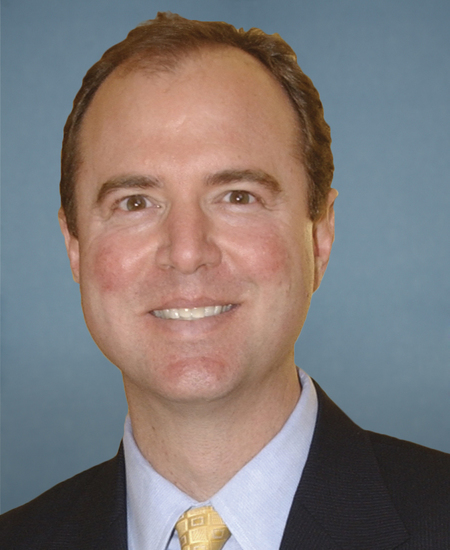
NEWS: As Administration Reviews US-Mexico Trade Deal, Sens. Schiff, Padilla, San Diego Congressional Delegation Urge Administration to Uphold USMCA Deal Provisions that Address Tijuana River Crisis
Washington, D.C. – Today, U.S. Senators Adam Schiff and Alex Padilla (both D-Calif.) and San Diego’s Congressional delegation are pushing the U.S. Trade Representative (USTR) to address the transboundary sewage crisis at the Tijuana River during negotiations with Mexico while it undergoes its required review of the United States-Mexico-Canada Agreement (USMCA). In this new letter to USTR Ambassador Jamieson Greer, the lawmakers request the USTR to build on the $300 million Congress provided through the initial approval of the USMCA and push for USTR’s assistance to provide additional resources. “The USMCA was signed into law on January 29, 2020, and included $300 million to address cross-border pollution coming from Mexico through the Tijuana River Watershed. These transboundary flows include contaminated wastewater and trash, which enters the U.S. and harms water quality, chokes the air with pollutants, closes beaches, and hurts economic livelihoods for communities in San Diego County,” the lawmakers wrote. The lawmakers’ requests would help the U.S. Environmental Protection Agency, International Boundary and Water Commission, and North American Development Bank in their work to address this crisis by providing them with new tools and resources, including resources from Mexico to address inadequate infrastructure on its side of the border. “The Tijuana River Valley pollution crisis continues to negatively impact the environment and the health of more than 3 million people living in San Diego County. We thank you for taking the time to consider our refined USMCA Tijuana River Valley policy priorities and for recognizing the urgency of our request,” the lawmakers concluded. In addition to Schiff, the letter was signed by Senator Alex Padilla (D-Calif.) and Representatives Mike Levin (D-Calif.-49), Scott Peters (D-Calif.-50), Sara Jacobs (D-Calif.-51), and Juan Vargas (D-Calif.-52). Background: Schiff and lawmakers previously pushed Greer to pursue long-term solutions to treating the sewage crisis. Today, Schiff questioned Administrator of the U.S. Environmental Protection Agency Lee Zeldin on efforts to tackle the Tijuana River pollution crisis. Senators Schiff, Padilla, and Cory Booker (D-N.J.), along with Representatives Vargas and Peters introduced the Border Water Quality Restoration and Protection Act of 2025. This legislation would designate the EPA as the lead agency to coordinate all federal, state, Tribal, and local agencies to build and maintain critical infrastructure projects to address long-standing, systemic water infrastructure and pollution issues in the Tijuana River and New River watersheds. The full text of the letter can be found here and below. Dear Ambassador Greer: As Members of Congress representing the San Diego area, we are writing to urge you to use the first mandated review of the United States-Mexico-Canada Agreement (USMCA) to build upon the U.S. government’s progress to address the transboundary sewage crisis in the Tijuana River Valley. The USMCA was signed into law on January 29, 2020, and included $300 million to address cross-border pollution coming from Mexico through the Tijuana River Watershed. These transboundary flows include contaminated wastewater and trash, which enters the U.S. and harms water quality, chokes the air with pollutants, closes beaches, and hurts economic livelihoods for communities in San Diego County. Moreover, the Pentagon’s Inspector General released a management advisory in February 2025 suggesting that the U.S. Navy might have to consider cancelling or relocating Naval Special Warfare water training activities due to the transboundary pollution. The Tijuana River sewage crisis is a major public health challenge that deserves USTR’s attention once again. We continue to engage with Environmental Protection Agency (EPA), the International Boundary and Water Commission, United States Trade Representative (USTR), the North American Development Bank (NADBank), and local elected officials on this issue. In March 2025, we wrote a letter to EPA Administrator Zeldin, inviting him to the Tijuana River Valley to witness this environmental and public health crisis firsthand, and Administrator Zeldin visited San Diego County in April 2025.1 Following this visit, Mexico and the U.S. agreed to collaborate on steps to repair and upgrade the international sewage plant that treats Mexican wastewater before it enters the U.S. Further, in December 2025, we sent you a letter urging the inclusion of Tijuana River Valley priorities in USMCA review negotiations.2 Later that month, EPA signed a new agreement with Mexico (Minute Agreement 333),3 in which Mexico agreed to provide funding for projects it committed to in an earlier agreement (Minute 328),4 including the creation of an operations and maintenance (O&M) account at the NADBank, the development of a Tijuana water infrastructure master plan, the creation of a binational working group, the construction of a sediment basin in Matadero Canyon, and the construction of the Tecolote-La Gloria Wastewater Treatment Plant. Considering the upcoming USMCA review, we would like to refine the requested priorities for negotiations in our December 2025 letter in order to enumerate the specific commitments or authorizations we would propose for particular parties: Request that Mexico commit to creating an O&M reserve account as specified by the EPA-SEMARNAT July 2025 Memorandum of Understanding. Request that Mexico commit to creating a multi-annual funding program (“Mexican BWIP”) to provide reliable financial support for Mexican projects. Allow EPA to use NADBank loans as a match for Border Water Infrastructure Program (BWIP) grants. This would allow NADBank to have oversight of the project over the life of the loan. For projects in Mexico, BWIP funds must be matched 1:1 by Mexican federal, state, or local sources and must support infrastructure that protects shared tributaries flowing into the U.S. Commit to seek an increase in annual U.S.-Mexico Border Water Infrastructure Grant Program (BWIP) appropriations to $100 million, and work with congressional appropriations committees to enact this funding. BWIP has struggled with fluctuating funding levels, and this would show Mexico that we are financially committed to solving transboundary flows. The Tijuana River Valley pollution crisis continues to negatively impact the environment and the health of more than 3 million people living in San Diego County. We thank you for taking the time to consider our refined USMCA Tijuana River Valley policy priorities and for recognizing the urgency of our request. ###
b37e647b-2b19-4b17-9893-2a0e4028f0fcIssued within 24 hours
Other senators' releases published in the day before or after this one.