Van Hollen Details Objections to Trump DOJ’s Spend Plan, Rebukes Unlawful Funding Cuts & Transfers
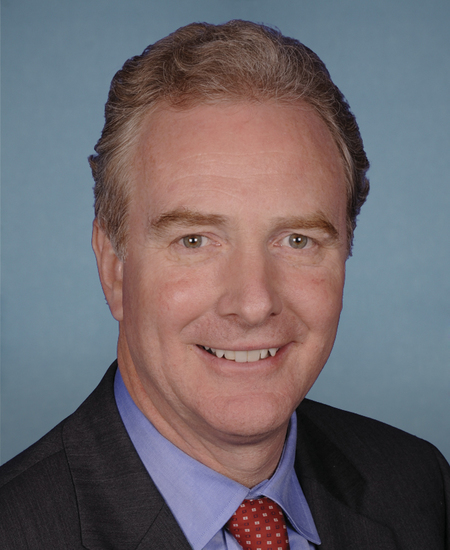
Today, U.S. Senator Chris Van Hollen (D-Md.), Ranking Member of the Senate Appropriations Subcommittee on Commerce, Justice, Science, and Related Agencies (CJS), expressed his strong opposition to a series of unlawful actions that the Trump Administration’s Department of Justice (DOJ) has taken with Congressionally appropriated funding for fiscal year 2025. The Senator’s letter to Attorney General Pam Bondi today followed his initial June 13letterregarding DOJ’s fiscal year 2025 spend plan and laid out in detail his objections to numerous reprogramming and funding requests that the Department carried out against the intent and without the input of Congress. The letter also highlighted the Senator’s objection to a subsequent DOJ proposal to siphon off $163 million in fiscal year 2025 state and local law enforcement and victims assistance grants for the Department’s pet projects, and make deeper cuts to critical resources intended for police and crime prevention organizations in communities nationwide. The Senator expressed his frustration that the DOJ has ignored Congressional authority and broken the longstanding precedent of seeking input and approval from the CJS Appropriations Subcommittee.
Expressing his frustration that DOJ proceeded with funding reprogramming requests without bipartisan Congressional approval, the Senator wrote,“This is not normal. The Committee and the Department had, until this year, maintained a tradition of comity in which controversial spend plan proposals would result in a meaningful discourse between the Department and Congress. Most often, the interested parties would find an agreeable path forward. Instead, this Department has made clear that a notification is simply that—a notice of actions to be taken after 15 days have elapsed, regardless of the law and clear Congressional intent to do otherwise.”
“I am disappointed by the deterioration of this relationship. I continue to urge the Department to engage with Congress on these spending plan proposals that seek to fundamentally change the makeup of this nation’s agency charged with upholding the rule of law. I remind you that when the Department ignored the Committee’s direction in the past, the outcome did not turn out well for the Department,”he continued.
The Senator went on to outline his detailed objections to the DOJ’s fiscal year 2025 spend plan, which include:
Senator Van Hollen also objected to a new proposal to transfer $163 million state and local grant programs to fund other unauthorized DOJ pet projects such as the INTERPOL-Marshals Service merger, reimbursements for federal agents deployed to D.C., and covering costs of office closures—on top of earlier, unilateral cuts made by the Department to previously awarded grants totaling over $860 million.
“Grant funds should not be used as slush funds to cover the Administration’s political pet projects,”he wrote.“Enough is enough—the Department needs to stop its relentless raid on grant funding that is serving state and local law enforcement and victims of crime.
“I respectfully note my continuing objections to the fiscal year 2025 Department of Justice Spending Plan and subsequent transfer proposal. I strongly urge you to drop these unnecessary transfer, reprogramming, and reorganizing proposals—which are also rejected in both the fiscal year 2026 Senate and House CJS Appropriations bills—and work with congressional leaders through regular order to restore transparency and confidence in the Department of Justice,”the Senator concluded.
Text of the letter can be viewedhereand below.
Dear Attorney General Bondi:
This letter follows my preliminary letter, dated June 13, 2025, which was sent in response to the May 30, 2025, Department of Justice (the Department) fiscal year 2025 spend plan. That spend plan was submitted to the Senate Appropriations Subcommittee on Commerce, Justice, Science, and Related Agencies (the Committee) pursuant to Division A, Title I, Section 1113, and Title III of the Full-Year Continuing Appropriations and Extensions Act, 2025 (Public Law 119–4). In my initial spend plan response, I specifically objected to the Section 205/505 transfer notification proposing to transfer up to $10 million from INTERPOL Washington to the U.S. Marshals Service (USMS) in addition to any efforts to terminate INTERPOL Washington as a standalone component at the Department. Despite my clear objection, the Department executed the transfer and fully dismantled INTERPOL Washington and absorbed what was left into USMS.
Given the complexity of the spend plan proposals, I also noted in my June 13 letter that I needed to continue my review of the proposals and thus did not approve of any of the Department’s fiscal year 2025 spend plan proposals, including reprogramming and transfer requests. Despite the clear lack of approval, the Department executed many controversial spend plan proposals anyway.
This is not normal. The Committee and the Department had, until this year, maintained a tradition of comity in which controversial spend plan proposals would result in a meaningful discourse between the Department and Congress. Most often, the interested parties would find an agreeable path forward. Instead, this Department has made clear that a notification is simply that—a notice of actions to be taken after 15 days have elapsed, regardless of the law and clear Congressional intent to do otherwise.
I am disappointed by the deterioration of this relationship. I continue to urge the Department to engage with Congress on these spending plan proposals that seek to fundamentally change the makeup of this nation’s agency charged with upholding the rule of law. I remind you that when the Department ignored the Committee’s direction in the past, the outcome did not turn out well for the Department.
I respectfully note my objections to this Department’s actions as articulated in the FY 2025 spend plan, transmitted May 30, 2025. In particular, I find these changes to the Department most objectionable:
A separate issue has arisen since the spend plan proposals were originally transmitted. The original notification contained a Section 205/505 notification that proposed to transfer nearly $179 million from grant programs to the Bureau of Prisons ($138.8 million) in order to maintain solvency, in addition to a transfer to the Environment and Natural Resources Division ($10.8 million) and a transfer for a vaguely-described pot of money ($28.6 million) that will allow the Department to pay for “costs that arise as part of the proposed realignments.” Realignments, I may add, that were made under the guise of efficiency and actuallysaving, not spending more, taxpayer dollars.
Thankfully, the Department found alternative sources for the Bureau of Prisons shortfall. However, despite alleviating the most pressing shortfall, the Department inexplicably decided to continue pursuing its plan to reduce grants. In a notification dated August 27, 2025, the Department proposed reducing fiscal year 2025 grants by $163 million. The list of “funding requirements,” which look more like the Department’s funding wish list, has notable inclusions such as $25 million to effectuate the absorption of INTERPOL Washington in USMS; $18 million to reimburse FBI, DEA, USMS, and ATF for expenses related to agents sent to Washington D.C. under this Administration’s manufactured crime emergency, a city in which violent crime levels are actually at a 30-year low; $13 million for an Operations Command Center System that, when pressed by staff, no one at the Department could articulate the specific reason the money was requested; and nearly $7 million to pay out lump sum leave balances for employees in litigating components either eliminated or significantly decreased under this Administration. None of these “funding requirements” are necessary expenditures of resources, and to be clear, the decision to cut critical funding from grant programs has typically been and should continue to be a solution of last resort. Grant funds should not be used as slush funds to cover the Administration’s political pet projects.
But this is not the first time this Administration has attacked critical grant programs. This Administration is proposing to transfer $163 million in grantsin addition tothe $811 million in grant funding terminations made by the Department in April, and the $50 million cut from certain grants due to a “scrivener’s error.” Earlier this week, the Department notified my staff that it had decided to reinstate $31.1 million of the $163 million proposed for cuts in grant funding, but I maintain that every penny should be sent back to the intended grant recipients. Enough is enough—the Department needs to stop its relentless raid on grant funding that is serving state and local law enforcement and victims of crime.
I respectfully note my continuing objections to the fiscal year 2025 Department of Justice Spending Plan and subsequent transfer proposal. I strongly urge you to drop these unnecessary transfer, reprogramming, and reorganizing proposals—which are also rejected in both the fiscal year 2026 Senate and House CJS Appropriations bills—and work with congressional leaders through regular order to restore transparency and confidence in the Department of Justice.
266c5369-fcf8-408e-87cc-0fb0176ab828Issued within 24 hours
Other senators' releases published in the day before or after this one.