At Hearing, Warren Blasts Trump Administration’s Flip-Flopping on Iran War, Alienating U.S. Allies
Warren: “It is not only an embarrassment when the President begs, and our allies say no, it is a national security threat because our enemies take note of that.”
Warren: “Trump has alienated many of our allies, and those costs are becoming clear.”
Video of Exchange (YouTube)
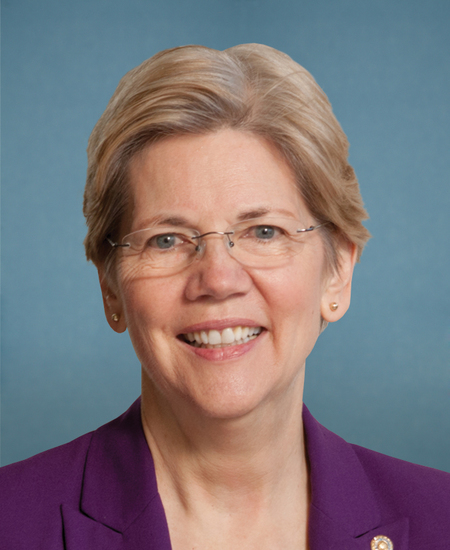
Washington, D.C. —At a hearing of the Senate Armed Services Committee, U.S. Senator Elizabeth Warren (D-Mass.) pressed Admiral Richard A. Correll, Commander of U.S. Strategic Command (STRATCOM), on how President Donald Trump’s foreign policy decisions impact U.S. alliances as the war against Iran continues. U.S. Strategic Command is responsible for strategic deterrence and nuclear operations.
On February 28, President Trump and Israeli Prime Minister Benjamin Netanyahu launched the first attack on Iran. Longstanding U.S. allies alleged they were not informed of President Trump’s plan to start the war until after the first strikes. Now, President Trump has publicly criticized those allies for not providing support to address Iran’s chokehold on the Strait of Hormuz while oil prices soar.
“It is not only an embarrassment when the President begs, and our allies say no, it is a national security threat because our enemies take note of that,”said Senator Warren.
Senator Warren noted that Admiral Correll has previously said repeatedly that alliances are critical to deterrence. When pressed on if Russia and China would view U.S. alliances as strong, given the lack of support from allies, Admiral Correll asserted, "I think China's and Russia's behavior…demonstrates their continued concern for America's alliances.” Senator Warren challenged his view, stating, “You're telling me your view is there's no threat here, and I'm just telling you that just does not bear credible analysis.”
Senator Warren also raised her concerns about how Israeli Prime Minister Netanyahu seems to be pursuing different objectives regarding the war compared to President Trump's claimed reasoning. On March 18, the Israeli government bombed one of the largest oil fields in the Middle East. Afterwards, President Trump posted on Truth Social that the U.S. was unaware of this attack, condemning it because of the economic danger that it would pose.
The Trump administration also continues to change its objectives for launching a war with Iran. Last year, the White House issued a press release proclaiming that “Iran's nuclear facilities have been obliterated, and suggestions otherwise are fake news.” The Trump administration has still not given a clear goal for its war against Iran, but has insisted on the threat of Iran’s nuclear weapons as one of many objectives.
“If this administration can't keep its main partner in line and can't keep its own story straight, then we've got a problem,” said Senator Warren.
When Senator Warren questioned Admiral Correll on whether it enhances strategic deterrence to have major partners undermining U.S. policy goals or for the Trump administration to continue changing its reasons for attacking Iran, he repeatedly refused to answer the senator's question. Instead, pointing to disagreeing with the senator’s assessment, Admiral Correll stated, “I have no further comments to make other than what I've previously said.”
Senator Warren concluded the hearing by raising her concern over Admiral Correll's unclear responses to her questions and emphasized the importance of understanding the impact of President Trump and his administration’s changing narratives on U.S. interests.
Transcript:Hearings to examine the posture of the United States Space Command and United States Strategic Command in review of the Defense Authorization Request for fiscal year 2027 and the future years defense program.Senate Armed Services CommitteeMarch 26, 2026
Senator Elizabeth Warren:President Trump has dragged us into war against Iran, and we're all paying the price. Service members have died. Oil prices are soaring, and we are facing a global economic crisis over the Strait of Hormuz. One big reason? Donald Trump's go-it-alone approach to blowing up long-standing American alliances. He has insulted and tariffed just about everyone, and he launched this war alongside Israel without telling our other allies. And then when he sees gas prices skyrocket, Donald Trump changes his tune and starts begging our allies to help us patrol the Strait of Hormuz. And our partners have said they want to help, but only if the fighting stops.
Admiral Correll, U.S. Strategic Command, is responsible for strategic deterrence and nuclear operations, and you have said repeatedly that alliances are critical to deterrence. So, Admiral, do Russia and China think that our alliances are strong when our partners refuse to help?
Admiral Richard A. Correll:My military assessment is that they continue to think they're very strong, and I think China and Russia's behavior in terms of attempting to undermine those alliances demonstrates their continued concern for America's alliances.
Senator Warren:I just have to say your answer makes no sense to me. That Russia and China watch us insult our allies, then beg for their help, and then our allies don't give that help. And you think Russia and China think, “There's an alliance that's working just great.” Look, it is not only an embarrassment when the President begs and our allies say no, it is a national security threat because our enemies take note of that. It is your job to advise the Secretary about how to deter our greatest threats. And you're telling me your view is there's no threat here, and I'm just telling you that just does not bear credible analysis.
Trump has alienated many of our allies, and those costs are becoming clear. At the same time, we have launched war with Israeli Prime Minister Netanyahu, who seems to be pursuing a completely different set of objectives, and President Trump is unwilling or unable even to rein in Netanyahu. On March 18, the Netanyahu government bombed one of the region's largest oil fields. Trump then posted that the U.S. didn't even know in advance and that we didn't want further oil strikes because of the economic danger that it would pose.
So, Admiral, does it enhance strategic deterrence to have major partners undermining explicit US policy goals?
Admiral Correll:Senator, I respectfully disagree with your overall assessment.
Senator Warren:What part do you disagree with that Trump posted that we didn't know and didn’t agree with what Netanyahu did, but Netanyahu did it anyway? What part are you disagreeing with?
Admiral Correll:Senator, I can just speak to my portfolio and my responsibilities, and you know, our capabilities remain ready to respond and deter, and they deter each and every day.
Senator Warren:I appreciate that. But that is not my question. My question is, does it enhance strategic deterrence to have major partners undermining explicit US policy goals?
Admiral Correll:Strong, mil-to-mil relationships and our alliance network are part of our overall deterrence.
Senator Warren:Look, again, your answer just lacks any credibility. If this administration can't keep its main partner in line and can't keep its own story straight, then we've got a problem. In June, the White House issued a press release proclaiming that, quote, “Iran's nuclear facilities have been obliterated, and suggestions otherwise are fake news,” and yet now Iran's nuclear program is one of the many changing reasons that the administration has given for this war.
So, Admiral Correll, let me ask one more. Does it help strategic deterrence when the White House changes its story minute by minute on the reasons for this war?
Chairman Roger Wicker:Senator Warren, the witness on three occasions, has said that he is declining to answer that question because he disagrees with the premise. I appreciate that members are able. To make whatever points they want, but I think it's clear why he's unable to answer your question because he completely disagrees with the premise.
Senator Warren:I'm glad that it's clear to you, Mr. Chairman, but with respect, I don't understand what part of the premise he disagrees with. I'm stating facts here. I'm asking if those facts are helpful for the United States or unhelpful for the United States?
Chairman Wicker:Admiral, you can answer the question if you're able.
Admiral Correll:I have no further comments to make other than what I've previously said.
Chairman Wicker:Thank you, Senator Warren.
###
2e6c6658-246c-4876-924a-9712f7124672Issued within 24 hours
Other senators' releases published in the day before or after this one.