McConnell on American Leadership; Standing with Israel and Ukraine
Washington, D.C.
–
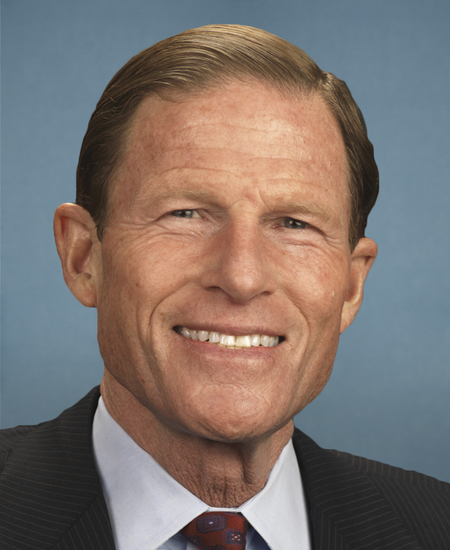
U.S. Senator Mitch McConnell (R-KY), Chairman of the Senate Appropriations Subcommittee on Defense, delivered remarks on the Senate floor today regarding U.S. national security interests in standing with Israel, supporting Ukraine, and investing sufficiently in our own defense. Prepared text of his speech follows:
“When Iran’s proxies launched a full-scale war on Israel on October 7th, 2023, President Biden pledged an ‘unwavering commitment to Israel’s security’. This was the right message in the moment. But as I warned publicly at the time, Israel needed more than rhetorical solidarity.
“Like Ukraine, Israel needed precious time, space to maneuver, and material support to defeat a shared enemy. And yet, as in Ukraine, America’s commitment has indeed wavered. Our support has not been ironclad.
“Instead, under the previous Administration, American support was delayed, restricted, and paired with attempts to micromanage Israeli operations and even interfere with Israeli politics. And at every turn, the progressive left and isolationist right hyperventilated about the specter of so-called forever war.
“Fortunately, Israel held its ground. Israelis weren’t enthused about a ground war in Gaza. Their leaders knew that war would be difficult. But they knew it was unavoidable so long as Hamas terrorists still refused to release its hostages. They also knew lasting security meant changing Iran’s calculus…Not just responding to attacks from its proxies. So Israel decided to turn Iran’s terrorist assets into liabilities.
“Despite the pearl-clutching here in Washington, our ally simultaneously decapitated Hizballah and crippled Hamas. Their bold operations created a new opportunity for Lebanon to claw back its sovereignty from a terrorist state within a state.
“Meanwhile, the collapse of the brutal Assad regime in Syria brought down a Russian vassal and Iran’s favorite corridor of weapons and terrorist finance. These are the circumstances President Trump inherited. What to do with them has been the subject of some debate. Some of his advisors and supporters came with Obama-Biden-era talking points, ready to urge him to continue his predecessor’s policy of constraining Israel. Some had argued publicly that America had no vital or existential interests in the Middle East or claimed the region was a distraction from other priorities. They warned of forever war. Some seemed to push for nuclear negotiations with parameters eerily similar to the nuclear deal he withdrew from during his first term. They even proposed Iran could keep enriching uranium, until the President rightly quashed that idea.
“These mixed messages emboldened Iran and its proxies. After all, why give up if Administration officials saw the Middle East as little more than a distraction?…or if they seem as fearful of restoring deterrence as the previous guys? So Hamas kept holding hostages. The Houthis kept targeting Israel and Red Sea commerce. And the Islamic Republic kept marching toward a nuclear weapon. And in response, Israel took the next logical step to restore deterrence.
“Once again, innovative and decisive strikes destroyed Iran’s air defenses and imposed immediate costs on Tehran. And leaders from across Israel’s politics stood united behind the daring operations. But here in America, the same restrainers, anti-Israel progressives, and self-proclaimed realists warned again of regional conflagration if the President intervened alongside – or even supported – Israel’s strikes.
“The President’s own Director of National Intelligence traveled to Hiroshima to record a bizarre video message – not as a warning against Tehran’s nuclear ambitions but, presumably, against American or Israeli operations to blunt them.
“Fortunately, the President rejected the pleas of appeasers and isolationists. The strikes he ordered dealt a massive blow to Iran’s nuclear program, bolstered American credibility, and strengthened U.S. and Israeli leverage to end Iran’s pursuit of nuclear weapons and its support for terrorism for good.
“Thanks to Israel’s heroic efforts for more than a year and a half, Iran’s ability to threaten regional stability is massively degraded. Not since before the Islamic revolution has there been such an opportunity for America, Israel, and our Arab partners to reset regional dynamics on such favorable terms. Achieving it has required no large-scale deployment of U.S. ground forces. It required only supporting our friends. Israel is a close ally and a strategic asset. Not a liability. And the strategic return on our investment in assisting Israel is incalculable.
“Standing with our Israeli friends offers a powerful lesson about American leadership, the value of alliances and partnerships, and the real nature of peace through strength. And this lesson extends far beyond the Middle East. If America refuses to apply it elsewhere – like Ukraine – we do so at grave risk to our own interests. But that’s exactly what some in Washington seem to be doing. Congress recently learned that a senior DoD official conducted a review of DoD security assistance efforts and concluded that the Ukraine Security Assistance Initiative (USAI), among other programs, was wasteful. This is a Republican Administration panning a program created by a Republican Congress in 2015 to counter President Obama’s toothless response to Russia’s initial invasion of Ukraine. I’d like to see the analysis behind the Administration’s decision to zero out USAI in its FY26 request. I’d like to hear them try to explain away the massive return on investment of America’s security assistance to Ukraine and the precious lessons we’ve learned from our Ukrainian partners.
“The Secretary of the Army has rightly called Ukraine ‘the Silicon Valley of warfare’. Do his colleagues at the Pentagon think this assessment is wrong, or do they just not think access to the cutting edge of modern combat is valuable? Here’s the truth: USAI and other security assistance efforts have helped us measurably address shortcomings in strategy, capabilities, and production capacity that would have gone ignored until it was too late.
“It’s an inconvenient reality for isolationists and restrainers, but – for a tiny percent of our defense budget – we helped a smaller military resist invasion by a vastly larger one and degrade a major U.S. adversary.
“As with Israel, Ukraine is fighting an adversary of the United States. Our support does not entangle us in a far-off foreign conflict. For Russia, Iran, China, and North Korea, America is the main enemy – the great Satan. If these adversaries beat our friends, the threat to America become a thousand times greater. We should be grateful for friends so willing to defend our collective interests against common foes.
“Partnership with Ukraine is teaching us what modern warfare could mean for U.S. forces when they do face direct conflict. It has tested our assumptions about munitions inventories, expenditure rates, electronic warfare, and the duration of conflict. Without Ukraine’s experience with U.S. weapons, we would have been surprised to find some advanced systems quickly rendered inoperable on future battlefields.
“The money we invest in USAI on weapons for Ukraine expands our own production capacity in the process and will improve the quality of our own munitions. Supplemental appropriations on Ukraine and Israel, in turn, backfill our own stocks with brand-new capabilities – not just 155mm rounds, but air defenses and long-range fires, with specific investment in solid rocket motors. These investments help us prepare for conflict in the Indo-Pacific. And production would be slower in the absence of our partnership with Ukraine. Not doing more to address our growing defense needs isn’t a failure of foresight. It’s a failure of political will. Everyone wants to see an end to Russia’s war in Ukraine. But the price of peace matters. If we want enduring stability in Europe, we can’t fall for an illusory peace.
“We should know enough history not to dismiss this as merely ‘a quarrel in a faraway country, between two people of whom we know nothing’. It’s a major war of conquest in Europe…The most significant since the days of Nazi Germany…And allies and adversaries half a world away are watching it closely for clues about America’s resolve. Certainly, Europe’s deepening commitments to collective defense will make real peace more enforceable. The President’s insistence has driven much of this progress; Putin’s brutality has reinforced it.
“Since 2022, our European NATO allies have made historic investments in defense – often buying American. And many are preparing to make even larger commitments at this week’s NATO Summit. This is good news. But we can’t expect allies to continue signing up for 3.5% and 5% commitments if America insists on falling further behind. Likewise, we can’t expect Putin to end his aggression if he thinks America’s abandonment of Ukraine is only a matter of time. And we can’t expect anyone to take America’s threats and commitments seriously if we’re content to let our own strength atrophy.
“A base budget request that cuts defense spending in real terms doesn’t show Moscow we’re serious – let alone Beijing. Leading from behind would be bad enough, but this is just plain falling behind. The strongest deterrence is denying an adversary’s objectives through military means. Israel is restoring this deterrence in the Middle East. Ukraine is achieving it by holding its own against Russia. But it needs help.
“Recently, I’ve asked Administration officials simple questions, like: Who is the aggressor in this conflict? The answer is obvious. But a second, equally simple question seems to trip them up: Who do we want to win?
“The President made the right call to stand with Israel. I hope he’ll also decide to stand with Ukraine, prevent Russian victory, and start reversing a dangerous, downward trend in our defense budgets. I hope he’ll recognize Russia’s attempt to ‘tap him along’ for what it is. Putin is getting mixed messages from Washington. He thinks he has time. He believes the West is weak and divided. But the President – at very little cost – can shatter this illusion. It’s time to impose sanctions, raise the price of Russia’s aggression, redouble security assistance to Ukraine, and drive the Kremlin to seek peace. It’s time for deterrence through denial.
“There’s no surer path to just and enduring peace…No better way to demonstrate that peace through strength actually means something…No clearer sign to allies and adversaries watching closely from the Western Hemisphere to the Indo-Pacific that America still has the will to lead.”
91108902-5293-4d11-9651-f43f1a14b582Issued within 24 hours
Other senators' releases published in the day before or after this one.