Press Release
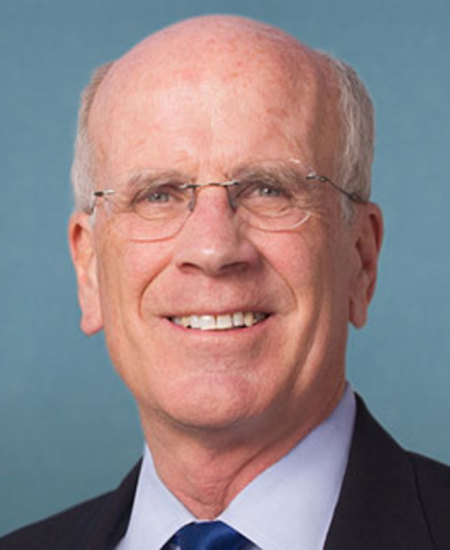
WASHINGTON, D.C .— Today, U.S. Senator Peter Welch (D-Vt.) , a member of the Senate Judiciary Subcommittee on Intellectual Property , questioned Shira Perlmutter, Register of Copyrights and Director of the U.S. Copyright Office, in an oversight hearing for the U.S. Copyright Office. Senator Welch questioned Director Perlmutter on two bills he has championed, the Freedom for Agricultural Repair and Maintenance (FARM) Act , and his bipartisan TRAIN Act, which would help creators—musicians, artists, writers, journalists, and others—access the courts to protect their copyrighted works if, and when, they are used to train generative AI models. The legislation would also allow copyright holders to access training records used for AI models to determine if their work was used—a process currently used for internet piracy. Sen. Welch : First of all, I speak to you as a Senator from Vermont, which is, as you all know, is the music capital of the world: Noah Kahan in Strafford, Vermont; Phish in Burlington; Grace Potter in Moretown. So, I’ve got my plug in. But here’s a concern they have: the TRAIN Act , which Senator Blackburn and I introduced, is about having copyright enforcement for people whose works have been utilized in large language models. And what it would do is create a good faith opportunity for people to get information, get a subpoena, to determine whether their work has been used and them not being compensated. Do you have a point of view on the TRAIN Act and what it’s intended to do? Director Perlmutter: Well, definitely I support the idea that we need transparency for copyright owners to be able to know when their works are used. The TRAIN Act seems to me to be a very creative idea of how to go about doing that. And it is similar, in some ways, to an approach being discussed in France right now. I think we should consider all options on the table. The issue has been in many of these areas, if you require—if you just on its own require disclosure—how much detail needs to be disclosed, and that’s where a lot of the debate has been. And the TRAIN Act represents an alternative approach. Sen. Welch : But absent the ability of the artist to actually get information about the use of her or his product, they basically lose any protection that copyright is intended to provide, correct? Director Perlmutter: Yes, I agree that this needs to be dealt with. Watch Senator Welch’s full remarks here : Senator Welch also discussed the importance of his legislation to allow farmers the opportunity to repair their own equipment, called the Freedom for Agricultural Repair and Maintenance (FARM) Act : Sen. Welch: One of the concerns I’ve had is that farmers these days no longer can fix their tractors. They’re under prohibitions from the tractor companies, and if there’s anything that farmers do well, it’s fix things. And it’s estimated that the farmers lose about $4.2 billion a year. $3 billion to tractor downtime and $1.2 billion in excess repair costs. Now, it may seem odd that I’m asking you about Right to Repair, but I understand that you are involved in the Right to Repair with respect to how copyright has an impact on it. Could you elaborate on that? Director Perlmutter: Copyright ends up being a very important part of Right to Repair because so much of the machinery and technology these days is software-enabled and software is protected by copyright. And the law makes it illegal to circumvent technical measures used to protect copyrighted works like software, so copyright does get implicated. And over the years, in the tri-annual rulemaking that we operate for the Librarian of Congress, we have recommended and the Librarian has adopted various exceptions to allow the repair of machinery. We believe that the time is ripe for Congress to consider making some of those exceptions permanent, including for repairing farm machinery. Sen. Welch: So, this is a tractor, for instance, that you might buy for—at least can be a half a million dollars—and it would allow the person who bought it to fix it? Director Perlmutter: Yes. Sen. Welch: Well, I appreciate your cooperation on the Right to Repair and giving the consumer—the person who paid the big price—the opportunity to keep that equipment going without all this downtime and expense. Thank you. ••• Senator Welch has led bipartisan efforts to protect the arts and artists’ creativity in the Senate, including as a lead cosponsor of the TRAIN Act . Senator Welch also joined Senator Blackburn in leading the introduction of the Visual Artists Copyright Reform Act (VACRA) , bipartisan legislation to modernize copyright registration for visual artists to make it easier and less costly for high-volume visual artists to register and protect their works. The Senator has also championed legislation to give farmers and consumers the right to repair their own equipment and restore competition in the agricultural repair market, including the FARM Act and the R ight to Equitable and Professional Auto Industry Repair Act (REPAIR Act) to ensure car owners and independent repair shops have expanded options for automobile repairs. ###
a9905bb7-faba-435d-8228-a9d34471c320Issued within 24 hours
Other senators' releases published in the day before or after this one.