Cramer Questions Federal Reserve Chair Nominee Kevin Warsh at Banking Hearing on Debanking, Cautions Against Groupthink at the Federal Reserve
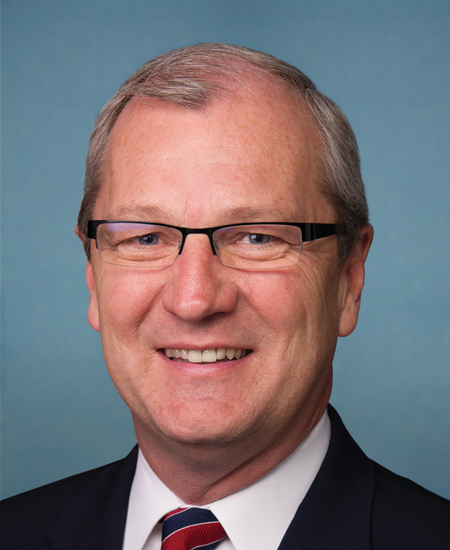
***Click here for audio. Click here for video*** WASHINGTON, D.C. – As Federal Reserve Chair Jerome Powell’s term comes to a close, the Senate Banking, Housing, and Urban Affairs Committee held a nomination hearing for Kevin Warsh, President Trump’s Federal Reserve Chair nominee. U.S. Senator Kevin Cramer (R-ND) asked Warsh about the independence of the Federal Reserve, and if he has observed philosophical independence within the institution’s deliberative process. Cramer said he’s often found it curious “people expect somebody who's appointed by an elected official and has to be confirmed by 100 other elected officials would somehow not have a philosophy. […] I think we should not forget that it would be common for a president who believes that interest rates should be lower, to want to nominate somebody who has expressed that maybe interest rates could be a little lower, as opposed to the quid pro quo that's being accused of today.” Cramer highlighted the frequent unanimity within the Federal Reserve, asking Warsh, “Do you have any idea how often, an interest rate decision by the Fed is a 12-0 or a 10-0 vote?” “I'd say over the last 15 years, decisions have been unanimous or near unanimous,” responded Warsh. “As I said to one of your colleagues earlier, I prefer clean memos and messier meetings, and there's nothing wrong with the divergence of opinion. These are very hard calls.” Prior to serving in the private sector, Warsh spent over 10 years in public service, including five years on the Federal Reserve Board of Governors. Cramer questioned Warsh on whether his viewpoint had evolved over the last two decades. “Absolutely,” answered Warsh. “It is essential for the chair of this organization, to be open-minded to new ideas. The world is moving fast. The mistake that's common in the economics profession, which Secretary Schultz once described to me when I was telling him that I was thinking about pursuing further studies. He said, ‘it's fine to get a PhD, but make sure that's not the last day you are learning.’ Too many people in the profession go back to what they learned 30 or 40 years ago. We've got to be open minded. The world's changing and the facts are changing. To the characterization I heard from some of your colleagues about, did my opinions change? My opinions change when the facts change. When interest rates are at zero and the balance sheet is growing and the economy is booming, well, relative to that, I will say I sounded hawkish. In 2018, when the Federal Reserve pushed to raise rates into a financial market meltdown and economic weakening, I said that was a mistake. That was dovish. I expect to have a divergence of views based on the facts on the ground.” Cramer also highlighted the practice commonly referred to as debanking, in which banks discriminate against law-abiding industries and groups by refusing to provide financial services. “Speaking of institutions that are dug in, I think out of 22,000 [Federal Reserve employees], there are a lot of them who still believe that reputational risk should be a factor, and that reputational risk should be based on out-of-favor industries. Can you give me a sense of how you plan to attack that?” “ Politics have no place, not just in monetary policy, but in supervision and regulation,” said Warsh. “If central bankers should stand for anything, it's to resist fads, resist trends, call balls and strikes. That's exactly what I would intend to do.” Cramer concluded by describing his support for Warsh as a “hard yes.”
ae579c87-680a-4a0c-ba83-b1793be1c5f3Issued within 24 hours
Other senators' releases published in the day before or after this one.