Cantwell Reintroduces Bipartisan Bill to Take WA-Developed, Low-Barrier Fentanyl Treatment Pilot Program Nationwide
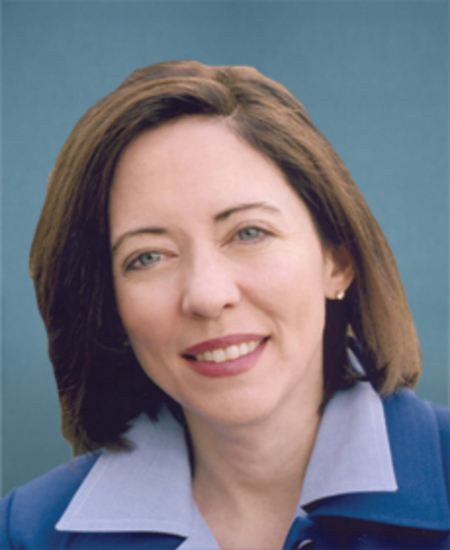
02.20.25 Cantwell Reintroduces Bipartisan Bill to Take WA-Developed, Low-Barrier Fentanyl Treatment Pilot Program Nationwide In UW study, access to Health Engagement Hubs shown to reduce fatal overdoses by a staggering 68%; Hubs would offer access to safe & free addiction treatment without an appointment WASHINGTON, D.C. – Today, U.S. Senator Maria Cantwell (D-WA), a senior member of the Senate Finance Committee and ranking member of the Senate Committee on Commerce, Science, and Transportation and U.S. Senator Bill Cassidy (R-LA) reintroduced the Fatal Overdose Reduction Act, a bipartisan bill that would expand a Washington-state-developed, low-barrier fentanyl treatment pilot program across the United States. “The fentanyl crisis continues to kill and tear apart communities all across the country,” said Sen. Cantwell. “We need to be protecting Medicaid, the largest payer of substance use treatment in the United States, to ensure we are using every tool possible to fight this epidemic. This bipartisan bill would leverage Medicaid to expand a locally developed community treatment center model that has proven remarkably successful at reducing fatal overdoses.” The Health Engagement Hub model was developed by Dr. Caleb Banta-Green at the University of Washington. The innovative hub model provides a one-stop shop where substance use disorder patients can receive near-immediate FDA-approved treatment (buprenorphine) and access primary care, harm reduction, and other social services without an appointment. Research data from UW shows that, among 825 participants, this community-based, medication-first approach decreased overdose mortality rates by 68%. READ MORE: The Seattle Times -- Federal bill to reduce opioid deaths deserves bipartisan support The Washington State Standard -- Could WA’s health ‘hub’ model treating opioid addiction go nationwide? Oregon Public Broadcasting -- Opioid hub treatment model shows success in Washington, could come to Oregon In 2023, the Washington State Legislature funded a $4 million state pilot program to establish health engagement hubs because the model demonstrates great potential in addressing the opioid epidemic. In May 2024 – the same day Sen. Cantwell and Sen. Cassidy originally introduced the Fatal Overdose Reduction Act -- Dr. Banta-Green addressed Sen. Cantwell and colleagues about the effectiveness of the Health Engagement Hub model during a hearing of the Senate Finance Committee titled “Front Lines of the Fentanyl Crisis: Supporting Communities and Combating Addiction through Prevention and Treatment.” “We really need to allow people to access care rapidly and stay engaged. The process of recovery […] for opioids and stimulants, it's about three years. And during that process of recovery, people are often returning to use,” Dr. Banta-Green said. “We need a place that people can start today and come back tomorrow, no matter what.” That hearing can be watched HERE ; a transcript of Sen. Cantwell and Dr. Banta-Green’s remarks is HERE . The Fatal Overdose Reduction Act would allow existing and qualifying entities to receive a Health Engagement Hub certification, similar to the process for mental health treatment centers to be designated as Certified Community Behavioral Health Centers . Under this bipartisan bill, certified Health Engagement Hubs would receive enhanced Medicaid payments for providing services including substance use disorder treatment, primary care, and case management. Certified hubs would also operate under a “no wrong doors” approach and offer services in a drop-in manner without prior appointment or proof of payment. To qualify as a Health Engagement Hub, an organization would need to offer: Substance use disorder treatment using FDA-approved medications; Harm reduction services such as overdose education, naloxone distribution, and emotional counseling; Patient-centered physical and behavioral health care services such as primary care, disease vaccination, psychiatric care, and secure medication storage; Case management, care navigation, and care coordination services including housing, identification, employment, recovery support, family reunification, and criminal-legal services; and Community health outreach and navigation services. In addition, a Health Engagement Hub must meet certain minimum staffing requirements: One part-time or full-time health care provider who is licensed to practice in the state and is licensed and registered to prescribe controlled substances; One part-time or full-time registered professional nurse or licensed practical nurse who can provide medication management, medical case management, care coordination, wound care, vaccine administration, and community-based outreach; One part-time or full-time licensed behavioral health staff who is qualified to assess and provide counseling and treatment recommendations for substance use and mental health diagnoses; and A full-time team of outreach, engagement, and care navigation staff. This could include peer counselors, community health workers, and recovery coaches. At least 50% of such staff must be individuals with a personal history of addiction treatment and recovery. Read the bill text HERE . In 2023 and 2024, Sen. Cantwell traveled across the State of Washington to 10 communities -- Tacoma, Everett, Tri-Cities, Seattle, Spokane, Vancouver, Port Angeles, Walla Walla, Yakima, and Longview – hearing from people on the front lines of the fentanyl crisis, including first responders, law enforcement, health care providers, and people with firsthand experience of fentanyl addiction. She also participated in the National Tribal Opioid Summit, a gathering of approximately 900 tribal leaders, health care workers, and first responders from across the country hosted by the Tulalip Tribes following the first-ever statewide summit hosted by the Lummi Nation. Sen. Cantwell has since used what she heard in those roundtables and related events to craft and champion specific legislative solutions, including: The Stop Smuggling Illicit Synthetic Drugs on U.S. Transportation Networks Act, which would crack down on the trafficking of illicit synthetic drugs, like fentanyl, using the U.S. transportation network; The Opioid Overdose Data Collection Enhancement Act, which would expand the use of tools that record fatal and nonfatal overdoses in near-real time and help first responders deploy resources faster; The FEND Off Fentanyl Act, signed into law by President Joe Biden, which will help U.S. government agencies disrupt opioid supply chains by imposing sanctions on traffickers and fighting money laundering; The Fight Illicit Pill Presses Act , which would require that all pill presses be engraved with a serial number and impose penalties for the removal or alteration of the number . ; The Combating Illicit Xylazine Act , which would list xylazine as a Schedule III controlled substance while protecting the drug’s legal use by veterinarians, farmers, and ranchers, enable the Drug Enforcement Administration to track xylazine’s manufacturing to ensure it is not diverted to the illicit market; The TRANQ Research Act of 2023 , signed into law by President Biden, which will spur more research into xylazine (also called “tranq”) and other novel synthetic drugs by directing the National Institute of Standards and Technology to tackle these issues; and The Parity for Tribal Law Enforcement Act , which would bolster Tribal law enforcement agencies by helping them hire and retain tribal law enforcement officers by raising their retirement, pension, death, and injury benefits to be on part with those of federal law enforcement officers. In addition, Sen. Cantwell voted for a series of federal funding bills allocating $1.69 billion to combat fentanyl and other illicit drugs coming into the United States, including an additional $385.2 million to increase security at U.S. ports of entry, with the goal of catching more illegal drugs like fentanyl before they make it across the border. Critical funding will go toward Non-Intrusive Inspection (NII) technology at land and sea ports of entries. NII technologies—like large-scale X-ray and Gamma ray imaging systems, as well as a variety of portable and handheld technologies—allow U.S. Customs and Border Protection to help detect and prevent contraband from being smuggled into the country without disrupting flow at the border. A full timeline of Sen. Cantwell’s actions to combat the fentanyl crisis is available HERE . Print Email Tweet Next Article Previous Article
b994b5ca-0a23-41e4-bb5e-a8a69e1ad611Edit history (1 prior version)
This release was edited after publication. Earlier captures are preserved below.
- Captured May 2, 2026, 10:11 AM EDT
Show prior body text
WASHINGTON, D.C.– Today, U.S. Senator Maria Cantwell (D-WA), a senior member of the Senate Finance Committee and ranking member of the Senate Committee on Commerce, Science, and Transportation and U.S. Senator Bill Cassidy (R-LA) reintroduced the Fatal Overdose Reduction Act, a bipartisan bill that would expand a Washington-state-developed, low-barrier fentanyl treatment pilot program across the United States. “The fentanyl crisis continues to kill and tear apart communities all across the country,”said Sen. Cantwell.“We need to be protecting Medicaid, the largest payer of substance use treatment in the United States, to ensure we are using every tool possible to fight this epidemic. This bipartisan bill would leverage Medicaid to expand a locally developed community treatment center model that has proven remarkably successful at reducing fatal overdoses.” The Health Engagement Hub model was developed byDr. Caleb Banta-Greenat the University of Washington. The innovative hub model provides a one-stop shop where substance use disorder patients can receive near-immediate FDA-approved treatment (buprenorphine) and access primary care, harm reduction, and other social services without an appointment. Research datafrom UW shows that, among 825 participants, this community-based, medication-first approach decreased overdose mortality rates by 68%. READ MORE: The Seattle Times -- Federal bill to reduce opioid deaths deserves bipartisan support The Washington State Standard -- Could WA’s health ‘hub’ model treating opioid addiction go nationwide? Oregon Public Broadcasting -- Opioid hub treatment model shows success in Washington, could come to Oregon In 2023, the Washington State Legislature funded a $4 million state pilot program to establish health engagement hubs because the model demonstrates great potential in addressing the opioid epidemic. In May 2024 – the same day Sen. Cantwell and Sen. Cassidy originally introduced the Fatal Overdose Reduction Act -- Dr. Banta-Green addressed Sen. Cantwell and colleagues about the effectiveness of the Health Engagement Hub model during a hearing of the Senate Finance Committee titled “Front Lines of the Fentanyl Crisis: Supporting Communities and Combating Addiction through Prevention and Treatment.” “We really need to allow people to access care rapidly and stay engaged. The process of recovery […] for opioids and stimulants, it's about three years. And during that process of recovery, people are often returning to use,”Dr. Banta-Green said.“We need a place that people can start today and come back tomorrow, no matter what.” That hearing can be watchedHERE; a transcript of Sen. Cantwell and Dr. Banta-Green’s remarks isHERE. The Fatal Overdose Reduction Act would allow existing and qualifying entities to receive a Health Engagement Hub certification, similar to the process for mental health treatment centers to be designated asCertified Community Behavioral Health Centers. Under this bipartisan bill, certified Health Engagement Hubs would receive enhanced Medicaid payments for providing services including substance use disorder treatment, primary care, and case management. Certified hubs would also operate under a “no wrong doors” approach and offer services in a drop-in manner without prior appointment or proof of payment. To qualify as a Health Engagement Hub, an organization would need to offer: In addition, a Health Engagement Hub must meet certain minimum staffing requirements: Read the bill textHERE. In 2023 and 2024, Sen. Cantwell traveled across the State of Washington to 10 communities -- Tacoma, Everett, Tri-Cities, Seattle, Spokane, Vancouver, Port Angeles, Walla Walla, Yakima, and Longview – hearing from people on the front lines of the fentanyl crisis, including first responders, law enforcement, health care providers, and people with firsthand experience of fentanyl addiction. She also participated in the National Tribal Opioid Summit, a gathering of approximately 900 tribal leaders, health care workers, and first responders from across the country hosted by the Tulalip Tribes following the first-ever statewide summit hosted by the Lummi Nation. Sen. Cantwell has since used what she heard in those roundtables and related events to craft and champion specific legislative solutions, including: In addition, Sen.Cantwell voted for a series of federal funding billsallocating $1.69 billion to combat fentanyl and other illicit drugs coming into the United States, including an additional $385.2 million to increase security at U.S. ports of entry, with the goal of catching more illegal drugs like fentanyl before they make it across the border. Critical funding will go toward Non-Intrusive Inspection (NII) technology at land and sea ports of entries. NII technologies—like large-scale X-ray and Gamma ray imaging systems, as well as a variety of portable and handheld technologies—allow U.S. Customs and Border Protection to help detect and prevent contraband from being smuggled into the country without disrupting flow at the border. A full timeline of Sen. Cantwell’s actions to combat the fentanyl crisis is availableHERE.
Issued within 24 hours
Other senators' releases published in the day before or after this one.