Senate Passes Package of Three Fiscal Year 2026 Appropriations Bills
Cuts Billions in Unnecessary, Wasteful Funding
***Clickhereto download audio.***
WASHINGTON, D.C. – By a vote of 82 to 15, the United States Senate passed three bipartisan Fiscal Year 2026 (FY26) appropriations bills, cutting more than $10 billion in spending and funding the Departments of the Interior, Energy Commerce and Justice. The minibus, which previously passed the House of Representatives by a vote of 397 to 28, invests in America’s energy dominance, combats violent crime, and supports critical water and infrastructure projects in North Dakota. The bill delivers on the Trump administration’s priorities, strengthens national security, puts taxpayers first, and keeps promises made to North Dakota and the American people.
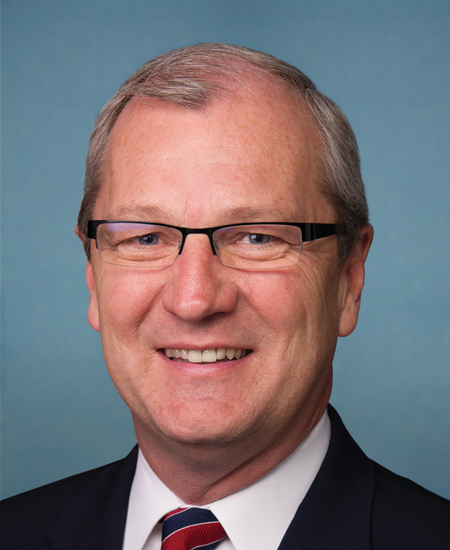
“This is a major victory for getting back to regular order in the United States Senate,”said U.S. Senator Kevin Cramer (R-ND).“This bill prioritizes the safety of our nation, our highest priority, boosts economic growth, it maintains ourcompetitive edge by prioritizing things that really matter to us in North Dakota. Things like space exploration, domestic energy production, sound land management policies, and of course, critical infrastructure.Itwas a vote that was really important because it helps avert the shutdown potential on January 30th and it reduces discretionary spending and waste. Congress has the Constitutional power of the purse, and we have an obligation to get our work done on behalf of the American people.”
Energy and Water Development
The energy and water development provision accelerates the advancement of commercially viable technologies for the recovery of rare earth elements and critical minerals from North Dakota sources like lignite and supports the study of carbon dioxide in enhancing oil and natural gas production in shale formations. The bill reduces wasteful spending on intermittent technologies like wind and solar.
The bill provides$10.4 billionto the Army Corps of Engineers (USACE) and fully funds USACE Operation and Management (O&M) activities across all North Dakota locations.
The legislation also includes several provisions Cramer wrote which were included inWRDAof 2024 and 2020. It includes$14.1 millionin Environmental Infrastructure (EI) funding. North Dakota is eligible for EI funding through the 594 Program, which Cramer reauthorized inWRDA2024. The program assists public entities in the state to design and construct water and wastewater infrastructure.
The bill implements the fee retention structure authorized by Cramer’s bipartisanLAKES Act, enacted inWRDA2024. It directs up to 80% of recreation fees to the USACE sites at which they are collected for operations and maintenance. This marks the first time the authority is being implemented through the appropriations process and covers an estimated $67 million in recreation fees for 2026.
It secures$14 millionfor the Coastal Ocean Data System program, which funds the research and development of the benefits of subsurface drainage for flood mitigation and coastal erosion. The study was authorized by Cramer in theWRDAof 2020.
The bill also provides advance payment authority to the USACE for the Fargo–Moorhead Flood Risk Management Project, allowing the early transfer of unutilized federal funds to the Metro Flood Diversion Authority prior to project completion
The bill includes$1.7 billionfor the Bureau of Reclamation and fully funds the Dickinson, Garrison Diversion, and Heart Butte Units of the Pick-Sloan Missouri Basin Program in North Dakota. An additional$75 millionfor rural water is included which can support tribal and non-tribal rural water projects across North Dakota. The Energy and Water Development provisions provide$50 millionfor the Eastern North Dakota Alternate Water Supply Project, which is designed to deliver a bulk water supply to meet municipal and rural water needs of people in the central and eastern parts of the state.
It invests in reliable, affordable baseload energy by allocating$1.785billionfor DOE Office of Nuclear Energy, including$269 millionfor the Advanced Reactor Demonstration Program, and$8.4 billionfor DOE Office of Science, including$35 millionfor the EPSCoR Program. The DOE Fossil Energy Office will receive$720 million:$10 millionfor gas post-combustion capture,$10 millionfor coal and gas pre-combustion capture,$25 millionto support all applications of carbon capture technologies,$75 millionfor Point Source Capture, at least$19 millionfor enhanced oil recovery, and$25 millionfor regional carbon sequestration partnerships.
The bill encourages the Federal Energy Regulatory Commission to evaluate interconnection queue prioritization proposals from transmission providers to expedite adding dispatchable power resources onto the grid.
Interior, Environment, and Related Agencies
The FY26Interior, Environment, and Related Agencies Appropriations Actcuts wasteful funding for the U.S. Environmental Protection Agency (EPA) by 4%. It provides$2.8 billionfor the Clean Water and Drinking Water Revolving Funds and maintains funding for EPA’sSafe Drinking Water ActTechnical Assistance Program at$30.7 million. This program provides critical technical assistance to help small and rural communities operate and maintain public wastewater treatment utilities and comply with federalClean Water Actstandards.
The bill fully funds Payment in Lieu of Taxes (PILT) payments to support the costs associated with maintaining vital community services. PILT payments are made for tax-exempt federal lands administered by Department of Interior bureaus. North Dakota received nearly$2.1 millionin PILT for FY25. It also continues the prohibition of an Endangered Species Act (ESA) listing of sage grouse.
The legislation fully funds agencies to prepare for and respond to wildland fires and continues funding for the U.S. Forest Service Cooperative Fire Assistance for states and volunteers.
It delivers$8.1 billionto the Indian Health Service, which includes funding for staffing new facilities and health care delivery services. Contract support costs (CSC) and tribal lease payments are fully funded and advanced appropriations are maintained.
Further, it authorizes$3.9 billionfor the Bureau of Indian Education and the Bureau of Indian Affairs. This funding supports important public safety and justice services, community and economic development, and probate programs. CSC and tribal lease payments are fully funded.
Commerce, Justice, Science (CJS)
The FY26CJS Appropriations Actfunds federal, state, and local law enforcement. Specifically, it secures$3.9 billionfor the U.S. Marshals Service to detain violent fugitives and illegal immigrants,$2.6 billionto the Drug Enforcement Administration to dismantle Mexican cartels, and$2.6 billionto the U.S. Attorneys’ offices to indict, prosecute, and incarcerate violent criminals. The bill includes provisions funding the Crime Victims Fund, the Community Oriented Policing Services Office, and theViolence Against Women Act.
It maintains$44 millionin funding for the Regional Information Sharing Systems (RISS) Program. North Dakota participates in the RISS program through the Mid-States Organized Crime Information Center, which allows North Dakota law enforcement to access intelligence databases, analytical and research staff, and investigative equipment to help solve crime. This has long been a priority for Cramer, who has worked closely with North Dakota law enforcement, the Bureau, and the state crime lab to strengthen public safety and keep communities safe. While the program is congressionally funded each year, RISS is locally managed.
It includes$466 millionfor the Economic Development Administration (EDA) to support community-based economic revitalization projects. As Ranking Member of the Environment and Public Works Transportation and Infrastructure Subcommittee, Cramer helped reauthorize the EDA in 2024. The reauthorization emphasized investments in hard infrastructure and included specific reforms to better meet the needs of rural communities across North Dakota.
The Commerce, Justice, and Science section preserves key policy riders, including the U.S. Department of Justice Hyde provision, the Tiahrt Amendment, prohibitions on export controls relating to firearms, and the prohibition relating to the U.N. Arms Trade Treaty.
The bill provides resources necessary to support realigning the Federal Bureau of Investigation (FBI) from Washington, D.C. to the field, strengthening the Bureau’s capacity to investigate violent crime, gangs, narcotics, trafficking, and terrorism. The minibus awards$10.6 billionto the FBI to detect, investigate, and prosecute crimes against the U.S. and$15 millionfor necessary expenses related to construction or acquisition of facilities.
It includes$24.4 billionfor the National Aeronautics and Space Administration to fund theArtemisProgram of Record, the International Space Station, and the commercial low earth orbit destinations program. The bill provides nearly$9 billionfor the National Science Foundation to maintain U.S. leadership in scientific research and discovery, $6.2 billionfor the National Oceanic and Atmospheric Administration to fund the National Weather Service and maintain weather satellites, and$1.85 billionfor the National Institute of Standards and Technologyto maintain U.S. dominance in quantum information science and artificial intelligence.
TheCJS Appropriations Actallocates$3.1 billionto the Office of Justice Programs, which supports police and sheriff departments such asByrne Justice Assistance Grants, Comprehensive Addiction and Recovery Actprograms, and DNA and forensics-related activities.
The bill provides$235 millionfor the Bureau of Industry and Security to enforce export controls on the most sensitive U.S. technologies and to conduct Section 232 investigations with respect to national security threats.
Further, thelegislation allocates roughly$1.5 billionfor the Bureau of the Census to support preparations for the 2030 Decennial Census,$562 millionto the Department of Commerce’s International Trade Administration to protect U.S. businesses from unfair competition and promote exports from small and midsized businesses, and$88 millionto the Office of the United States Trade Representative to ensure adequate staffing in trade negotiations.
Tags:Energy and the Environment,Jobs and the Economy,Judiciary & Nominations
d7f65f8e-082d-44d5-9d55-07408db9028eIssued within 24 hours
Other senators' releases published in the day before or after this one.