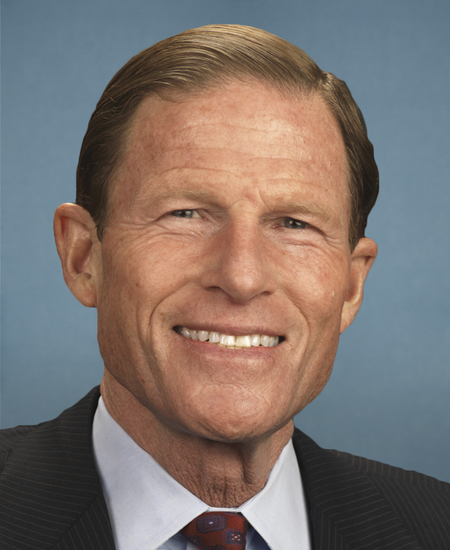
WATCH: In SASC Hearing, Kelly Presses Pentagon on Contradictions in Iran War Justification
Today, during a
Senate Armed Services Committee
hearing, Arizona Senator and Navy combat veteran Mark Kelly pressed Defense Department leadership on the administration’s justification for the ongoing military operation against Iran, demanding straight answers about whether the White House is overselling a threat to the American people to justify another war in the Middle East.
Kelly challenged Under Secretary of Defense for Policy Elbridge Colby on the administration’s claim that Iran posed an imminent threat to the U.S., pointing to the inconsistency with the administration’s own National Defense Strategy (NDS).
Kelly underscored the apparent contradiction between the administration’s public claims and
NDS 2026:
“I’m trying to understand whether you believe Iran can be primarily contained by our regional partners, which is what you wrote a few weeks ago, or is it an imminent threat to the United States as President Trump, Secretary Hegseth and Secretary Rubio have told the American people over the last few days?
Can’t
be both.”
Kelly also pressed Colby on the shifting explanations and the real-world cost already being paid by U.S. service members:
“The last thing we heard from the president on the nuclear weapon before this war, as he calls it, was the Iranian nuclear program was obliterated. That means
completely eliminated. Gone for good.
That’s
what obliterated means.
“And then on Saturday, this administration started a war on that basis, inconsistent with a document that I think
you’re
responsible for. And now, at least six U.S. service members have paid the ultimate price based on this notion that Iran posed an imminent threat to the United States, to the homeland, and to our military. And many more are risking their lives right now to
eliminate
a threat that six weeks ago, when you published that document, you
didn’t
really believe existed.”
Kelly also warned against repeating past mistakes where shifting intelligence claims were used to justify military action:
“I think
it’s
important to say that
we’ve
seen this playbook before.
It’s
what dragged us into a war decades ago. A bloody war
in
Iraq. And, Secretary Colby, I think if you intend to avoid this mistake again,
I think we
got to rethink, about how we need to be
really straight
with the American people about
what’s
going on.”
Sen. Kelly questions Under Secretary Elbridge A. Colby at a SASC hearing.
Click
here
to download a video of Kelly’s questioning. See the transcript below:
Sen. Kelly:
Secretary Colby, is it correct that the administration is justifying the ongoing military operation against Iran,
in
part,
because of the urgent threat posed by Iran to U.S. forces
in
the region and the perceived future threat of Iranian ballistic missiles to the U.S.
homeland? Yes or no?
Secretary Elbridge A. Colby:
From a general perspective, I
wouldn’t
comment on the legal rationale
but certainly from a general strategic point of view,
absolutely.
Kelly:
Absolutely.
So,
your 2026 National Defense Strategy downgraded the Middle East and
didn’t
label it as a core strategic theater on the same level as the Indo-Pacific and the Western Hemisphere. Is that correct?
Colby:
I think what we said that we were
very clear-eyed and specific about the threat posed by Iran and by its missile program and the potential for resumption of its nuclear program after Operation Midnight Hammer, and the need to give the president options working with—
Kelly:
But on the core strategic theater question, it was the Indo-Pacific and the Western Hemisphere
that should be the focus?
Colby:
The overarching focus of the American military, obviously, is the homeland hemisphere and the first island chain
and—
Kelly:
Thank you.
That’s
how I read it.
So,
when that was drafted, did the administration believe, as it claims now, that Iran was close to having a ballistic missile capability that could threaten the homeland?
Colby:
I defer to my intelligence community colleagues on the specifics of that kind of question. But obviously, the administration,
I think I can speak for the
administration as a whole, thinks
that the Iranian missile program is
a very serious
threat to be dealt with.
Kelly:
How about you?
Colby:
Yeah,
I think the Iranian missile threat is
a serious
threat.
Kelly:
So
you believed that Iran was close to having a ballistic missile capability that could range the United States?
Colby:
I think
I’m
talking about the general threat of Iranian ballistic cruise missiles, one-way attack drones that
we’re
seeing right now. Exactly this—
Kelly:
Yeah, but those are different.
Colby:
Yeah. No, I would just defer to,
Senator,
you’re
asking
—
Kelly:
I’m
talking about something else.
I’m
talking about a missile that could—that
exoatmospheric, that could get to the United States.
Colby:
Yeah. Sorry,
I’m
not trying to be evasive.
I’m
saying I think on that question, I would defer to intelligence community colleagues. The threat posed by Iran is not limited to any,
whatever the status of that is, which I think would be the classified
problem.
Kelly:
Yeah,
so
it sounds like you
didn’t
know of anything that could range the United States or close to it.
So,
here’s
the thing. I’m trying to understand whether you believe Iran can be primarily contained by our regional partners, which is what you wrote a few weeks ago, or is it an imminent threat to the United States as President Trump, Secretary Hegseth and Secretary Rubio have told the American people over the last few days?
Can’t
be both.
Colby:
Well, the strategy
I
had in mind the Operation Midnight Hammer, obviously,
in
the past, it was written before Operation Epic Fury, but we
fully
anticipated
providing the president with credible military options to deal with the Iranian threat.
Kelly:
But
here’s
the thing. Mr. Secretary, none of us here heard about Iran having missile technology that was that advanced, being able to range the United States,
or being close to obtaining a nuclear weapon.
I mean, the last thing we heard from the president on the nuclear weapon before this war, as he calls it, was the Iranian nuclear program was obliterated. That means
completely eliminated.
Gone for good.
That’s
what obliterated means. And then on Saturday, this administration started a war on that basis, inconsistent with a document that I think
you’reresponsible for.
And now, at least six U.S. service members have paid the ultimate price based on this notion that Iran posed an imminent threat to the United States, to the homeland,
and to our military.
And many more are risking their lives right now to
eliminate
a threat that six weeks ago, when you published that document,
you
didn’t
really believe existed.
Colby:
Senator, I think
it’s
demonstrably untrue that the
strategy
didn’t
countenance the potential for the president to use military force against Iran.
In
fact,
it’s appeared
several times.
Kelly:
Can you speak into
the microphone?
Colby:
Oh.
I’m
sorry. Senator, I think
it’s
demonstrably untrue that the document
didn’t
countenance the provision of credible military options for the president to use force again.
In fact, it specifically refers to that in
a number of
occasions.
So,
obviously,
I think the military campaign
that’sunderway, Operation Epic Fury—
Kelly:
But would you think that that would be a primary theater that we would be focused on in the document, if that threat, that imminent threat to the homeland,
existed?
Colby:
I
think the document
countenances the employment
by the president of military force
in
globally as part of the strategy.
Kelly:
Well,
I’m
about out of time, but I think
it’s
important to say that
we’ve
seen this playbook before.
It’s
what dragged us into a war decades ago. A bloody war
in
Iraq. And, Secretary Colby, I think if you intend to avoid this mistake again,
I
think we
got to rethink about how we need to be
really straight
with the American people about
what’s
going on.
Thank you.
f303ca29-7759-4d36-9d3a-fdfa512d9da9Issued within 24 hours
Other senators' releases published in the day before or after this one.