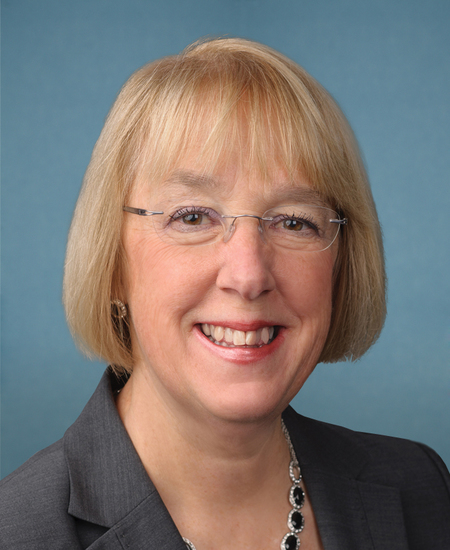
Murray Leads Senate Democrats in Demanding Answers on EPA Surveillance of Medication Abortion Drugs in Drinking Water
Washington, D.C. — Today, U.S. Senator Patty Murray (D-WA), Vice Chair of the Senate Appropriations Committee, led the entire Democratic caucus in a letter to U.S. Environmental Protection Agency (EPA) Administrator Lee Zeldin urging the EPA to remove medication abortion drugs mifepristone and misoprostol from a list of contaminants targeted for surveillance in drinking water in a study that the agency announced in September. In their letter , the lawmakers demand answers on the study from EPA Administrator Lee Zeldin, who previously told the Appropriations Committee that he was “not aware” of any efforts to detect medication abortion in water. The surveillance study comes after a years-long pressure campaign by anti-abortion groups who have urged the EPA to retool environmental protection laws to monitor and ultimately restrict abortion medications that are safe for humans and the environment. “ We write to express our serious concerns with the recent announcement that the Environmental Protection Agency (EPA) plans to take up a surveillance study to track the presence of the medication abortion drugs mifepristone and misoprostol in drinking water, ” the Senators write. “ This action is a stark departure from past EPA practice and serves to further this administration’s attacks on reproductive health care and distracts from your agency’s critical role protecting Americans from known chemical pollutants in our water systems .” The senators note that mifepristone and misoprostol have been deemed safe for patients by the Food and Drug Administration (FDA) for over 25 years, and reaffirmed as safe for the environment as recently as 2025. “ There is no scientific evidence – recent or otherwise – that demonstrates a need for an EPA surveillance study ,” they write. “ While there is no scientific evidence that would support mifepristone and misoprostol as candidates for surveillance by the EPA, there has been a targeted political pressure campaign by anti-abortion activists to urge the agency to use the Safe Drinking Water Act (SDWA) and other environmental authorities to surveil and regulate medication abortion drugs ,” the lawmakers continue. Murray and colleagues also call out Zeldin for stating that he had no knowledge of efforts to target mifepristone and misoprostol in drinking water when the EPA had engaged in conversations with radical anti-abortion groups and encouraged them to pressure the agency to regulate abortion medication. “ It is deeply alarming that this kind of radical, anti-science campaign might have an audience at the EPA ,” write the senators. “ This study is a departure from the EPA’s historic role in protecting our water and air from actual threats to human health and the environment. Instead, this study opens the door to new attacks on safe and accessible reproductive health care, undermining the safety and privacy of patients around the country. ” The lawmakers write that the EPA’s responsibility is to regulate contaminants that harm human health and the environment, not drugs that are well-documented to be safe and effective but disrupt Republican efforts to control women’s bodies. “ Taxpayers fund EPA to protect their health and the environment, not to advance a political campaign against women’s health care ,” they conclude. The senators are also requesting all correspondence between EPA staff and Students for Life since January 20, 2025, and information on the EPA’s justification and process for monitoring medication abortion in the study. Murray was joined by U.S. Senate Democratic Leader Chuck Schumer (D-NY) and U.S. Senators Jeff Merkley (D-OR), Sheldon Whitehouse (D-RI), Angela Alsobrooks (D-MD), Tammy Baldwin (D-WI), Michael Bennet (D-CO), Richard Blumenthal (D-CT), Lisa Blunt Rochester (D-DE), Cory Booker (D-NJ), Maria Cantwell (D-WA), Chris Coons (D-DE), Catherine Cortez Masto (D-NV), Tammy Duckworth (D-IL), Richard Durbin (D-IL), John Fetterman (D-PA), Ruben Gallego (D-AZ), Kirsten Gillibrand (D-NY), Maggie Hassan (D-NH), Martin Heinrich (D-NM), John Hickenlooper (D-CO), Mazie Hirono (D-HI), Tim Kaine (D-VA), Mark Kelly (D-AZ), Andy Kim (D-NJ), Angus King (I-ME), Amy Klobuchar (D-MN), Ben Ray Luján (D-NM), Ed Markey (D-MA), Christopher Murphy (D-CT), Jon Ossoff (D-GA), Alex Padilla (D-CA), Gary Peters (D- MI), Jack Reed (D-RI), Jacky Rosen (D-NV), Bernie Sanders (I-VT), Brian Schatz (D-HI), Adam Schiff (D-CA), Jeanne Shaheen (D-NH), Elissa Slotkin (D-MI), Tina Smith (D-MN), Chris Van Hollen (D-MD), Mark Warner (D-VA), Raphael Warnock (D-GA), Elizabeth Warren (D-MA), Peter Welch (D-VT), and Ron Wyden (D-OR). The full letter is available HERE and below : Dear Administrator Zeldin: We write to express our serious concerns with the recent announcement that the Environmental Protection Agency (EPA) plans to take up a surveillance study to track the presence of the medication abortion drugs mifepristone and misoprostol in drinking water. This action is a stark departure from past EPA practice and serves to further this administration’s attacks on reproductive health care and distracts from your agency’s critical role protecting Americans from known chemical pollutants in our water systems. Mifepristone has been approved by the Food and Drug Administration (FDA) for use in medication abortion in combination with misoprostol since 2000. Decades of scientific research have repeatedly shown that both mifepristone and misoprostol are safe and effective for patients, with mifepristone having been used safely by more than 7.5 million people in the United States since then. Mifepristone’s approval followed a robust scientific review of both the drug’s human safety and environmental health impacts. In 1996, the FDA conducted an Environmental Assessment under the National Environmental Policy Act (NEPA) to assess the potential impacts of mifepristone on the environment. This NEPA assessment resulted in a Finding of No Significant Impact and “concluded that the product can be manufactured, used, and disposed of without any expected adverse environmental effects.” This finding was reaffirmed by the FDA as recently as January 2025. Further, over three decades of scientific research have repeatedly shown that both mifepristone and misoprostol are safe and effective for patients. Misoprostol was first approved by the FDA to treat gastric ulcers in 1988 and has been approved for use in medication abortion in combination with mifepristone since 2000. There is no scientific evidence – recent or otherwise – that demonstrates a need for an EPA surveillance study on misoprostol. While there is no scientific evidence that would support mifepristone and misoprostol as candidates for surveillance by the EPA, there has been a targeted political pressure campaign by anti-abortion activists to urge the agency to use the Safe Drinking Water Act (SDWA) and other environmental authorities to surveil and regulate medication abortion drugs. In January 2025, Politico reported that the anti-abortion rights organization Students for Life was encouraging its supporters to weaponize environmental laws to attack medication abortion. Students for Life leadership described this novel use of the SDWA and other environmental authorities as “using the devil’s own tools against them.” In November 2025, leaders in the EPA’s Office of Water met with the group and encouraged Students for Life to have its members contact the agency and pressure it to regulate abortion medications. When asked about this effort, Students for Life’s head of policy ludicrously stated that “people need to understand that they are likely drinking other people’s abortions” — a categorically false statement. At a Senate Appropriations Committee hearing on May 13, 2026, to review your budget request for Fiscal Year 2027, you were directly asked about these conversations given the House Republican language that was specifically not included in the Fiscal Year 2026 appropriations bill. You replied, “I’m not aware of the agency doing anything with that.” In spite of this assurance, the EPA announced this September that it would, for the first time, include mifepristone and misoprostol and their metabolites in a surveillance study on emerging contaminants. Students for Life celebrated this announcement as victory for its political pressure campaign, saying in an interview that the group is “finally being heard” by the EPA. It is deeply alarming that this kind of radical, anti-science campaign might have an audience at the EPA. This study is a departure from the EPA’s historic role in protecting our water and air from actual threats to human health and the environment. Instead, this study opens the door to new attacks on safe and accessible reproductive health care, undermining the safety and privacy of patients around the country. We are also concerned that the EPA’s new focus on medication abortion drugs pulls resources and attention away from PFAS, pesticides, and other well-documented contaminants that years of research have shown pose an actual threat to human health and the environment. No credible evidence shows mifepristone is a threat to America’s drinking water, but there’s plenty of evidence that anti-abortion groups have been asking EPA to concoct bogus studies that say otherwise. Taxpayers fund EPA to protect their health and the environment, not to advance a political campaign against women’s health care. We strongly urge you to revise this study to remove mifepristone and misoprostol and their metabolites from the list of emerging contaminants targeted for surveillance. Additionally, we request that you provide the following information no later than October 31, 2026: 1. Your agency’s justification for the surveillance of mifepristone and misoprostol and their metabolites in this study, including the statutory, regulatory, and scientific basis for its inclusion. 2. Your agency’s process for determining which pharmaceuticals and chemicals were included in this surveillance study. 3. The anticipated timeline for this study and information on how the study’s results will be shared. 4. How this study may be used in relation to the regulatory process under the SDWA. 5. A full list of all meetings between EPA staff and outside organizations to discuss the potential surveillance or regulation of mifepristone and/or misoprostol and its metabolites, including under the Safe Drinking Water Act or any other statute or regulation enforced by your agency. 6. All correspondence between EPA staff and Students for Life since January 20, 2025. Sincerely, ###
0a18c597-54af-449c-a0b9-9593b4e5a419Issued within 24 hours
Other senators' releases published in the day before or after this one.