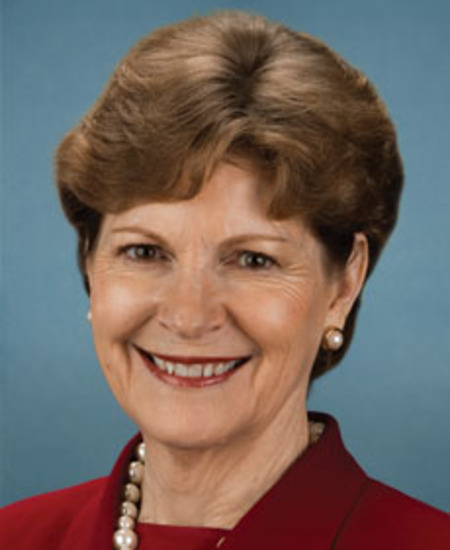
Shaheen Secures Key National Security and New Hampshire Wins in Annual Defense Bill
**A top member of U.S. Senate Armed Services Committee, Shaheen built on her years-long legacy of securing key New Hampshire priorities and policies that address America's top security challenges** **Shaheen supported several key oversight measures to ensure the Administration better consults with Congress, as well as an amendment that would have lowered the topline spending number** (Washington, DC) – U.S. Senator Jeanne Shaheen (D-NH), a top member of the U.S. Senate Armed Services Committee , secured major policies and provisions in the annual Fiscal Year (FY) 2027 National Defense Authorization Act (NDAA) that authorizes national security and military programs for the next fiscal year. The bill was approved by the Senate Armed Services Committee (SASC) by a bipartisan vote. As a senior member of SASC, Senator Shaheen's additions to the defense bill address both America's top national security objectives, while also enhancing New Hampshire’s role in support of our national defense. While Senator Shaheen voted to advance the bill, she supported an amendment led by U.S. Senator Mark Kelly (D-AZ) to lower the topline spending number. Shaheen also voted for an amendment led by Senator Tammy Duckworth (D-IL) that would withhold funding in the FY 27 legislation for any operations against Iran without authorization from Congress. Additionally, Shaheen voted to block an amendment to change the name of the Department of Defense to the Department of War, which she has criticized as being costly and ill-advised. “With President Trump in the White House and Secretary Hegseth leading the Pentagon, the annual defense legislation remains one of the most effective ways for Congress to assert sorely needed oversight, place real guardrails on the Administration and advance policy that improves our national security and the lives of our service members,” said Senator Shaheen. “I’m proud to have worked with my colleagues in a bipartisan way to secure key provisions that will deliver for New Hampshire and strengthen our security.” The Committee-passed bill now moves to the full Senate. Below is a summary of top New Hampshire and national security priorities secured by Shaheen in the FY 2027 NDAA. Reauthorizing the Women, Peace and Security Law Critically, Shaheen secured the reauthorization of the Pentagon’s authorities under the Women, Peace and Security (WPS) law. In 2017, Shaheen led the bipartisan Women, Peace and Security law through Congress to prioritize the promotion of women’s participation in foreign policy and national security efforts, such as conflict prevention, peace negotiations and democratic institutions. Women’s participation in peace negotiations increases the probability by 35 percent of agreements lasting at least 15 years. After Shaheen’s bill passed the Republican-led Senate by unanimous consent and was approved by the Republican-led U.S. House of Representatives, President Trump signed the bipartisan legislation into law in October 2017. Subsequent legislation gave the Pentagon additional authorities to train personnel and conduct security cooperation with partner militaries. Senior military officials see WPS as a low-cost, high-impact approach to maintaining access and influence with key allies and partners globally. The SASC-passed NDAA extends these authorities through 2029. Shaheen slammed Defense Secretary Pete Hegseth for moving to “end” participation in WPS activities last year. Reassuring America’s Allies and Partners Standing with Ukraine Senator Shaheen has consistently worked to ensure the delivery of military, humanitarian and economic support to Ukraine as it fights for its freedom and democracy amid Putin’s war of aggression. The Committee-approved NDAA includes a reauthorization of the Ukraine Security Assistance Initiative (USAI) through 2030, the Department of Defense’s authority to equip the Ukrainian Armed Forces. Critically, the bill also includes guardrails requested by Shaheen to ensure transparency of foreign funds used to match U.S. contributions under USAI. The Senate-passed bill also includes Shaheen-authored amendments that allow the continued sharing of U.S. information, intelligence and imagery to support the Ukrainian Armed Forces in Russian-occupied territory and prohibits funding to implement any activity that recognizes the sovereignty of Russia over the internationally recognized territory of Ukraine. Supporting NATO Allies Senator Shaheen also secured provisions that send a strong message of commitment to North Atlantic Treaty Organization (NATO) Allies and other U.S. partners abroad. The SASC-passed NDAA extends her legislation requiring the Pentagon to consult with Congress before making changes to U.S. military force posture in Europe and on the Korean Peninsula. It also includes a provision that requires the Commander of U.S. European Command to submit his assessment of risks associated with recent troop withdrawals from Germany, Poland and Romania. Her legislation requires the executive branch to consult with Congress and our NATO Allies before any attempt to abdicate the Commander of U.S. European Command’s dual role of Supreme Allied Commander Europe. This comes after Shaheen pressed senior U.S. military officials on the importance of this U.S. responsibility at NATO. An American general has also served as Supreme Allied Commander of NATO Forces in Europe since General Dwight Eisenhower assumed the role following the establishment of the NATO alliance. It also requires the Government Accountability Office to review these withdrawals, including relevant input from military leaders. This legislation comes amidst concerns that Secretary Hegseth is making hasty withdrawals of U.S. troops from Europe, without adequate consultation with the Department of State, U.S. military leadership and NATO Allies. Lebanese Armed Forces Senator Shaheen supported a provision that prioritizes assistance for the Lebanese Armed Forces (LAF) to counter U.S.-designated terrorist organizations in Lebanon. Ensuring the Uninterrupted Care of Americans Affected by Anomalous Health Incidents (AHIs) The Committee-passed NDAA builds on Senator Shaheen's long-standing progress to ensure that all U.S. personnel and their affected family members suffering from anomalous health incidents (AHIs)—also known as “Havana Syndrome” or directed-energy attacks—get the medical attention they deserve. Upon learning of the Pentagon’s plans to reorganize the Cross Functional Team (CFT) charged with ensuring the continued care for Americans impacted by AHIs, Shaheen raised bipartisan concerns with the move. The Committee-passed NDAA clearly breaks out the responsibilities of the CFT, requiring it to report directly to the Secretary of Defense and structuring staffing requirements specific to attribution, care and research. The Shaheen-secured amendment also requires the Government Accountability Office (GAO) to review the CFT’s change in leadership. Additionally, Shaheen secured language that makes clear that, under the HAVANA Act , active duty service members with reported symptoms of anomalous health incidents also qualify for care. Finally, the NDAA authorizes $10 million specifically for research into potential attribution. Protecting Freedom of the Press Amid Pentagon Restrictions Last month, amid the Pentagon’s repeated efforts to restrict the freedom of the press , Senator Shaheen introduced new legislation to preserve the editorial independence of the Stars and Stripes publication. The Committee-passed NDAA incorporates Shaheen’s bill to make clear that Stars and Stripes is independent from the DoD chain of command and must maintain an ombudsman—a non-partial watchdog charged with monitoring the paper’s independence. In April, the Pentagon fired the Stars and Stripes ombudsman Jacqueline Smith, who is alleging that the Pentagon is trying to censor the military paper. Bringing Missing Armed Forces and Civilian Personnel Home Also included in the Committee-approved NDAA is a provision based on Senator Shaheen’s long-time bipartisan legislation with Senator Mike Crapo (R-ID), the Bring Our Heroes Home Act , to eliminate obstacles preventing families and caseworkers from accessing the records needed for recovering America’s POWs and MIA. According to the Defense POW/MIA Accounting Agency, more than 81,500 Americans remain unaccounted for from World War II, Korea, Vietnam, the Cold War, the Gulf Wars and other conflicts. Making Military Facilities More Energy Efficient Shaheen secured a provision in the NDAA that will accelerate improvements to military installations and make them more energy efficient, helping the military save money on energy costs at a time when utility bills are rising. As of 2020, the Department of Defense had about $50 billion in deferred maintenance for the roughly 101,500 buildings on their bases. By allowing energy saving performance contracts to count towards military installations’ Facilities, Sustainment, Restoration and Modernization (FSRM) requirements, the provision will reduce costs and energy use. Performance contracting allows the military to undertake retrofits or other energy saving improvements to facilities and pay for those projects through energy savings over time rather than using appropriated funds up front. This type of public-private partnership significantly expands the amount of work that can be done to reduce annual operating costs, improve building resilience and ensure healthy, safe and functional spaces for Service members, their families and the civilian workforce. Protecting Public Shipyards The FY 2027 Committee-passed NDAA extends protections from Senator Shaheen’s bipartisan Protecting Public Naval Shipyards Act. This provision will exempt all four public shipyards from hiring disruptions and ensure the chaos and confusion that ensued from Secretary Hegseth’s Department of Defense (DoD) civilian hiring freeze does not happen again—protecting thousands of jobs integral to America’s national security at the Portsmouth Naval Shipyard. The Portsmouth Naval Shipyard is a key economic driver in the region, supporting thousands of jobs integral to America’s national security. The Shipyard needs to hire almost 700 workers a year to keep up with maintenance on our Navy’s fast-attack submarine fleet. After calls from Shaheen and Senator Susan Collins (R-ME) , DoD claimed to have exempted the shipyard workforce from the civilian hiring freeze, but issues persist in implementation by the White House. Shaheen’s provision will make this exemption final, take new political litmus tests out of the hiring process for our public shipyards and addresses hiring delays . Strengthening and Maintaining American Air Superiority In April, Shaheen and U.S. Senator Ted Budd (R-NC) introduced a bipartisan package of bills aimed at elevating and preserving the dominance of American military airpower. Shaheen and Budd secured numerous provisions from their legislative package in the Committee-passed FY 27 NDAA, including: In line with Shaheen and Budd’s Airpower Acceleration Act , the FY 27 NDAA authorizes multi-year procurements for F-35A/B/C aircraft and F-15EX aircraft as well as the increase of the Air Force’s aircraft inventory to a minimum of 1,800 aircraft to ensure the continued strategic investment in American air superiority. In line with Shaheen and Budd’s Retention Enhancements for Tactical Aircrew Initiative Act , the FY 27 NDAA increases the maximum amount for aviation bonuses to retain mid-career Air Force aviators. The Committee-passed bill also includes a provision to enhance the Air Force rated officer retention demonstration program by increasing flexibility of assignments, status and location. Modeled after Shaheen and Budd’s Fighter Aircrew Career Flexibility Act , the FY 27 NDAA establishes a program to permit a one-time career intermission for fighter pilots and weapons systems officers to reduce the number of fighter aircrew separating from active duty. Last year, Senator Shaheen secured a similar provision for the National Guard to help retain quality commissioned and warrant officers and maintain increased levels of personnel readiness. Last month, Shaheen and Budd co-authored an op-ed in the Wall Street Journal arguing that there is an urgent need to strengthen American military airpower in light of efforts China has made to expand its military industrial base, which are outpacing U.S. efforts. Ensuring the Safety of Afghans at Camp As Sayliyah Shaheen secured an amendment that would prohibit the transfer of Afghans at Camp As Sayliyah back to Afghanistan or to a third country, unless Congress is first briefed. The United States is responsible for the safety of roughly 1,100 Afghans held at Camp As Sayliyah in Qatar who were brought there with the intention of safely and legally providing a pathway to the United States. With the Trump Administration’s change in policy regarding refugees, roughly 800 of these individuals who were otherwise eligible to be resettled in the U.S. have been stranded in Qatar. As the Trump Administration seeks an alternative, their enduring safety must be prioritized. Providing resettlement for Afghans who risked their lives in support of the United States is clearly in the national interest, as betraying our promises could make it harder to ask future partners to fight and serve alongside the U.S. Investing in New Hampshire’s National Security Workforce Portsmouth Naval Shipyard Senator Shaheen built on her long legacy of support for New England’s shipbuilding industry and workforce, including through authorizing funding and workforce development for the Portsmouth Naval Shipyard. The Committee-approved NDAA includes full authorization for the Shipyard Infrastructure Optimization Program (SIOP) investments at the Portsmouth Naval Shipyard, which will expand the Shipyard’s capacity to maintain America’s fast-attack submarine fleet. As a member of the U.S. Senate Appropriations and Armed Services Committees, Senator Shaheen helped secure this funding beginning in the fiscal year 2019 funding legislation, which she has continued in ensuing years. Shaheen also helped to authorize funding for increased reliability, resiliency and capacity to the existing electric and water utility systems primarily responsible for the nuclear support facilities at the Portsmouth Naval Shipyard. In addition, the bill reauthorizes funding for Virginia-class submarines, which are repaired at the Portsmouth Naval Shipyard. Shaheen is a steadfast supporter of the Virginia-class program and is a fierce advocate for Shipyard priorities. Shaheen also supported language to provide multi-year funding for SIOP-related Facilities, Sustainment, Modernization and Restoration (FSRM) funds to support PNSY. FSRM funds often expire at the end of the fiscal year due to under-utilization by the military services, particularly given new requirements that put a floor on service budgets for FSRM. At public shipyards, the Shipyard Infrastructure Optimization Program (SIOP) is a generational overhaul of our nation’s public shipyard infrastructure to meet increased maintenance demand by the Navy. New Hampshire National Guard As co-chair of the bipartisan U.S. Senate National Guard Caucus, Shaheen has long advocated on behalf of National Guard members. To strengthen the NH National Guard’s ability to protect and aid New Hampshire in times of crisis, Shaheen secured a provision authorizing $4 million for the construction of a new, state-of-the-art Readiness Center to support the New Hampshire National Guard in Newington, New Hampshire. The bill also authorizes increased manning for the Air National Guard and includes a provision from Shaheen that requires DoD to adhere to its manning agreement with the New Hampshire Air National Guard’s 157th Air Refueling Wing (ARW), stationed at Pease Air National Guard Base in Newington, NH. The 157 th ARW flies the first fully operational fleet of KC-46 Refueling Tankers which are crucial to the U.S. military’s force projection and the success of its military operations. Shaheen has strongly supported the New Hampshire National Guard and will continue to fight to ensure they have the resources they need as their fight to preserve our freedom. Support for Small Businesses The committee-passed NDAA establishes a Cyber Security Model Certification Assessment grant program to award one-time grants of up to $100,000 to eligible small businesses and nontraditional defense contractors seeking CMMC level 2 certification. This will support small businesses across the country, including nearly 840 in New Hampshire, meet certification requirements to contract with the Pentagon. Defending and Strengthening Support for America’s Service Members and Their Families Addressing Service Members and Military Families’ Quality of Life: With Shaheen’s support, the FY 27 NDAA authorizes a 3.6 percent pay raise for all service members. Shaheen also helped secure the inclusion of provisions to help military families more easily access quality, affordable child care and to strengthen recruitment and retention of child care providers. The Committee-approved FY 2027 NDAA expands eligibility for child care providers using the DoD’s fee assistance program, requires the Department to collect comprehensive data on military child care waitlists and how the availability of child care impacts the readiness of the Armed Forces and authorizes a pilot program to increase recruitment and retention of DoD Child Care Development Center providers by allowing them access to on-base benefits in line with what other DoD civilians receive. The provisions are based on bipartisan legislation Shaheen co-leads with Senator Joni Ernst (R-IA), the Helping Ensure Reliable Opportunities (HERO) in Child Care for Military Families Act, to help servicemembers access child care by adding capacity to the sector. To help service members and their families navigate the nation’s housing affordability crisis, Shaheen secured an amendment in the NDAA requiring DoD to offer housing counseling to service members who are either transitioning to civilian life or purchasing a home. Service members have unique housing needs and the provision would ensure both current and future homebuyers receive tailored advice and resources to prevent foreclosure, provide mortgage counseling and advice to renters. To better protect survivors of intimate partner violence, the Committee-approved NDAA r equires the Department to notify survivors when any Military Protective Order (MPO) for sexual assault or domestic violence is issued, modified or terminated. Current law does not require DoD to notify survivors in all cases when there are changes to an MPO. Shaheen’s amendment would ensure that survivors are fully apprised of changes, increasing transparency and accountability in the MPO process. Shaheen has championed efforts in the Senate to respond to and address sexual assault in the military. In the FY 26 NDAA she secured requirements to improve sexual assault prevention and response (SAPR) training in the National Guard. Supporting Next Generation of Service Members The NDAA includes Shaheen-led provisions to help recruit a new generation of service members, including an amendment that would allow for increased tuition assistance payments for off-duty training or education for members of the armed services. This would support the more than 800 students at New Hampshire public universities who are service-connected and benefit from DoD tuition assistance. Shaheen also secured language encouraging the services to review their policies and practices on conferral of undergraduate degrees to cadets and midshipmen who are medically disqualified in their final year. This builds on her bipartisan legislation with Senator Rounds, the Defense Workforce Integration Act, which helps individuals who want to serve their country but are disqualified from military service for medical reasons transition into federal civilian roles within the Department of Defense. Confronting the Challenges Posed by PFAS Contamination: Shaheen also secured adoption of an amendment to help DoD better respond to per- and poly-fluoroalkyl substances (PFAS) contamination by clarifying that DoD can use innovative technologies for destroying PFAS. It also directs the Department to report on the steps needed to update PFAS Destruction and Disposal Guidance to incorporate these verification requirements as a condition of any future PFAS destruction or disposal contract or authorization. Shaheen also supported an amendment to require a Government Accountability Office (GAO) evaluation of DoD’s current contracting process as it relates to PFAS cleanup at DoD military installations that identifies challenges to the timely award of contracts and provides recommendations for increasing the efficiency and effectiveness of this process. This study would direct GAO to identify barriers to more efficient contracting and provide recommendations on how to facilitate this process. Additionally, the Committee-passed FY 27 NDAA includes an amendment that requires DoD to initiate PFAS interim remediation at no fewer than 50 of the sites that have seen delays within the next two years. In September of last year, DoD released new timelines for cleanup efforts at PFAS-contaminated military installations that were backdated to March 2025, raising concerns about transparency and delaying work at hundreds of sites, including some in New Hampshire. The Committee-passed NDAA requires DoD to create a public dashboard to track PFAS remediation efforts and proactively provide notice to local communities, including Restoration Advisory Boards, when there are updates regarding the status of PFAS response actions or timeline changes for the completion of those actions. Senator Shaheen sent a letter to the Department in November of last year raising concerns about these timeline delays and urging speed and transparency in the remediation process. Shaheen has worked for more than a decade to hold the Department of Defense responsible for remediation of PFAS contamination at military bases and ensure transparency for affected communities. Shaheen spearheaded the first nationwide PFAS health impact study conducted by the Centers for Disease Control and Prevention (CDC)/Agency for Toxic Substances and Disease Registry (ATSDR) that is in its final stages. Shaheen leads efforts in Congress to uncover the potential health effects related to PFAS contamination. Because of her efforts, Pease Air National Guard Base served as a model site for the nationwide study. Asserting Congressional Oversight Senator Shaheen supported a number of oversight measures aimed at ensuring the Administration better consults with Congress about military matters, including: Modifies required congressional notifications on sensitive military operations to include legal authority under which the strike was conducted, name and date of execute orders, more specificity on targeting and indications of civilian harm. Requires congressional notification when officer promotions are delayed and if a 3 or 4-star officer departs their post early. The purpose is to address the purge of senior officials and officers by Secretary Hegseth at the Pentagon. Requires DoD to report annually on the Rules of Engagement, including any changes or violations. This comes as the Trump Administration has continued to deploy the U.S. military domestically and the President refuses to rule out using American troops to intimidate voters at polling locations. Bans insider trading on prediction markets for DoD personnel. Multiple news reports around the Iran conflict note elected and government officials at all levels are privy to confidential information that could appear on a prediction market. ###
0b4f4c77-d5b0-42d2-a3e4-3708036cdc91Issued within 24 hours
Other senators' releases published in the day before or after this one.