Pressley, Tlaib Reintroduce Bill to Boost Housing Access for Folks with Criminal Records
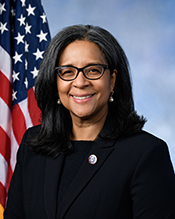
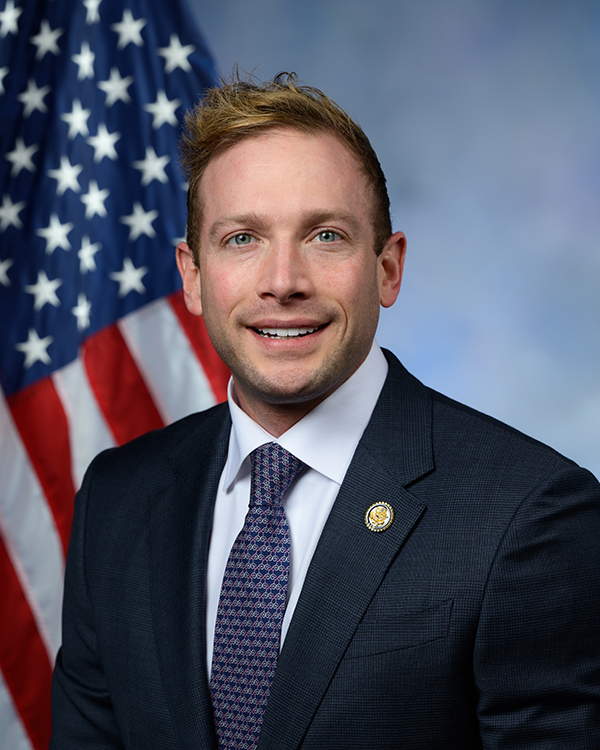
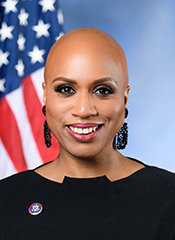
May 1, 2026 Pressley, Tlaib Reintroduce Bill to Boost Housing Access for Folks with Criminal Records Bill Promotes Housing Justice by Removing Barries to Housing for People Formerly Incarcerated, Helps Disrupt Prison-to-Homelessness Pipeline Bill Text | Bill Summary | Hearing Video WASHINGTON – Today, during Fair Housing and Second Chance Month, Congresswoman Ayanna Pressley (MA-07) and Congresswoman Rashida Tlaib (MI-12) reintroduced the Housing for Formerly Incarcerated Reentry and Stable Tenancy (Housing FIRST) Act of 2026, bold legislation to help people who are formerly incarcerated and those with criminal histories access safe and stable housing. The bill would advance housing justice and help disrupt the prison-to-homelessness pipeline by removing unjust barriers to housing and limit tenant screening criteria for criminal records in background checks. The Housing FIRST Act is informed by Rep. Pressley’s People’s Justice Guarantee , her bold vision for transforming the American criminal legal system into one that centers the dignity and humanity of all people. “Safe, affordable housing is fundamental human right, but for too long, discrimination against folks with criminal records has served as a barrier to housing access, economic stability, and public safety,” said Congresswoman Pressley. “Our bill seeks to change that by removing the systemic barriers that have worsened the prison-to-homelessness pipeline, exacerbated mass incarceration, and denied housing to people who need it most. As someone whose own family has been impacted by mass incarceration, I’m proud to reintroduce this bill and grateful to Congresswoman Tlaib and our colleagues for their ongoing partnership.” “From Detroit to Boston, every human being deserves access to safe, affordable housing, including people who were formerly incarcerated,” said Congresswoman Tlaib. “We must prioritize restorative justice, lead with compassion, and recognize the human dignity of our neighbors as we work to end mass incarceration and housing discrimination. This legislation addresses barriers to stable housing returning citizens face every day as they begin to rebuild their lives in our communities.” Congresswoman Pressley discussed the bill in a House Financial Services Committee hearing. Watch it here . Systemic discrimination against people with criminal records in tenant screening is a persistent barrier to housing access, economic stability, and public safety, and contributes to the prison-to-homelessness pipeline. Landlords’ refusal to rent to individuals with a criminal record impacts more than 70 million people in the United States— nearly 1 in 3 adults —with Black and brown folks having the highest rates of housing denials due to disparate treatment by the criminal legal system. Additionally, people who are formerly incarcerated are almost 10 times more likely to be homeless than the general public. The Housing FIRST Act would address these systemic barriers by: Prohibiting a consumer reporting agency from furnishing a consumer report, for tenant screening purposes, that includes information related to an individual’s criminal background; Requiring consumer reporting agencies to disclose to the consumer, upon request, any person from whom the consumer reporting agency received information pertaining to a consumer’s file; Requiring a person who denies rental housing to or takes adverse action against a consumer to provide to the consumer the specific reasons for the denial or adverse action; Creating national standard for criminal record information excluded from consumer reports; Excluding records of convictions of crimes older than seven years from consumer reports for tenant screening purposes; and Codifying existing judicial interpretations that a consumer reporting agency must disclose the identities of people or vendors who gathered information on their behalf. For bill text of the Housing FIRST Act, click here . The Housing First Act is co-sponsored by Representatives Rashida Tlaib, James P. McGovern, Alexandria Ocasio-Cortez, Lateefah Simon, Delia Ramírez, Jan Schakowsky, Hank Johnson, Maxwell Frost, Summer Lee, Nikema Williams, LaMonica McIver, Yvette Clarke, Troy Carter, Robin Kelly, Sydney Kamlager-Dove, Bonnie Watson Coleman, Ilhan Omar, Greg Casar, Jimmy Gomez, and Eleanor Holmes Norton. The legislation is supported by: Justice 4 Housing, National Consumer Law Center, JustLeadershipUSA, Prison Policy Initiative, Center for Popular Democracy, National Housing Law Project, National Council for Incarcerated & Formerly Incarcerated Women and Girls, National Low Income Housing Coalition, and Vera Institute. “ Justice for Housing, Inc supports the reintroduction of the Housing FIRST Act as a critical step toward addressing the structural barriers that limit housing access for justice-involved individuals. Research continues to show that incarceration significantly impacts credit, with Black households affected by incarceration experiencing dramatically lower credit scores—often by more than 200 points—further widening the racial wealth gap. Policies that center housing stability without over-reliance on credit history are essential to advancing equitable access to housing and long-term economic mobility.” “A place to call home is a basic human need for all members of our community, including those with a conviction history. For too long, individuals seeking safe, affordable housing have been locked out by exclusions fueled by background checking. The Housing FIRST Act makes critically important changes to the Fair Credit Reporting Act and limits the way in which an individual’s past can be used to carve them out of housing access. These carve outs and exclusions affect both the impacted housing applicant, as well as their families, and are a direct contributor to the data showing that people reentering are ten times more likely to be homeless than other applicants. The Housing FIRST Act will also bring much needed clarity to how consumer reporting agencies handle the data requests for individuals who have received a clemency or had a record sealed, expunged, or vacated. Stable housing is the bedrock of successful reentry; passing this Act means we are choosing to invest in stronger families and safer neighborhoods rather than perpetual cycles of displacement. We urge Congress to act and to take the next step in turning the page from exclusion to true reintegration.” – JustLeadershipUSA In April 2023, Rep. Pressley joined Justice 4 Housing, New England Culinary Arts Training, and housing advocates to tour their cutting-edge coworking space and discuss the organizations’ transformative work in support of Formerly Incarcerated People. Photos from the visit are available here . As a Member of the Subcommittee on Housing and Insurance of the House Financial Services Committee (FSC), Rep. Pressley has consistently advocated for policies that affirm housing as a human right and center the dignity and humanity of all people, including individuals who are formerly incarcerated. In April 2026, Rep. Pressley introduced the Housing Emergencies Lifeline Program (HELP) Act , much needed legislation to provide support to those facing eviction. In March 2026, Rep. Pressley joined Financial Services Committee Democrats in a comment letter condemning HUD’s proposed mixed-status families rule, which would increase evictions, separate families, and increase homelessness across the country. In December 2025, Rep. Pressley convened local advocates and community partners to sound the alarm on the housing crisis created by Donald Trump . In December 2025, Rep. Pressley underscored the need to support grandfamily and kinship households, which are vital to preventing homelessness and keeping families and communities whole. In November 2025, Rep. Pressley joined House Financial Services Committee Ranking Member Maxine Waters (CA-35) and 52 colleagues in sending a letter to the U.S. Department of Housing and Urban Development (HUD) Secretary Scott Turner , calling on him to rescind a recent HUD decision to slash essential Continuum of Care (CoC) program funding. In November 2025, Rep. Pressley introduced the Appraisal Modernization Act , legislation to promote equity and combat systemic bias in the home appraisal process that has disadvantaged many current and aspiring homeowners—especially homeowners of color. In May 2025, Rep, Pressley, along with Representatives Delia C. Ramirez (IL-03), Rashida Tlaib (MI-12), Jimmy Gomez (CA-34), and Greg Casar (TX-35), reintroduced the Tenants’ Right to Organize Act , legislation to protect the power of tenants, including those with federal vouchers, to organize. In June 2024, Rep. Pressley, along with Representatives Maxine Waters (CA-43) and Rashida Tlaib (MI-12), re-introduced the Tenant Empowerment Act , bold legislation to strengthen HUD tenant protections and provide renters with the tools necessary to improve the quality of their homes. In March 2024, Rep. Pressley, along with Mayor Wu, visited Roxbury to celebrate the $1,000,000 in federal funding she secured to provide emergency childcare support for families experiencing homelessness in the City of Boston. In March 2024, Rep. Pressley, along with Senators Warren and Markey, applauded the final passage of $850,000 in federal community project funding for The Pryde , an affordable housing development for LGBTQ+ seniors in Hyde Park. In March 2024, Rep. Pressley urged Federal Reserve Chairman Jerome Powell to cut interest rates to boost home affordability and construction of affordable housing. In January 2024, Rep. Pressley, during a House Financial Services Committee Hearing, highlighted the growing housing crisis and how appraisal bias and discriminatory tenant screening practices exacerbate the racial wealth and homeownership gaps, especially for Black communities. In January 2024, Rep. Pressley celebrated the $2.4 million in federal funding she secured to support the community-led transformation of the Clarendon Hill housing community , an ethnically, linguistically and economically diverse neighborhood in Somerville. In December 2023, Rep. Pressley requested the Centers for Medicare and Medicaid Services (CMS) to provide data on housing needs for Medicaid beneficiaries and feedback on challenges the agency is having in covering housing support for people requiring home and community-based services (HCBS). In July 2023, Rep. Pressley, along with Chairwoman Rosa DeLauro (CT-03) and Congresswoman Cori Bush (MO-01), reintroduced the Housing Emergencies Lifeline Program (HELP) Act , critical legislation to provide much-needed assistance to those facing eviction amid the ongoing COVID-19 pandemic. In September 2021, Rep. Pressley joined Rep. Bush and Senator Elizabeth Warren (D-MA) in introducing the Keeping Renters Safe Act of 2021 to enact an urgently needed nationwide eviction moratorium. On July 2021, ahead of the expiration of the previous CDC eviction moratorium, Reps. Pressley, Bush, Gomez and their progressive colleagues sent a letter renewing their calls for President Biden and CDC Director Rochelle Walensky to extend the federal eviction moratorium and prevent the historic and deadly wave of evictions that would occur if the government failed to do so. On July 30, 2021, Rep. Pressley joined House Financial Services Committee Chairwoman Maxine Waters (D-CA) in introducing the Protecting Renters from Evictions Act of 2021 , legislation to extend the eviction moratorium through the end of the year. In June 2021, Rep. Pressley, along with Reps. Gomez and Bush, led over 40 of their colleagues on a letter urging President Biden and CDC Director Walensky to extend and strengthen the moratorium for the duration of the public health crisis. In June 2021, Congresswoman Pressley, along with Rep. Ilhan Omar (D-MN), re-introduced the Rent and Mortgage Cancellation Act , a bill to institute a nationwide cancellation of rents and home mortgage payments through the duration of the coronavirus pandemic. On May 18, 2021, Reps. Bush and Pressley sent a letter to the Director of the Centers for Disease Control and Prevention (CDC), calling on the CDC to strengthen and extend the federal moratorium on evictions, ensuring families can remain safely in their homes for the duration of the COVID-19 global health emergency. On July 28, 2020, Rep. Pressley, Rep. DeLauro and Sen. Harris introduced the Housing Emergencies Lifeline Program (HELP) Act to provide much-needed, layered assistance to those facing eviction amid the COVID-19 pandemic. On July 24, 2020, in a Financial Services Committee hearing, Rep. Pressley discussed the unprecedented financial cliff facing millions of renters and homeowners, the economic consequences of millions losing their homes, including the ability to return to work, and why funding for legal representation is so critical. On May 11, 2020, Reps. Tlaib, and Joe Neguse (D-CO) urge House and Senate leadership to include $11.5 billion in funding for Emergency Solutions Grants (ESG) in the next relief package to aid the nation’s homeless population who are experiencing heightened vulnerability during the COVID-19 pandemic. On April 10, 2020, Rep. Pressley urged Congressional leadership to prioritize recurring monthly cash payments to those most at-risk during the COVID-19 crisis. This funding would allow people to cover all their bills, including rent. On April 17, 2020, Reps. Pressley, Ilhan Omar (D-MN) and colleagues introduce the Rent and Mortgage Cancellation Act, a bill to institute a nationwide cancellation of rents and home mortgage payments through the duration of the coronavirus pandemic. On March 23, 2020, Reps. Pressley and Rashida Tlaib (D-MI) introduced the Public Health Emergency Shelter Act of 2020, legislation to provide critical funding to states and local governments responding to the needs of families and individuals experiencing homelessness during the COVID-19 crisis. This legislation was included and passed through the HEROES Act and H.R. 7301, the Emergency Housing Protections and Relief Act of 2020 . On March 19, 2020, Rep. Pressley, along with progressive lawmakers and organizations, introduced the Housing is a Human Right Act to authorize more than $200 billion in federal spending over 10 years for crucial housing infrastructure and reduce homelessness. On March 18, 2020, Reps. Pressley, Katie Porter (D-CA) and Sens. Elizabeth Warren (D-MA), Bernie Sanders (I-VT) and Jeff Merkley (D-OR) wrote to HUD calling for a moratorium on evicting renters during the coronavirus pandemic. In July 2019, Rep. Pressley announced legislation that would prohibit the use of biometric recognition technology in most public and assisted housing units funded by the Department of Housing and Urban Development (HUD), protecting tenants from biased surveillance technology. In November 2019, Rep. Pressley and Rep. Tlaib wrote to HUD blasting the agency for ignoring low-income tenants seeking to save their homes. ### Back to News Next Article Share Facebook Twitter LinkedIn Email
0bd0ab4f-11e7-47b9-9a96-a0fa31ff7176Issued within 24 hours
Other senators' releases published in the day before or after this one.