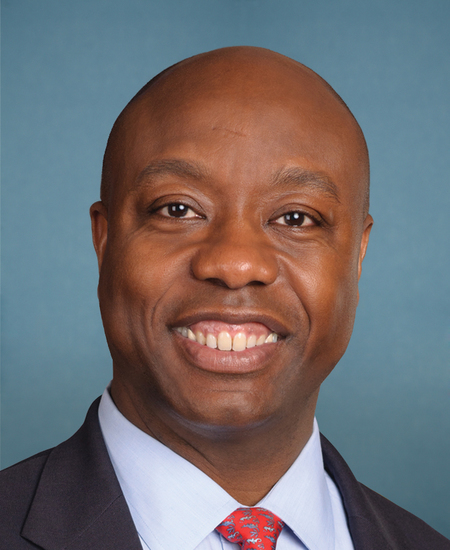
Sen. Scott introduces legislation to level playing field for American manufacturers in foreign-trade zones
WASHINGTON — U.S. Senator Tim Scott (R-S.C.) today introduced the Foreign-Trade Zone Export Enhancement Act of 2026 to allow goods produced in Foreign-Trade Zones (FTZs) to be exported duty-free to Mexico and Canada. This bill levels the playing field for American manufacturers by removing a trade disadvantage that prevents goods produced in a U.S. FTZ from being exported duty-free to Mexico and Canada under the United States-Mexico-Canada Agreement (USMCA), thereby undercutting U.S. competitiveness, including South Carolina companies operating in FTZs. “South Carolina companies operating in Foreign-Trade Zones make significant contributions to the Palmetto State’s economy,” said Sen. Scott. “My bill levels the playing field for our businesses by making sure American manufacturing remains globally competitive, boosting USA-made exports, and supporting American jobs.” Joining Sen. Scott is Sen. Katie Britt (R-Ala.). “I’m proud to support Alabama’s world-class manufacturing sector, including those in our thriving automotive and aerospace industries, which continue to drive growth and strengthen our state’s industrial base. This legislation would help ensure Alabama companies that utilize our FTZs aren’t operating at a global competitive disadvantage. This is a commonsense step Congress can take to strengthen domestic manufacturing and support hardworking Americans,” said Sen. Britt. “For over the last decade, BMW Plant Spartanburg has been the largest exporter by value in the U.S. Since 2014, our 11,000 associates have been responsible for the more than 3 million vehicles exported to nearly 120 global markets. We support Senator Scott’s ‘Foreign-Trade Zone Export Enhancement Act of 2026’ that will continue to sustain and grow U.S. jobs and competitiveness in advance manufacturing,” said Bryan Jacobs, vice president of government and external affairs for BMW Group. “We appreciate Senator Scott’s leadership in addressing a critical issue impacting U.S. manufacturing competitiveness. This legislation helps ensure that products manufactured in South Carolina can be exported to Canada and Mexico without unnecessary cost disadvantages, allowing companies like AFL to compete on a level playing field and continue investing in jobs and innovation here at home,” said Jaxon Lang, president and CEO of AFL. “South Carolina’s foreign-trade zones are a critical tool for the manufacturers who move cargo through the Port of Charleston. Senator Scott’s bill keeps South Carolina competitive, protects jobs, and reinforces the kind of stable trade environment that attracts long-term manufacturing investment,” said Micah Mallace, president and CEO of SC Ports. “U.S. Foreign-Trade Zones were established to strengthen America’s position as a globally competitive place to invest and expand operations,” said Jeff Tafel, president of National Association of Foreign-Trade Zones. “In practice, however, current USMCA implementation has created unintended cost disparities for many U.S. FTZ-based operators, imposing costs that competitors in Canada and Mexico often do not face. At the same time, operators are navigating an increasingly complex trade environment. Senator Scott’s proposal is a necessary step that helps restore balance in how U.S. FTZs are treated under USMCA and reinforces the original intent of the FTZ program to encourage domestic production and investment, support American jobs and ensure companies are not penalized for operating in the U.S.” Companion legislation has been introduced in the House by Representatives Lance Goodman (R-Tex.-5) and Vicente Gonzalez (D-Tex.-34). Background: Congress created the U.S. FTZ program in 1934 to encourage domestic manufacturing and distribution, specifically in cases where foreign countries maintain a tariff advantage. $133 billion of merchandise was exported from U.S. FTZs in 2024, accounting for nearly 7% of total U.S. goods exports that year. Under USMCA, U.S. manufacturers operating within U.S. FTZs are required to pay a duty to the U.S. government on inputs used in products made domestically by American workers that are exported to Canada and Mexico. However, Mexico and Canada have implemented loopholes to avoid this requirement. This creates a significant disadvantage to U.S. FTZs. In South Carolina, FTZs employ roughly 28,000 people and handle $5-10 billion in exports. According to the Annual Report of the Foreign-Trade Zones Board (2024), South Carolina ranks the following: No. 4 state in total exports No. 10 state in merchandise received No. 1 FTZ (warehouse/distribution) in exports: Dorchester County, South Carolina FTZ products were primarily made up of vehicles, vehicle parts, textiles/footwear/leather, and electrical machinery and equipment. Read the full text of the bill here . Read the one-pager here . ###
0d4c6b21-16e6-4b7b-8e43-bf73fcb1cb97Issued within 24 hours
Other senators' releases published in the day before or after this one.