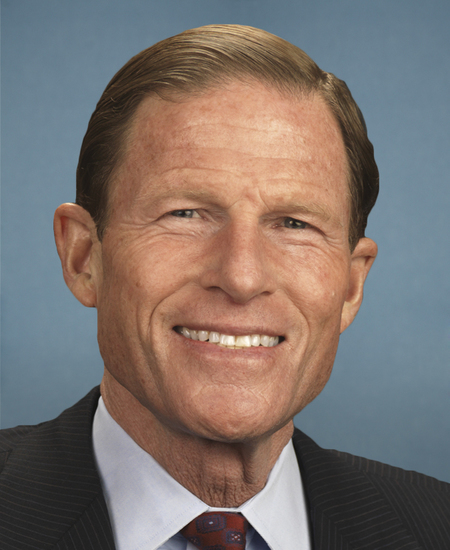
Following Whistleblower Disclosure On Deadly Iran War Drone Attack, Blumenthal Demands Hegseth Answer For Failure To Protect Servicemembers
[WASHINGTON, DC] – After receiving information from a whistleblower who survived the Iranian drone strike on Port Shuaiba, Kuwait that killed six U.S. servicemembers, U.S. Senator Richard Blumenthal (D-CT), Ranking Member of the Permanent Subcommittee on Investigations (PSI), wrote Secretary of Defense Pete Hegseth demanding a briefing and documents that would show “whether senior civilian leaders in the Department ignored known threats and failed to take necessary precautions to protect American servicemembers.” The whistleblower, U.S. Army Reserve Maj. Stephen Ramsbottom, was wounded in the drone attack on Port Shuaiba, Kuwait and shared his experience exclusively with 60 Minutes . “Bolstered by this courageous whistleblower revelation, I am again demanding full disclosure about the Port Shuaiba attack – an accounting of misjudgments by political appointees that likely led to increased vulnerability and greater casualties,” Blumenthal said. “The nation should be grateful, as I am, for their fortitude coming forward. The whistleblower’s firsthand experience shows exactly how President Trump and his inept Secretary of Defense pushed our nation into a senseless, lawless war and put our servicemembers at heightened risk. The families of the six fallen servicemembers, the wounded survivors, and the American people deserve full transparency and accountability. It is time for a reckoning.” “Soldiers were killed and wounded at the Port of Shuaiba, and their families deserve a full and honest accounting of why,” said Andrew P. Bakaj, counsel for Maj. Ramsbottom . “Our client came forward through lawful, protected channels because these questions have not been answered. The Army cannot be expected to investigate decisions made by its own senior leaders. An independent investigation is the only way to get to the truth. Our client does not seek to assign blame. He wants the lessons of March 1 identified now, while the records and witnesses are still available, so that no command post moved out of harm’s way is ever again left as exposed as the Port of Shuaiba.” The whistleblower disclosure provided to Blumenthal includes information about Port Shuaiba’s vulnerability against Iranian drones and alleges that these concerns were raised directly to senior leaders within the Department of Defense at least three times in the week prior to the attack. The installation experienced an Iranian drone strike near Port Shuaiba the day before the deadly attack on March 1, and the whistleblower describes how this warning did not appear to prompt any action, with servicemembers directed to resume operations outside protective bunkers almost immediately. The whistleblower also describes a lack of adequate medical personnel, ambulances, and established casualty evacuation and collection capabilities at Port Shuaiba and raises the possibility that at least one of the six servicemembers killed could have survived had adequate medical support been available. Blumenthal’s letter to Hegseth, which includes the whistleblower’s disclosure, is available here and copied below. Dear Secretary Hegseth, I write regarding reports of failures within the Department of Defense regarding force protection, command and control, and medical preparedness in connection with the March 1, 2026, Iranian drone strike on U.S. forces at Port Shuaiba, Kuwait, which killed six American servicemembers and injured more than 30 others. My office has received information from a whistleblower who survived the attack, and their statement raises serious questions about whether senior civilian leaders in the Department ignored known threats and failed to take necessary precautions to protect American servicemembers. According to the Whistleblower, U.S. forces at Port Shuaiba lacked adequate defenses against Iranian drones despite repeated warnings about the vulnerability of the installation. Public reporting indicates that Port Shuaiba had been identified as a potential Iranian target, and military officials had raised concerns prior to the attack about the vulnerability of the tactical operations center (TOC), which concentrated U.S. personnel in a facility lacking adequate protection against Iranian strikes. [1] The Whistleblower alleges that these concerns were raised directly to senior leaders within the Department at least three times in the week before the hostilities. [2] Additional reporting indicates that alternative plans to relocate personnel to more defensible locations were rejected. [3] Even more alarming, the Whistleblower described how an Iranian drone struck near Port Shuaiba the day before the deadly March 1 attack. [4] This stark warning of the imminent threat to U.S. personnel does not appear to have prompted any action. [5] Servicemembers were directed to resume operations outside protective bunkers on March 1, despite the absence of overhead protection and concerns that the available radar systems could not reliably detect low-flying drones. [6] The fatal strike occurred shortly thereafter. The failures further extend to the immediate medical response. The Whistleblower has described a lack of adequate medical personnel, ambulances, and established casualty evacuation and collection capabilities at Port Shuaiba. [7] Survivors reportedly relied on improvised transportation to evacuate wounded personnel, despite earlier requests for additional medical resources. [8] The Whistleblower has informed my office that they believe one of the six servicemembers killed could have survived had adequate medical support been available. The possibility that inadequate medical preparedness cost American servicemembers their lives demands immediate answers and accountability. Congress has repeatedly sought answers regarding this attack, yet your Department has failed to provide a complete accounting of the decisions that preceded it or the findings of the Army’s investigation. The families of the six fallen servicemembers, the wounded survivors, and the American people deserve transparency and accountability. Accordingly, I am demanding answers to the following questions: What force-protection measures, including counter-unmanned aircraft systems, overhead protection, hardened shelters, and early warning capabilities, were available at Port Shuaiba on March 1, 2026? What additional capabilities were requested between March 1, 2025 and March 1, 2026, by whom, and were any requests denied or left unfulfilled? Were proposals developed to retrograde or relocate personnel from Port Shuaiba to more defensible locations, including facilities in Saudi Arabia? Who reviewed or rejected these proposals, what was the rationale, and were the force-protection risks formally documented and accepted? Were Iranian drones detected or confirmed to have struck Port Shuaiba or its immediate vicinity before the fatal strike on March 1? For each incident, what warning was provided to personnel, and what changes, if any, were made to protective measures or operating procedures? What medical personnel, supplies, ambulances, and casualty evacuation capabilities were available at Port Shuaiba on March 1? Were requests for additional medical support submitted before the attack, and if so, why were those capabilities not provided? Was there an approved mass-casualty response and evacuation plan for Port Shuaiba, and had personnel rehearsed it before March 1? What were the timelines for providing initial medical treatment and evacuating each wounded servicemember, and has the Army assessed whether additional medical resources could have prevented any deaths? The Army reportedly completed its investigation of the attack in June but has yet to release the report. [9] Has the Army indeed completed its investigation into the Port Shuaiba attack? Did it specifically examine the decisions of senior commanders regarding threat warnings, force protection, alternative basing, bunker evacuation, medical preparedness, and command-and-control responsibilities? Please provide the complete investigation, including findings, recommendations, and any supporting documents, as well as the status of any related Inspector General or CENTCOM investigations. Additionally, I request that you provide the Subcommittee a classified briefing on this topic and provide the following documents: The complete AR 15-6 investigation with all classified annexes. All relevant Army Central (ARCENT) operations orders and annexes. Task Force Spartan daily update products from February 15, 2026 to March 10, 2026. All force protection assessments for the Port of Shuaiba. Thank you for your attention to this urgent matter. I request a written response within 14 days of receipt of this letter. -30- [1] CBS News, “Army survivors of deadly attack in Kuwait dispute Pentagon’s account, say unit ‘was unprepared’ to defend itself,” Jonah Kaplan and Michael Kaplan, April 9, 2026, https://www.cbsnews.com/news/iran-war-kuwait-drone-attack-survivors-us-army ; CBS News, “Military questioned use of makeshift office space in Kuwait where U.S. troops were killed,” James LaPorta, March 3, 2026, https://www.cbsnews.com/news/iran-strike-kuwait-officials-question-fortifications . [2] Whistleblower Disclosure, pp. 4, 6. [3] CBS News, “Commander rejected plans to rebase farther from Iran before deadly drone strike, sources say,” Jonah Kaplan, September 24, 2026, https://www.cbsnews.com/news/iran-drone-strike-kuwait-commander-rejected-plans-rebase/ . [4] Whistleblower Disclosure, p.4. [5] Whistleblower Disclosure, p.7. [6] Whistleblower Disclosure, p.7; Associated Press, “Soldiers and Gold Star families press Army leadership after deadly Iranian drone strike.” Jack Brook, Konstantin Toropin, Julie Watson, and Russ Bynum. Oct. 5, 2026, https://apnews.com/article/iran-war-port-shuaiba-attack-soldiers-29f34587c6361261f6e803aff6791e8f . [7] Whistleblower Disclosure, p.8. [8] The Washington Post, “Survivors of Iranian attack that killed 6 U.S. troops say generals ignored warnings,” Tara Copp and Alex Horton, July 12, 2026, https://www.washingtonpost.com/national-security/2026/07/12/survivors-iranian-attack-that-killed-6-us-troops-say-generals-ignored-warnings . [9] AP, “Takeaways from AP report on Iranian attack in Kuwait that killed 6 US soldiers and wounded dozens,” Jack Brook, Konstantin Toropin, Julie Watson, and Russ Bynum, October 5, 2026, https://apnews.com/article/iran-war-port-shuaiba-drone-strike-takeaways-77203e36ceaf49c798e18219f0e3506a .
10af85b6-db17-45f4-9992-d747e8618dd9Issued within 24 hours
Other senators' releases published in the day before or after this one.