After Weak Live Nation-Ticketmaster Antitrust Deal, Klobuchar Introduces Legislation to Ensure Antitrust Settlements Benefit Consumers, Workers, and Small Businesses—Not Special Interests
Legislation is supported by antitrust enforcers from both sides of the aisle
Companion legislation is being introduced in the House by Judiciary Committee Ranking Member Jamie Raskin
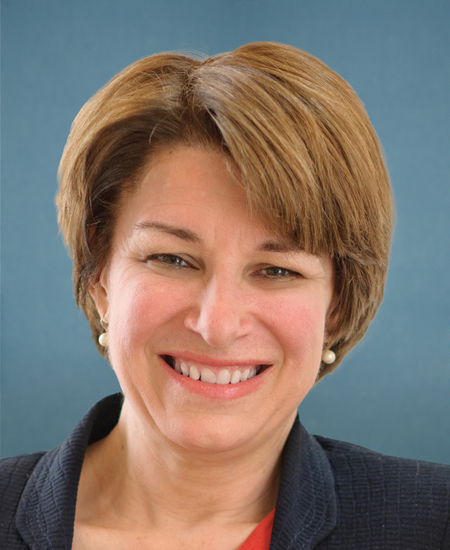
WASHINGTON – Today, Senator Amy Klobuchar introduced the
Antitrust Accountability and Transparency Act
to strengthen review of antitrust settlements and ensure they protect consumers, workers, and small businesses.
“When the government prosecutes antitrust violations, the goal should be to uphold the law, lower prices, and protect consumers and small businesses. In the recent settlement between the Department of Justice and Live Nation, it is clear the American people got the raw end of the deal. This bill—which has support from antitrust enforcers from both sides of the aisle—ensures that courts have the tools to independently review settlements and approve only those that benefit the American people,”
said Klobuchar.
This legislation is cosponsored by Senate Judiciary Ranking Member Dick Durbin and Senators Cory Booker, Mazie Hirono, Richard Blumenthal, Peter Welch, Sheldon Whitehouse, Elizabeth Warren, and Chris Murphy.
Companion legislation is being led in the House by Rep. Jamie Raskin, Ranking Member of the House Judiciary Committee.
“Strengthening our antitrust laws to put consumers and competition first must be a priority,”
said Senator Durbin.
“As the Trump Administration continues to undermine antitrust enforcement, our bill provides much needed reforms to protect our workers and ensure transparency.”
“The enforcement of our antitrust laws should protect consumers, workers, and small businesses, not allow powerful corporations with the best lobbyists to get off with a slap on the wrist. Amid reports of the Trump Administration’s backroom deals and favoritism for the politically connected, it's time to strengthen transparency and oversight to ensure the Department of Justice is pursuing settlements in Americans’ interests,”
said Senator Booker.
“This legislation puts teeth into the review process so that courts, state attorneys general, and the public have a stronger role in scrutinizing settlements rather than merely deferring to a government that is looking out for the well-connected and powerful corporations, not everyday Americans.”
“When there’s a bad merger deal, it’s consumers and small businesses who foot the bill—facing higher prices and fewer choices as a result,”
said Senator Welch
. “Any backdoor corporate settlement needs to face real scrutiny before it’s allowed to move forward. We need stronger antitrust laws that protect hardworking families.”
“Robust antitrust enforcement is critical to preventing massive corporations from further stacking the deck against working people and small businesses. For too long, these mega corporations have been allowed to consolidate market power without legally required public-input. By increasing transparency in merger settlements and creating stronger review processes for antitrust cases, the Antitrust Accountability and Transparency Act will help ensure antitrust laws are actually enforced as Congress intended to protect consumers,”
said
Senator Hirono.
“Under Donald Trump, antitrust enforcement has become a growing cesspool of corruption. Giant mergers look like the newest way for Donald Trump to play political favorites while slashing choices and jacking up prices for Americans. This bill will protect consumers and workers by making sure the government doesn’t let giant companies like Ticketmaster or HPE off the hook based on influence-peddling,”
said Senator Warren.
“This bill helps safeguard the integrity of antitrust enforcement, so often sacrificed under Trump. It gives consumers, workers and small businesses a voice and place in antitrust discussions, so their interests aren’t eclipsed by big corporations. The Trump Administration has corruptly favored businesses that serve the President’s interests over proper enforcement of antitrust laws—leading to higher prices for consumers and lower wages for workers, all in the interest of political favors and patronage. The Antitrust Accountability and Transparency Act empowers courts to ensure settlements are consistent with the purpose of antitrust laws—lowering prices, increasing choice, and protecting workers,”
said Senator Blumenthal.
“The Antitrust Accountability and Transparency Act restores the idea that antitrust enforcement must serve the people—not conglomerates and special interests with Beltway lobbyists. When evaluating mergers and settlements, the Trump Administration has sidelined independent expertise and cut backroom deals that will hurt consumers, workers, and small businesses. This bill helps guarantee that antitrust settlements will advance the core mission of our laws: to promote healthy competition, lower prices, foster innovation and support American workers and our democracy. I’m proud to lead this legislation with Senator Klobuchar to renew integrity, transparency, and public trust and purpose in the enforcement of our antitrust laws,”
said Rep. Raskin.
“These amendments make clear that courts have both the authority and the obligation to do more than rubber-stamp government settlements. Antitrust violations should not end in weak settlements that leave the public holding the bag,"
said Jonathan Kanter, former Assistant Attorney General for Antitrust.
“These proposals are welcome additions to strengthen judicial review of merger settlements and ensure voluntary dismissals are not used to circumvent review,” said
Roger Alford, former
Principal Deputy Assistant Attorney General
for Antitrust.
“The Tunney Act intended to ensure that antitrust enforcement was merits-based. Recent developments suggest that the sunlight it demanded could be easily evaded. It’s time for an update to protect the rule of law. This bill does just that,”
said Bill Baer, former Assistant Attorney General for Antitrust.
Recently, the Justice Department, over the objection of its own Antitrust Division, settled a merger in enterprise networking markets only a few days before trial. The settlement led to the firing of two antitrust officials. One of those officials, Roger Alford, warned that the Administration is engaged in a “pay-to-play approach to antitrust enforcement” and that “the Department of Justice is now overwhelmed with lobbyists with little antitrust expertise going above the Antitrust Division leadership seeking special favors.”
Notably, even President Trump’s own Assistant Attorney General for Antitrust Gail Slater was ousted, reportedly in part, because of her resistance to inappropriate pressure by Justice Department leadership over antitrust matters, including the case against Live Nation-Ticketmaster, which was recently settled mid-trial without the knowledge of the lawyers trying the case in court.
These controversies highlight the need to empower courts to ensure settlements are consistent with the antitrust laws’ purpose of lowering prices, increasing choice, and protecting workers.
The
Antitrust Accountability and Transparency Act
protects consumers, workers, and the integrity of antitrust enforcement by making the following reforms to the Tunney Act:
Apply Review to the Federal Trade Commission.
Currently, the Tunney Act applies only to the Justice Department. This made sense when the Federal Trade Commission (FTC) was led by a truly bipartisan, independent Commission with removal protections. But with the firing of FTC commissioners, the time is ripe to extend Tunney Act review to the FTC;
Bolster disclosure requirements.
The Act requires (1) the government to explain how the proposed settlement remedies antitrust issues; (2) the government to disclose previous settlement offers and the process for reviewing those offers; (3) the disclosure of side-deals not included in the four corners of a consent decree; and (4) the parties to disclose all communications related to the settlement.
Hold-Separate Provisions.
Currently, after a settlement courts may move forward with a merger by combining assets before courts finish reviewing a settlement. Once this occurs, courts are frequently reluctant to order parties to “unscramble an egg” even if a settlement is problematic because doing so is costly and disruptive. To remedy this without creating undue delays for businesses, the Act creates a hold-separate requirement for up to 90 days to allow the court to review public comments and government responses. A court may allow the hold-separate period to lapse or, upon showing the settlement may pose problems, extend the hold-separate order as necessary.
Strengthen Court Review.
In addition to the public interest standard, the Act also requires courts to ensure the settlement terms (1) do not pose a material risk of allowing a merger or other business conduct to continue that threatens to violate the antitrust laws; and (2) are reasonably related to the antitrust concerns, preventing the government from using antitrust as leverage in others, unrelated matters. Courts are also required to base their decisions on reasoned analysis and evidence, and need not defer to the government.
Empower State Attorneys General.
The bill empowers state attorneys general by allowing them to intervene in Tunney Act hearings as a matter of right rather than spending their limited resources fighting to have a court even consider their perspective.
Voluntary Dismissals.
Currently, there is no review process for voluntary dismissals. Where the federal government chooses to voluntarily dismiss a case (rather than settling), the Act creates a process by which state attorneys general can step into the shoes of the federal government and continue the case.
The bill is endorsed by Jonathan Kanter (former Assistant Attorney General for Antitrust), Bill Baer (former Assistant Attorney General for Antitrust), Roger Alford (Former Principal Deputy Assistant Attorney General for Antitrust); Tim Wu (Former White House as special assistant to the president for technology and competition policy) Randy Stutz (President of the American Antitrust Institute), Bill Kovacic (former Republican Chair of the FTC), Gene Kimmelman (former Deputy Assistant Attorney General for Antitrust), John Newman (Former Deputy Director, Federal Trade Commission), Professor Darren Bush, Public Knowledge, Open Markets Institute, and the American Economic Liberties Project.
Senator Klobuchar has long led efforts to strengthen America’s antitrust laws and support enforcement.
She leads the
Competition and Antitrust Law Enforcement Reform Act
to give federal enforcers the resources they need to do their jobs, strengthen prohibitions on anticompetitive conduct and mergers, and make additional reforms to improve enforcement.
In
January 2023
, Klobuchar and Senator Mike Lee (R-UT) organized a Senate Judiciary Committee hearing after reports of significant service failures and delays on Ticketmaster’s website in November left fans unable to purchase concert tickets for Taylor Swift’s new tour.
Following the hearing, in February 2023, Klobuchar
sent evidence
from the hearing to the Department of Justice (DOJ) and called on the DOJ to continue examining Live Nation and Ticketmaster’s anticompetitive conduct.
In April 2023, Klobuchar and Senator Richard Blumenthal (D-CT)
introduced
the
Unlock Ticketing Markets Act
to improve competition in live event ticketing markets by empowering the Federal Trade Commission to prevent the use of excessively long multi-year exclusive contracts that lock out competitors, decrease incentives to innovate new services, and increase costs for fans.
In
December 2023
, Klobuchar and Senator John Cornyn (R-TX) introduced bipartisan
Fan First Act
to address flaws in the live event ticketing system by increasing transparency in ticket sales, protecting consumers from fake or dramatically over priced tickets and holding bad actors who engage in illegal ticket sale practices accountable.
In 2022, Senator Klobuchar’s bipartisan
legislation
to increase resources for antitrust enforcers became law along with legislation she sponsored to allow state enforcers to keep antitrust cases in the courts they choose through the State Antitrust Enforcement Venue Act.
###
16737ed6-c618-4c90-bec2-3e4f97cd4a87Issued within 24 hours
Other senators' releases published in the day before or after this one.