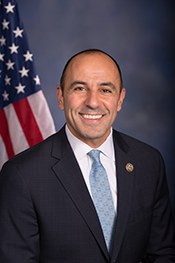
Rep. Panetta Authors and Introduces Bipartisan Legislation to Counter Growing Terrorist Threat in Mali
September 2, 2026 Press Release Washington, D.C. – United States Representative Jimmy Panetta (CA-19) authored and introduced the bipartisan Mali Security Partnership and Counterterrorism Act to address the growing threat posed by al-Qaeda-affiliated terrorist organizations in Mali and strengthen U.S. efforts to counter terrorism and instability across the Sahel. Rep. Joe Wilson (SC-02) is co-leading the legislation. The bill comes as security conditions continue to deteriorate across the region. Mali, Niger, and Burkina Faso face persistent attacks from al-Qaeda- and Islamic State-affiliated terrorist organizations, while military governments in all three countries have increasingly turned away from traditional Western security partnerships and toward Russia. The attempted coup in Niger in August 2026 further underscored the growing security risks posed by political instability, weak governance, and persistent terrorist violence across the interconnected Sahel. The Mali Security Partnership and Counterterrorism Act would establish a clear U.S. strategy for supporting a more secure and stable Mali while examining how developments in Mali affect the broader Sahel and U.S. national security interests. “Mali cannot be viewed in isolation from the broader security challenges facing the Sahel,” said Rep. Panetta. “The recent instability in Niger increases the risks of terrorism and political turmoil that can undermine security and destabilize this interconnected region. The United States must have a comprehensive diplomatic strategy based on a clear understanding of how al-Qaeda-affiliated organizations expand their influence, move resources across borders, and exploit instability so that we can effectively counter their growth and support greater security across the region.” “This bill is a necessary step to address the growing threat posed by al-Qaeda-affiliated groups in Mali and the broader Sahel. Extremist organizations continue to expand their influence and destabilize this region, supported by war criminal Putin and the regime in Tehran. By requiring a comprehensive assessment of terrorist financing, regional security dynamics, and a coordinated U.S. diplomatic strategy, this legislation will strengthen America’s ability to support regional partners and protect U.S. national security interests to secure Peace Through Strength,” said Rep. Wilson. The legislation would direct the Department of State to develop a comprehensive diplomatic strategy to counter the expansion of al-Qaeda and affiliated terrorist organizations in Mali. The strategy would provide Congress with a detailed assessment of the terrorist threat, terrorist financing networks, existing U.S. policy tools, and opportunities to strengthen regional security partnerships. The Mali Security Partnership and Counterterrorism Act would: Assess the terrorist threat: Examine Jama’at Nusrat al-Islam wal-Muslimin’s (JNIM) territorial reach and operational capabilities, the expansion of extremist groups across Mali, and their connections to terrorist networks in Burkina Faso and Niger. The assessment would also examine how terrorist organizations exploit poverty, displacement, ethnic tensions, and governance failures to recruit and expand. Examine terrorist financing: Investigate how terrorist organizations exploit Mali’s gold sector and illicit trade networks to generate revenue, including through extortion, coercive taxation, protection payments, smuggling, and informal taxation. The legislation would also map key transit routes, facilitators, and financial intermediaries supporting extremist organizations. Review existing U.S. policy tools: Evaluate the effectiveness of current sanctions and other U.S. policy tools, identify gaps in U.S. diplomatic engagement and regional coordination, and assess opportunities to strengthen international efforts to disrupt terrorist financing. Develop a comprehensive U.S. diplomatic strategy: Direct the Department of State to identify opportunities to strengthen bilateral and multilateral efforts to counter al-Qaeda’s influence, improve cross-border cooperation among regional partners, address the governance, economic, and security conditions that fuel extremism, and establish measurable benchmarks for evaluating U.S. diplomatic engagement. The legislation would also examine the broader regional security environment, including the expansion of Russian influence in Mali and its impact on Western engagement, governance, transparency, and regional stability. Full text of the bill is available here . Issues : National Security
1ce4be42-1261-4109-988c-311a861b48b6Issued within 24 hours
Other senators' releases published in the day before or after this one.