King Seeks Follow Through from U.S. Army on Weapon Blast Overpressure Efforts
June 05, 2025
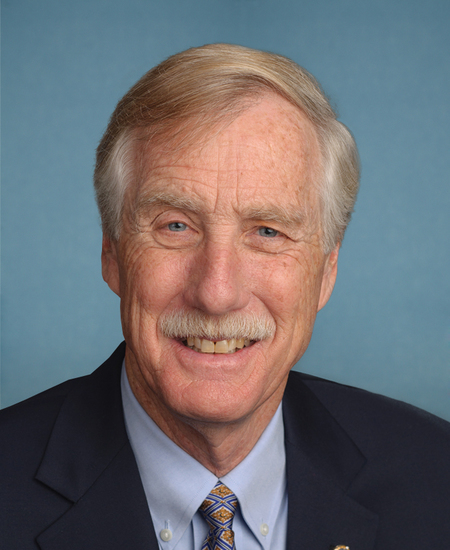
WASHINGTON, D.C.—U.S. Senator Angus King (I-ME), in a hearing of the Senate Armed Services Committee (SASC), spoke with General Randy George, Chief of staff of the Army, and Daniel Driscoll, Secretary of the Army, about the importance of addressing brain injuries in servicemember and veterans caused by repeated exposure to weapon blasts. During the exchange, Senator King received confirmation from both General George and Secretary Driscoll that life-saving initiatives — advocated for by Senator King — have been put into action to better understand and mitigate the effects of blast overpressure. In October 2023, a shooter opened fire on and killed 18 Maine people in Lewiston. The shooter, an Army reservist, worked as an instructor at a hand grenade training range where it is believed he was repeatedly exposed to low-level blasts. Ananalysisof his brain later showed evidence of severe traumatic brain injury.
“In October of 2023, a tragic event occurred in Maine where an army reservist killed 18 people in a matter of minutes. Subsequent to that it was determined that he had substantial brain injury, most likely because he was atrainer in munitions, by blast overpressure and continued exposure. There was a lot of activity at the time in the army and in the Pentagon generally on this issue of blast overpressure and mental health baselining, and I just want to be sure are you aware of that work and I just want to be sure that it isn't lost in the transition from one administration to another. This is a very serious problem. It turns out this one case in Maine was kind of a notorious one. This is something that, throughout the armed services, particularly in the army. General, do you want to address that? Are we staying after this issue,”questioned Senator King.
“We are staying after that. It was about three weeks ago that we had the team up to talk about that, so in operators we’re using one of our very specialized units that do a lot of these very high-end kind of training. It’s, right now, we have implemented the neurological testing, so people going on—,”responded General George.
“You’re doing a baseline,”asked Senator King.
“That's the baseline. We are, you know, changing, again, it's how you train as well, and you kind of alluded to that. Do you need the level of explosives when you’re doing certain kind of training? How can you reduce that? We’re looking at equipment. How do we change, you know, for example, the Kevlar might be helpful against, you know, bullets coming at you, but it does other things when you have concussive events, and so, how do we change that? So, I probably, once a quarter, I will have discussions on this, and theseare ongoing with what we’re doing. And so, we’re continuing on with that—,”replied General George.
“And Senator, I can just echo, this does come up often. We are trying to look at our training. Obviously, we’re choosing to expose soldiers to things and make sure that it is worth the risk,”added Driscoll.
“I appreciate that, and all the right work has been done at the fairly high level. I just want to be sure it gets down to the ground in terms of day-to-day activity that it’s not just reports in thePentagon but that it is direct changes in the way equipment and training and those things, because, as I say, this turns out to be a widespread problem and something we need to address,”finished Senator King.
During just three months in 2023, the Department of Defense (DoD) provided treatment to service members nearly 50,000 times for traumatic brain injuries (TBIs), which are considered the “signature wound” of the Iraq and Afghanistan wars. For troops withmild TBI, “the most important cause of brain injury was the long-term exposure to explosive weapons.”Researchers using data from blast analysis sensors worn by U.S. soldiers in Afghanistan also determined that, “75 percent of the troops’ [blast] exposure was coming from their own weapons.”Despite this, service members continue totrainwith weapons with unsafe blast levels, and sadly, many have of these injuries have led to high levels of mental illness and suicide.
Following the Lewiston shooting, Senator King has been working with his colleagues to increase mental health funding and address brain injuries. Last summer hewrote a letterto the former Department of Defense (DoD) Secretary Lloyd Austin urging the Department to expedite protection of servicemembers from weapon blasts and TBIs. Prior to that letter heurged leaders of the Appropriations Committeeto support the strongest possible funding for the Traumatic Brain Injury and Psychological Health Research program within the DoD Congressionally Directed Medical Research Program (CDRMP). Earlier this year, Senator King introducedbipartisan legislationto study impacts of lower-intensity weapon blasts on veteran mental health. He also was successful in securing aprovisionto protect service members from brain injuries in the Fiscal Year 2025 National Defense Authorization Act (NDAA). In a recent Armed Serviceshearing, Senator King receive commitment from a DoD nominee to maintain focus on addressing brain injuries stemming from weapon blast traumas.
###
1d69f549-95a3-4dc3-b862-c8caadce9818Issued within 24 hours
Other senators' releases published in the day before or after this one.