ICYMI: Rep. Lee Highlights New Law to Expand Health Care Access for Non-English Speakers
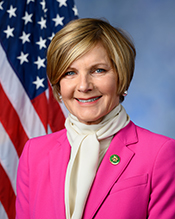
September 2, 2026 Press Release Joined by Health Care Providers and Advocates Image Watch and download video here LAS VEGAS, NV – Congresswoman Susie Lee (NV-03) hosted a roundtable discussing a new, bipartisan law she championed to expand health care access for Nevadans who do not speak English or have limited English proficiency. The Supporting Patient Education and Knowledge (SPEAK) Act was signed into law this year and will improve access to health care information technologies such as telehealth and patient portals. Read more below: Las Vegas Sun : Las Vegas health providers urge federal officials to include frontline voices in language-access task force By Grace da Rocha Local healthcare providers and advocates gathered with U.S. Rep. Susie Lee this week to send a clear message: While new federal legislation is a step in the right direction, the fight for language access in Southern Nevada’s healthcare system is far from over. The roundtable served as a critical feedback loop for the bipartisan Supporting Patient Education and Knowledge (SPEAK) Act. Co-sponsored by Lee, D-Nev., and enacted in February as part of the Consolidated Appropriations Act of 2026, the law directs the U.S. Department of Health and Human Services to establish a task force and issue guidance on best practices for telehealth and patient portals for non-English speakers. But for those on the frontlines in a state where nearly 30% of residents speak a language other than English at home, the legislation is a starting point, not a finish line. “We’re going to make sure that the task force lives up to the goal of the bill,” Lee told the group Thursday. “Healthcare is something that’s so incredibly important and personal, and something that we struggle with here in Southern Nevada, and that’s before we even get to language access, and that’s why this roundtable is so important to me.” The urgency of the conversation is underscored by Nevada’s dismal healthcare rankings. The West Health-Gallup Center for Healthcare in America ranked Nevada 50th out of 51 jurisdictions — 50 states and the District of Columbia — in its 2025 survey. With all 17 of the state’s counties carrying some form of health professional shortage designation, language barriers compound an already perilous environment for patients. Lee met with more than a dozen community leaders, interpreters and providers serving Latino, Asian and African diaspora communities to discuss how the SPEAK Act’s guidance — which covers everything from multilingual information distribution to the use of interpreters — can be practically applied. Dr. Ati Hakimi, a physician at Vegas Direct Primary Care, noted that the legislation is a vital protection for telehealth, which she described as “invaluable” during COVID-era lockdowns and remains essential for Nevada’s rural populations. However, she warned that language gaps directly jeopardize patient health. In many cases, families rely on English-speaking children to translate complex medical instructions, a practice that can lead to dangerous misinterpretations. Dr. William Nham, a family medicine physician at North East Medical Services in Las Vegas, pointed out that language access often ends the moment a patient leaves the clinic. While his office provides interpreters, patients can encounter barriers when trying to coordinate care with outside specialists. The providers also highlighted the financial and logistical hurdles of implementation. Hakimi argued that the cost of language tools should not fall solely on private practices, suggesting that insurance companies should bear that cost as part of comprehensive patient care. Other participants urged the task force to account for nuances in communication, such as the need for interpreters fluent in specific dialects and those trained for high-stress environments such as emergency rooms, where a different approach is needed than for psychological therapy. Lee told the group the task force would evaluate these suggestions and explore solutions ranging from traditional methods to artificial intelligence. For the providers in the room, the priority is ensuring that those actually treating patients have a hand in writing the rules. Telemundo Las Vegas: Noticiero Telemundo Las Vegas @ 5pm Image And we'll also tell you that Congresswoman Susie Lee organized a roundtable discussion today to analyze a new bipartisan law she championed precisely to expand access to healthcare for Nevada residents who don't speak English or have limited English proficiency . The [Supporting Patient Education and Knowledge (SPEAK) Act] was enacted this year and will improve access to information technologies in telemedicine and patient portals in a sector that is crucial to the community . Let's remember that almost 30% of Nevada residents regularly speak a language other than English at home , but local health services currently lack the necessary language skills to provide them with the appropriate care they need. Definitely an important law that we need. Nearly 30% of Nevadans regularly speak a language other than English at home, but local health care services do not reflect appropriate language capabilities to get them the care they need. Meanwhile, every county in Nevada is already designated as a health professional shortage area with inadequate telehealth services, making it difficult to get care to southern Nevadans regardless of the language they speak. Image Image Image ### Issues : Health Care
261371ac-efd2-460a-89e0-d3106b49b476Issued within 24 hours
Other senators' releases published in the day before or after this one.