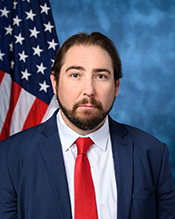
Rep. Crane Introduces Legislation to Help Rural Counties Secure Federal Disaster Assistance
Yesterday, Rep. Eli Crane (R-AZ) introduced the Rural Disaster Fairness Act of 2026 to make it easier for rural counties with limited taxable land to qualify for federal disaster assistance. The bill would require the Federal Emergency Management Agency (FEMA) to cut a key per capita damage threshold in half for any county that can levy property taxes on less than 15 percent of its land. Rural counties where the federal government owns much of the land often suffer significant disaster damage, yet many struggle to secure the help they need. Because federal land is not subject to local property taxes, these counties typically have far fewer resources to fund emergency response and recovery. This narrow tax base also makes it hard for them to maintain and replace aging infrastructure before a disaster strikes. Those older systems can complicate FEMA’s review of a county’s losses. In some cases, the agency has been unable to determine whether damage to pipelines and other critical assets resulted from the event itself or from their age and condition. Part of the problem lies in how FEMA measures the scale of a disaster. When a state requests a major disaster declaration, the agency weighs several factors to assess whether federal aid is warranted. One of these is local impact, which FEMA gauges through the county per capita indicator . This benchmark sets a dollar amount of estimated public assistance damages per resident that a county must meet. The indicator compares losses to population, but it does not account for how much revenue a local government can actually raise. As a result, a disaster can place a serious financial burden on a county with little taxable land yet still fall short of the threshold. The Rural Disaster Fairness Act seeks to address this gap by amending Section 1232 of the FAA Reauthorization Act of 2018 . That section directs FEMA to give greater consideration to severe local impact when evaluating declaration requests. Under Rep. Crane’s legislation, the agency would lower the threshold amount of estimated public assistance damages needed to meet the county per capita indicator by 50 percent. This reduction would apply nationwide to every county where less than 15 percent of its total land area is subject to its real property taxes. The change is designed to more accurately reflect a disaster’s true toll on these counties and strengthen their case for federal relief. “The federal government owns vast swaths of land out West, which limits the tax base for rural counties. In turn, they often have less money to spend on critical infrastructure, mitigation efforts, and response operations. My legislation would reform FEMA’s evaluation process to take into account how much land these jurisdictions are able to tax. This approach would lower a pivotal threshold to give them a better chance of receiving aid in the aftermath of catastrophic events. The plan is rooted in the realities of the district I represent, and I’m hopeful my colleagues will join me in helping rural America recover from floods, wildfires, and other emergencies,” said Rep. Crane .
34b218d8-c943-4d9b-9fc7-9de9254fcf1fIssued within 24 hours
Other senators' releases published in the day before or after this one.