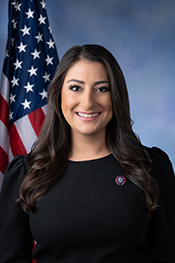
Rep. Sara Jacobs Votes Against NDAA Due to Lack of Constraints on Weaponization and Politicization of Military
June 05, 2026 Rep. Sara Jacobs Votes Against NDAA Due to Lack of Constraints on Weaponization and Politicization of Military Following the egregious topline of $1.15 trillion and a lack of meaningful constraints on the Trump Administration’s illegal and reckless use and threats of the military, Rep. Sara Jacobs voted against the FY 2027 National Defense Authorization Act (NDAA) in the House Armed Services Committee. Rep. Sara Jacobs said: “Millions of Americans can’t afford gas and groceries to get through the week, and yet my colleagues green-lit a $1.15 trillion military budget anyway. True security and strength won’t be created by endlessly building ships and planes that pad defense contractors’ bottom lines and embolden a military-first approach. It will come from investing in our best asset – the American people – which we’ve largely failed to do. “President Trump has treated the military as his own personal enforcer to do his dirty work – whether that’s illegal deployments to American cities, strikes in Iran and off the coast of Venezuela, or conducting domestic law enforcement. He’s even threatened to send troops to polling locations and invade Greenland and Cuba. And yet, this bill fails to enact guardrails on this obvious politicization and weaponization of our military. “While I’m proud of the provisions I secured to expand access to IVF, guarantee transparency on the Minab strike, deliver right to repair, and ensure transparency and accountability of the Pentagon’s use of AI, I can’t in good conscience support a bill that fails to protect the use of our military in such unprecedented times.” Rep. Sara Jacobs secured the following provisions in the FY27 NDAA: Improving Military Quality of Life Expands TRICARE coverage of comprehensive infertility diagnoses and treatments – including in vitro fertilization (IVF) for active-duty service members and their dependents – through Rep. Sara Jacobs’ Bipartisan for Military Families Act Increases the cost-of-living adjustment by lowering the threshold of what’s deemed a high-cost area, so more locations qualify and more service members receive greater, meaningful support Urges the Secretary of Defense to create a military child care pilot program to increase the number of community infant and toddler care providers near select installations in areas with high child care costs or a significant lack of accessible child care Modifies the child care nanny reimbursement process by allowing the Pentagon to pay families directly Excludes the Basic Allowance for Housing (BAH) when calculating a service member’s eligibility to receive the Basic Needs Allowance, allowing more service members and their families access to necessary support Codifies policy for TRICARE to allow Active Duty servicemembers, and their beneficiaries, to receive up to a full year’s supply of contraception. Permanently allows the Secretary of Defense to authorize mid-year temporary adjustments to BAH to address sudden cost-of-living spikes and lowers the threshold from 20% to 15%, allowing for larger adjustments to service members Strengthens oversight of military housing by mandating the reporting of window falls Prohibits private military housing companies from asking military families to sign non-disclosure agreements (NDAs) Requires a chaperone to be present at any sensitive examination performed by an obstetrician-gynecologist at a military medical treatment facility Prohibits military appellate courts from overturning verdicts based on factual sufficiency Requires the Department of Defense to establish a policy banning the display of hate symbols by servicemembers and civilian employees, with guidance, training, and implementation oversight across the military Requires a briefing on how the Department of Defense is implementing the recommendations outlined in the IG report about neglect and mistreatment of military working dogs. Requires a report on the status of the statutorily required Military Justice Review Panel Requires a briefing on how the Department of Defense is implementing the GAO recommendations on military suicide prevention training effectiveness Directs GAO to review how the military services have implemented involuntary separations for non-disciplinary reasons from 2021–2026, with a focus on consistency, transparency, costs, and impacts on service members and force readiness. Upholding Human Rights, Enforcing Domestic and International Laws, and Preventing Conflict Requires the Pentagon to share its investigation with Congress into the strike on the girls’ elementary school in Minab, Iran, which reportedly killed more than 175 students and teachers, and make an unclassified version of the report available to the public Requires a report listing all the DoD authorities subject to the Foreign Assistance Review Authorizes full funding, consistent with FY2026 levels, for institutional capacity building of partner militaries through the Institute for Security Governance (ISG) account and humanitarian support and demining through Overseas Humanitarian, Disaster, and Civic Aid (OHDACA), and the Defense Institute of International Legal Studies (DIILS) Requires a report on the Combatant Commanders’ implementation of their civilian harm mitigation response responsibilities, including personnel Requires a Federally Funded Research and Development Center (FFRDC) to conduct a 20-year assessment of U.S. counterterrorism strategy and policy in Somalia Requires a report on the Pentagon’s strategy to address armed violence in Nigeria Requires a report on the status of Global Fragility Act implementation Ensuring AI Transparency and Accountability Preserves human accountability and responsibility for the use of force involving autonomous and AI-enabled systems by requiring policies to identify the human commanders or operators responsible for authorizing, supervising, and terminating such use of force. Creates a Department-wide AI incident and vulnerability reporting program to report, track, analyze, and remediate AI incidents and vulnerabilities across the development, testing, procurement, fielding, and operation of DoD AI systems, including risks arising from human-machine teaming. Promotes effective use of AI-enabled systems by requiring training to help operators appropriately rely on, question, or override AI outputs. Requires common definitions or categories for AI systems deployed on Department enterprise AI platforms, including systems with agentic capabilities, to support acquisition clarity, testing, authorization, and operational adoption. Requires DoD, in updating policies and guidance for autonomous and AI-enabled systems associated with the use of force, to adhere to existing law requiring human involvement in the nuclear launch process Advancing Improved and Accountable Procurement at DoD Delivers “Right to Repair” for major weapons systems. Contractors must hand over the parts, tools, and technical data service members need to fix their own gear. ### Print Email Share Tweet
3a32c422-2e3c-4548-8a45-7f3d17c20b85Edit history (1 prior version)
This release was edited after publication. Earlier captures are preserved below.
- Captured Jun 8, 2026, 2:08 PM EDT
Show prior body text
June 05, 2026 Rep. Sara Jacobs Votes Against NDAA Due to Lack of Constraints on Weaponization and Politicization of Military Following the egregious topline of $1.15 trillion and a lack of meaningful constraints on the Trump Administration’s illegal and reckless use and threats of the military, Rep. Sara Jacobs voted against the FY 2027 National Defense Authorization Act (NDAA) in the House Armed Services Committee. Rep. Sara Jacobs said: “Millions of Americans can’t afford gas and groceries to get through the week, and yet my colleagues green-lit a $1.15 trillion military budget anyway. True security and strength won’t be created by endlessly building ships and planes that pad defense contractors’ bottom lines and embolden a military-first approach. It will come from investing in our best asset – the American people – which we’ve largely failed to do. “President Trump has treated the military as his own personal enforcer to do his dirty work – whether that’s illegal deployments to American cities, strikes in Iran and off the coast of Venezuela, or conducting domestic law enforcement. He’s even threatened to send troops to polling locations and invade Greenland and Cuba. And yet, this bill fails to enact guardrails on this obvious politicization and weaponization of our military. “While I’m proud of the provisions I secured to expand access to IVF, guarantee transparency on the Minab strike, deliver right to repair, and ensure transparency and accountability of the Pentagon’s use of AI, I can’t in good conscience support a bill that fails to protect the use of our military in such unprecedented times.” Rep. Sara Jacobs secured the following provisions in the FY27 NDAA: Improving Military Quality of Life Expands TRICARE coverage of comprehensive infertility diagnoses and treatments – including in vitro fertilization (IVF) for active-duty service members and their dependents – through Rep. Sara Jacobs’ Bipartisan for Military Families Act Increases the cost-of-living adjustment by lowering the threshold of what’s deemed a high-cost area, so more locations qualify and more service members receive greater, meaningful support Urges the Secretary of Defense to create a military child care pilot program to increase the number of community infant and toddler care providers near select installations in areas with high child care costs or a significant lack of accessible child care Modifies the child care nanny reimbursement process by allowing the Pentagon to pay families directly Excludes the Basic Allowance for Housing (BAH) when calculating a service member’s eligibility to receive the Basic Needs Allowance, allowing more service members and their families access to necessary support Codifies policy for TRICARE to allow Active Duty servicemembers, and their beneficiaries, to receive up to a full year’s supply of contraception. Permanently allows the Secretary of Defense to authorize mid-year temporary adjustments to BAH to address sudden cost-of-living spikes and lowers the threshold from 20% to 15%, allowing for larger adjustments to service members Strengthens oversight of military housing by mandating the reporting of window falls Prohibits private military housing companies from asking military families to sign non-disclosure agreements (NDAs) Requires a chaperone to be present at any sensitive examination performed by an obstetrician-gynecologist at a military medical treatment facility Prohibits military appellate courts from overturning verdicts based on factual sufficiency Requires the Department of Defense to establish a policy banning the display of hate symbols by servicemembers and civilian employees, with guidance, training, and implementation oversight across the military Requires a briefing on how the Department of Defense is implementing the recommendations outlined in the IG report about neglect and mistreatment of military working dogs. Requires a report on the status of the statutorily required Military Justice Review Panel Requires a briefing on how the Department of Defense is implementing the GAO recommendations on military suicide prevention training effectiveness Directs GAO to review how the military services have implemented involuntary separations for non-disciplinary reasons from 2021–2026, with a focus on consistency, transparency, costs, and impacts on service members and force readiness. Upholding Human Rights, Enforcing Domestic and International Laws, and Preventing Conflict Requires the Pentagon to share its investigation with Congress into the strike on the girls’ elementary school in Minab, Iran, which reportedly killed more than 175 students and teachers, and make an unclassified version of the report available to the public Requires a report listing all the DoD authorities subject to the Foreign Assistance Review Authorizes full funding, consistent with FY2026 levels, for institutional capacity building of partner militaries through the Institute for Security Governance (ISG) account and humanitarian support and demining through Overseas Humanitarian, Disaster, and Civic Aid (OHDACA), and the Defense Institute of International Legal Studies (DIILS) Requires a report on the Combatant Commanders’ implementation of their civilian harm mitigation response responsibilities, including personnel Requires a Federally Funded Research and Development Center (FFRDC) to conduct a 20-year assessment of U.S. counterterrorism strategy and policy in Somalia Requires a report on the Pentagon’s strategy to address armed violence in Nigeria Requires a report on the status of Global Fragility Act implementation Ensuring AI Transparency and Accountability Preserves human accountability and responsibility for the use of force involving autonomous and AI-enabled systems by requiring policies to identify the human commanders or operators responsible for authorizing, supervising, and terminating such use of force. Creates a Department-wide AI incident and vulnerability reporting program to report, track, analyze, and remediate AI incidents and vulnerabilities across the development, testing, procurement, fielding, and operation of DoD AI systems, including risks arising from human-machine teaming. Promotes effective use of AI-enabled systems by requiring training to help operators appropriately rely on, question, or override AI outputs. Requires common definitions or categories for AI systems deployed on Department enterprise AI platforms, including systems with agentic capabilities, to support acquisition clarity, testing, authorization, and operational adoption. Requires DoD, in updating policies and guidance for autonomous and AI-enabled systems associated with the use of force, to adhere to existing law requiring human involvement in the nuclear launch process Advancing Improved and Accountable Procurement at DoD Delivers “Right to?Repair” for major weapons systems. Contractors must hand over the parts, tools, and technical data service members need to fix their own gear. ### Print Email Share Tweet
Issued within 24 hours
Other senators' releases published in the day before or after this one.