Rep. Wilson Introduces Glaucoma Vision Act to Expand Screenings and Prevent Vision Loss
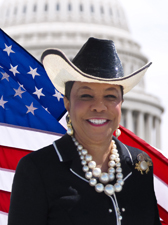
September 23, 2026 Press Release WASHINGTON, D.C. — Congresswoman Frederica S. Wilson (FL-24) introduced the Glaucoma Vision Act of 2026, legislation to expand access to annual glaucoma screenings, bring detection and treatment to underserved communities, and invest in research to protect and restore vision. “Glaucoma can steal a person’s sight before they even know they have it. By the time symptoms appear, the damage may be irreversible,” said Congresswoman Frederica S. Wilson (FL-24). “A screening could change the course of someone’s life, but too many people face gaps in coverage or cannot afford the care they need. My bill would help families detect glaucoma earlier, get treatment sooner, and hold on to the independence that comes with their sight.” Approximately 4.22 million Americans were living with glaucoma in 2022, and about half of people with the disease are unaware they have it. Although Medicare covers screenings for certain people at high risk, federal law does not uniformly require glaucoma screening coverage across Medicaid, private health plans, and the Federal Employees Health Benefits Program. Key Provisions of the Glaucoma Vision Act of 2026 Expands screening coverage across major health plans. The bill would require glaucoma screening coverage for eligible people with private insurance, Medicaid, and Federal Employees Health Benefits coverage. It would also eliminate applicable Medicare Part B cost sharing for screenings furnished to eligible people. The coverage provisions would generally take effect in 2027. Reaches people at higher risk. Eligible individuals include adults age 40 or older who identify as having African, Hispanic/Latino, or Asian ancestry, or who have a clinical risk factor such as diabetes, a family history of glaucoma, elevated eye pressure, myopia, certain blood pressure conditions, or chronic corticosteroid use. Adults age 60 or older would also qualify. Brings screening and treatment into underserved communities. Through the Centers for Disease Control and Prevention’s Vision Health Initiative, the bill would establish competitive grants for free or low-cost screenings and follow-up treatment for uninsured and underinsured people at high risk. Grants could also support community education, mobile screening units, care coordination, and disease surveillance. Projects serving racial and ethnic minority communities and other underserved populations with a high burden of vision loss would receive priority. The bill authorizes $10 million for these activities across fiscal years 2027 and 2028. Advances research on glaucoma and optic nerve damage. The bill would authorize $10 million across fiscal years 2027 and 2028 for National Eye Institute research, including work on optic nerve repair, neuroprotection, gene therapies, and approaches to preserving or restoring vision. “No one should lose their sight because glaucoma went undetected. The Glaucoma Vision Act of 2026 would expand screening coverage, invest in community detection programs, and support vital research to improve treatment and prevent vision loss. The Academy applauds Representative Wilson for introducing this important legislation and advancing eye health for all Americans,” said Michael Repka, MD, MBA, Medical Director for Governmental Affairs, American Academy of Ophthalmology. “The impacts of untreated glaucoma extend beyond the individual, leading to emotional and psychological challenges for patients and their families. It can also diminish independence and contribute to substantial economic costs at both local and national levels through decreased productivity and increased health care demands. Given that there is currently no cure, proactive screening and prompt treatment are essential to reduce incidents of preventable blindness. Congresswoman Wilson’s legislation addresses this critical public health issue by increasing access to early glaucoma screening and investing in public health and research. Put together, these initiatives aim to protect vision, maintain independence, and mitigate the long-term personal and economic effects associated with this silent, irreversible disease. Prevent Blindness applauds Rep. Wilson’s efforts to promote early detection, preserve sight, and improve the health and well-being of our communities,” said Karen Allison, MD, MBA, FACS, Associate Professor of Clinical Ophthalmology at the Flaum Eye Institute, University of Rochester Medical Center; Prevent Blindness Board of Directors member; and Prevent Blindness Public Health & Science Committee Co-Chair. “Protecting someone’s vision protects their ability to work, care for their family, and move through the world on their own terms,” said Congresswoman Frederica S. Wilson (FL-24). “We have the knowledge to catch glaucoma earlier. We must make sure people have the opportunity to act on it.” Cosponsors of this bill are Reps. Joyce Beatty (OH-3), Sanford Bishop (GA-2), Troy Carter (LA-2), Yvette Clarke (NY-9), Emanuel Cleaver (MO-5), Jasmine Crockett (TX-30), Lois Frankel (FL-22), Adelita Grijalva (AZ-7), Jonathan L. Jackson (IL-1), Robin Kelly (IL-2), Lucy McBath (GA-6), Jennifer McClellan (VA-4), LaMonica McIver (NJ-10), Christian D. Menefee (TX-18), Kweisi Mfume (MD-7), Jerrold Nadler (NY-12), Terri Sewell (AL-7), Brad Sherman (CA-32), Shri Thanedar (MI-13), Bennie Thompson (MS-2), Nydia Velázquez (NY-7), Maxine Waters (CA-43), Bonnie Watson Coleman (NJ-12), and Nikema Williams (GA-5), as well as Del. Eleanor Holmes Norton (DC-AL). Organizations supporting this bill are the American Academy of Ophthalmology, American Glaucoma Society, American Society of Cataract and Refractive Surgery, Association for Research in Vision and Ophthalmology, Alliance for Vision Research, Cornea Society, Macula Society, Foundation Fighting Blindness, and Prevent Blindness. Read the full bill text here . Issues : Affordable Health Care Medicare
3c02744f-1294-4c94-8b1b-6c5f6e6afc9eIssued within 24 hours
Other senators' releases published in the day before or after this one.