On the Senate Floor, Warner Unveils Comprehensive AI Agenda Focused on Impact on the Economy, National Security, Competition, and American Workers
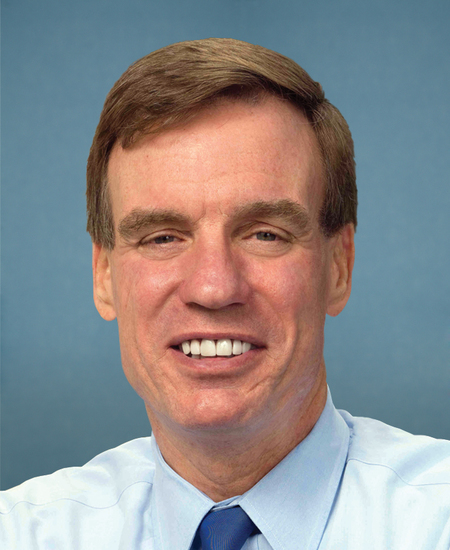
BROADCAST-QUALITY VIDEO OF SEN. WARNER’S SPEECH IS AVAILABLE HERE WASHINGTON – Sen. Mark R. Warner (D-VA), Vice Chairman of the Senate Select Committee on Intelligence, delivered a speech on the Senate floor unveiling his new “ Framework for America’s AI Future ,” a comprehensive legislative agenda to establish the rules of the road for artificial intelligence and ensure the United States leads the world in developing AI responsibly. In his speech today, Sen. Warner detailed how his legislation would address four key priorities: building AI infrastructure responsibly; promoting competition and safety; preparing workers for economic disruption and technological change; and strengthening America’s national security advantage. “AI is already changing how we work, how we learn, how we defend ourselves, how businesses compete, and how Americans live their daily lives,” said Sen. Warner. “The question is no longer whether artificial intelligence will transform our society. The question is whether Congress will help shape that transformation or spend the next decade scrambling to catch up after the fact,” he continued. When warning about the dangers of Congress’s inaction, Sen. Warner said, “Congress made a mistake once before. We largely stood on the sidelines as social media reshaped our politics, our economy, and our children. We waited until the problems became obvious before we began asking whether there should have been rules of the road. We cannot afford to make that same mistake again.” Sen. Warner went on to describe the six new bills he introduced today – as well as other steps he is taking – to guide AI innovation. Sen. Warner’s full remarks as prepared are below: M. President: For much of the last decade, conversations about artificial intelligence were largely conversations about the future. But today, they’re conversations about the present. AI is already changing how we work, how we learn, how we defend ourselves, how businesses compete, and how Americans live their daily lives. AI is writing software, discovering drugs, managing supply chains, and helping defend our networks. It is already reshaping the economy, the workplace, and our national security. The question is no longer whether artificial intelligence will transform our society. The question is whether Congress will help shape that transformation or spend the next decade scrambling to catch up after the fact. Now, I’ve spent a lot of time on this issue over the last several years. Before entering public service, I spent my career in technology. I remain convinced that AI has enormous potential to improve lives, accelerate scientific discovery, strengthen our economy, and help America compete. And I share the concern of many Americans that the impacts of this technology on our country and our culture could be catastrophic. But let’s be honest with ourselves, we’re not putting this genie back in the bottle. And the amount of disruption this technology will bring over the next five years is, frankly, beyond jaw-dropping. Congress made a mistake once before. We largely stood on the sidelines as social media reshaped our politics, our economy, and our children. We waited until the problems became obvious before we began asking whether there should have been rules of the road. We cannot afford to make that same mistake again. That’s why today I’m introducing a legislative agenda built around four simple principles. First, we need to build the infrastructure for America’s AI future responsibly. The AI revolution depends on enormous amounts of physical infrastructure, particularly massive data centers. Those facilities place extraordinary demands on electricity, water, and local communities. Communities should not be asked to shoulder the costs of the AI revolution without knowing what they’re signing up for. They deserve to know exactly what is being built in their backyard, and a full understanding of what these facilities will mean for their electric grid, their water supply, their air quality, and their local infrastructure. My Data Center Tax Accountability and Disclosure Act fixes that problem: it gives the people the facts they need to make decisions about their communities. My bill will ensure transparency about data center electricity and water consumption, backup power generation, and setbacks in residential neighborhoods – all information communities should have when planning and building decisions are being made. And if Congress is going to provide special tax breaks that allow companies to write off the cost of building these facilities far faster than they otherwise could, those subsidies should come with conditions. Companies receiving that taxpayer support should meet strong standards for efficiency, sustainability, and accountability because American leadership in AI cannot come at the expense of the communities that make that leadership possible. Second, we need to promote competition, safety, and consumer trust. If AI is going to become the interface through which Americans shop, bank, communicate, receive medical advice, and navigate the internet, then people need confidence that these systems are working for them – not exploiting them. That means two things. First, we need to preserve competition, especially when it comes to AI agents. We’ve seen what happens when a handful of dominant technology companies are allowed to become gatekeepers. Markets become less competitive, consumers have fewer choices, and innovation suffers. As AI agents increasingly act on our behalf online, Americans, not big tech companies, should be able to decide which services they use and where their data goes. I plan to introduce new legislation to establish clear rights and responsibilities for these emerging AI agents, so they can compete fairly while meeting strong standards for privacy, cybersecurity, and consumer protection. Second, we need meaningful safeguards against abuse. AI has extraordinary potential to improve lives. But it also makes it easier than ever to generate convincing fraud, exploit children, violate people’s privacy, and create harmful content at unprecedented scale. There is absolutely no legitimate use for an AI system capable of generating child sexual abuse material or non-consensual intimate images. None. Companies developing these systems have a responsibility to build effective safeguards into their products – not after harm occurs, but before these systems are released. My legislation would establish a process to verify that AI models cannot generate child sexual abuse material or non-consensual intimate images, prevent the federal government from buying systems that fail those basic safeguards, and give survivors a meaningful path to justice when those protections fail. And as AI-generated content becomes increasingly sophisticated, we also have to protect our financial markets and our democratic institutions from fraud, deception, and manipulation, which is why in the coming weeks I will reintroduce my bipartisan legislation to require financial regulators to address uses of AI-generated content that could disrupt financial markets. If the United States wants to lead the world in artificial intelligence, we can’t simply build the best models – we need to build the most trusted ones. History shows that transformative technologies succeed not only because they are powerful, but because people have confidence using them. Congress has a responsibility to help create that confidence by ensuring there are clear rules of the road before problems become crises. Third, we need to prepare America’s workforce for the economy AI will create. This may ultimately become the defining economic challenge of this new technology. But before we can respond effectively, we have to answer a basic question: What is actually happening to American workers? Right now, the honest answer is that we don’t know nearly enough. Congress has remarkably little visibility into how AI is affecting hiring, wages, productivity, or job displacement across the economy. We’re debating one of the most consequential technological transformations in history with surprisingly little real-time data. That’s why, earlier this Congress, I partnered with Senator Hawley on bipartisan legislation to improve the federal government’s ability to measure AI’s effects on jobs, wages, hiring, and the broader workforce. If AI is changing the labor market, policymakers shouldn’t have to wait years to understand what’s happening. It’s also why Senator Rounds and I introduced bipartisan legislation creating an Economy of the Future Commission to help the country develop a long-term strategy for artificial intelligence and other transformative technologies. These changes won’t happen overnight, and they won’t be confined to one industry. We need a national strategy equal to the scale of the challenge. Because while there is every reason to believe artificial intelligence will create entirely new industries and new jobs over the long run, history tells us that technological revolutions rarely unfold smoothly. The transition can be enormously disruptive. Workers whose skills are no longer in demand don’t experience the benefits of productivity gains immediately. They experience uncertainty. They experience layoffs. They experience the challenge of building a new career while supporting a family. And some of the workers most exposed to this disruption may not be who we’ve traditionally expected. Today, unemployment among recent college graduates has risen to levels that should concern all of us. Many of the occupations most vulnerable to generative AI are the very white-collar, entry-level jobs that have long served as the first rung on the career ladder – jobs in business, finance, marketing, software development, customer support, and other knowledge professions. If those entry-level opportunities begin disappearing faster than new ones are created, we risk leaving an entire generation of young Americans struggling to gain a foothold in the workforce. We cannot simply assume the market will sort that out on its own. That’s why today I’m proposing a National Workforce Transition Fund to help workers navigate this period of technological change. The fund would support worker retraining, portable training accounts, employer redeployment programs, tuition assistance for high-demand careers, better workforce data, and innovative approaches to help workers adapt as AI reshapes the economy. I’m also introducing legislation to strengthen America’s pipeline of homegrown STEM talent by helping universities create accelerated pathways into doctoral programs in critical technologies like artificial intelligence, cybersecurity, semiconductors, and quantum computing. And earlier this year, I introduced the Investing in American Workers Act because we need to rethink the incentives in our tax code. Today, our tax system often makes it easier for companies to invest in machines than in people. That doesn’t make sense in an AI economy. If businesses benefit from the productivity gains AI creates, they should also have a strong incentive to invest in the workers who make those gains possible. The goal is not to stop technological progress. The goal is to make sure the American people have a real opportunity to benefit from it. Finally, I want to talk about artificial intelligence through the lens of national security. From my vantage point as Vice Chairman of the Senate Intelligence Committee, I believe AI is one of the most consequential strategic technologies our country will confront in the coming decade. Artificial intelligence is rapidly becoming foundational to intelligence collection, cybersecurity, military planning, scientific research, and America’s long-term strategic competition with China. It will help analysts process information at a scale no human workforce ever could. It will strengthen our ability to detect cyber intrusions, identify emerging threats, and support our men and women in uniform. Properly developed and secured, AI can become one of America’s greatest strategic advantages. But we would be naïve to believe our adversaries aren’t racing toward the same goal. China has made artificial intelligence a national priority. Russia, Iran, North Korea, and sophisticated criminal organizations are all looking for ways to exploit these technologies for espionage, cyberattacks, influence operations, and intellectual property theft. The same frontier AI models that can accelerate scientific discovery can also help identify cyber vulnerabilities, automate sophisticated cyber operations, lower the barriers to developing dangerous capabilities, or be stolen and repurposed by hostile actors. That’s why we cannot approach frontier AI models the same way we approach an ordinary software update. The most advanced AI systems deserve a higher standard of security before they are widely deployed. My Secure AI Development Act would establish mandatory, secure testing for our most advanced AI models; improve the way government and industry identify and disclose AI-related cybersecurity vulnerabilities; strengthen information sharing between AI developers and the federal government; and establish a voluntary AI safety incident reporting system modeled after the aviation industry, because one of the reasons aviation has become so remarkably safe is that companies are encouraged to report problems, learn from them, and prevent future failures before they become disasters. The legislation would also strengthen protections against efforts by foreign adversaries to steal, compromise, or exploit American-developed AI technologies and supply chains. One lesson I’ve learned over years of overseeing the Intelligence Community is that our greatest national security failures often come when we recognize a threat but fail to act until after a crisis. Artificial intelligence is moving too quickly – and becoming too strategically important – for Congress to take that risk. If America intends to lead the world in artificial intelligence, we must lead not only in capability, but in security. Because maintaining our technological edge isn’t simply about building the most advanced AI systems. It’s about ensuring they remain America’s advantage and never become America’s vulnerability. M. President, throughout our history, America has led the world not simply because we invented new technologies but because we built the institutions, markets, and rules that allowed those technologies to benefit the greatest number of people. Electricity transformed our economy. So did the automobile. So did the airplane. So did the internet. None of those revolutions succeeded because government stood entirely on the sidelines. They succeeded because, over time, we established the rules, the standards, and the public confidence that allowed innovation to flourish. Artificial intelligence must be no different. The choice before Congress is not whether to embrace AI or resist it. That ship has sailed. The choice is whether we will help shape this technology so it reflects American values or whether we will wait until its consequences are impossible to ignore. I believe America can lead the world in artificial intelligence. But leadership means more than developing the most powerful models. It means building the most trusted models. It means ensuring this technology strengthens our economy without leaving workers behind. It means ensuring it enhances our national security without creating new vulnerabilities. It means ensuring the communities hosting this infrastructure share in its benefits, and it means ensuring that innovation serves the American people, not the other way around. That’s what this legislative agenda is about. Not slowing innovation but guiding it. Artificial intelligence will shape the next generation of American prosperity, security, and global leadership whether Congress acts or not. The question is whether Congress will help write the rules of that future or spend the next decade reacting to decisions that have already been made for us. I believe the American people expect us to lead. I hope this Congress will do exactly that. I yield the floor. ###
4d22061f-fecc-4124-9824-55c1721606cfIssued within 24 hours
Other senators' releases published in the day before or after this one.