Daines Urges Colleagues to Support Bipartisan Proposal to Save the Senate
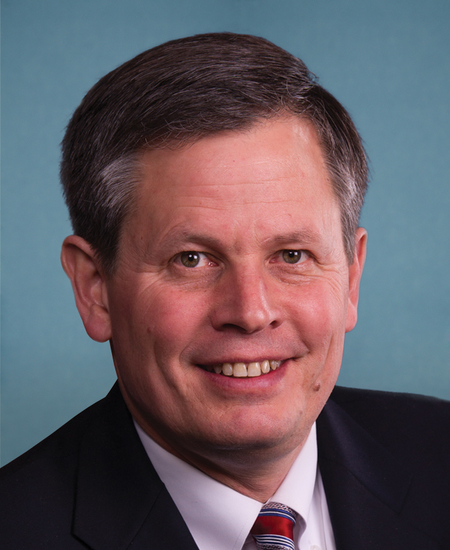
“Change Is In the Air and We Cannot Avoid It, Much Less Ignore It” WASHINGTON, D.C. – U.S. Senator Steve Daines today spoke on the floor of the U.S. Senate about his bipartisan Save the Senate initiative. Read highlights below. Watch the full speech HERE . Excerpts from Daines’ speech are below: Mr. President, “change is in the air and we cannot avoid it, much less ignore it.” Those were the words that my fellow Montanan, then Senate Majority Leader Mike Mansfield, used in 1971 to describe the bipartisan frustration with the growing abuse of the filibuster. Senator Mansfield knew that substantial reforms to the cloture rule were desperately needed, both to prevent a revolt from senators and to protect the power and prestige of this institution. Mansfield feared the Senate could even become “an innocuous House of Lords” that would cede influence to the House of Representatives. Unfortunately, the reforms that the Senate adopted during the 1970s, and since, have failed to safeguard this institution as a deliberative and functional body. And by any fair measure, dysfunction in the Senate has only gotten worse. And this institution has only become weaker in the decades since. …………. We must also be deeply pragmatic and recognize the realities of the modern Senate and the hyper-partisanship that saturates our political discourse. Therefore, to insist on an unattainable ideal of a bygone era would be unwise. But to hold out hope for institutional self-correction is irresponsible. I believe the most responsible course, our last, best hope to Save the Senate, is to realign incentives by rewarding bipartisan deliberation and bringing the Senate back closer to its original practices. …………. It may come as surprise to new members and the American people that the first supermajority cloture rule, adopted in 1917, was meant to help the institution overcome such crippling talking filibusters, not become synonymous with the term filibuster itself. It provided a way to shut off debate with the support of two-thirds of voting senators. We can learn a clear lesson from the development of a cloture mechanism and by the prior efforts, sometimes successful, to limit debate and overcome filibusters. And that is, when obstruction is used to kill a bill rather than improve it, senators in the majority oftentimes get fed up and contemplate decisive action to stop the obstruction. While I believe majorities should exercise restraint in those scenarios, I also believe filibustering senators should do the same and focus on enhancing deliberation, not blatant obstruction. …………. Our plan restores the Senate’s right to amend. For most of my twelve years in the Senate, the right to amend has been a caricature of what it was in generations’ past. In an unfortunate irony, deliberation in the era of cloture and pain-free filibustering is but a fragment of what it once was, and substantive floor amendments are but crumbs. Too often the Senate is a body in the midst of a quorum call, not deliberation…Our proposal seeks to restore the opportunity for votes for a third bucket of amendments: Those that are bipartisan and would make substantive changes to legislation that its sponsors or managers might prefer to exclude but that are germane to the bill and might pass if they can get a vote. These amendments should not be suppressed, especially if they’re bipartisan. And if they create a policy conflict that must be resolved with the House in a formal or informal conference down the road, I say: That’s okay. That’s how regular order and deliberation has worked in the past and should work again. …………. According to Senate scholar Molly Reynolds, there are at least 161 majoritarian exceptions in law. To put it more clearly, on at least 161 occasions, the U.S. Senate has voted to prohibit filibusters on specified topics and to allow related legislation to pass with simple majority support…And you’ll notice that, in the modern Senate, most of these fast-track or privileged majoritarian exceptions are used for overwhelmingly partisan initiatives…My proposal with Senator Merkley encourages the exact opposite. It establishes a majoritarian exception in Senate rules, but only for bipartisan bills. It incentivizes and rewards bipartisan policymaking, empowers committees to go forth and conquer, and brings the Senate back closer to its original design and practice: Debate. Amend. Vote. We are hopeful that these reforms will help lower the temperature in the Senate. And for those of us who think it would be damaging for the Senate to use the nuclear option to pass even more party-line legislation, I would respectfully suggest adopting these reforms—and using them—would reduce the likelihood that either party would take that unwanted action. …………. If this were merely an academic exercise, I would suggest that what’s broken in the Senate is not the concept that a majority of States should still be able to pass a bill, but instead that the deliberative judgment that the Framers envisioned for the Senate has deteriorated. But as I said earlier this isn’t an academic exercise. We must be clear-eyed about the dangers of the politically charged time we live in. And for that reason, I think there is merit to the concern that returning to outright majority rule in the Senate, especially if done through the nuclear option, would do major and lasting harm to the Senate. Worse, it could further divide our citizens and create dangerous instability across our country. Our plan seeks a healthy balance. It encourages the Senate to pass legislation at majority rule wherever bipartisan consensus exists while retaining the cloture process for strictly partisan bills. It’s even possible that bills would be processed and passed with fewer votes than 60 votes—but only if the bills are bipartisan. In short, our plan encourages senators to run toward common ground rather than their own corners. I believe this transformation is urgently needed and would be extremely healthy for this institution. And it is a set of proposals that will encourage bipartisanship in both unified government, when partisan policymaking is most tempting, and in divided government. We of course will be in divided government for at least the next two years, and Senator Merkley and I are convinced these reforms could help the Senate to function better and lead in solving our nation’s pressing challenges for the good of the American people. Bipartisan policymaking will not just be preferable; it will be mandatory. …………. In conclusion, Mr. President, I offer no conjecture on whether Senator Mansfield or Senator Byrd or Senator Hatch would support each of the bipartisan proposals that Senator Merkley and I have put forward, though I think it is quite plausible that they would. But based on their clear misgivings about the pervasive abuse of the filibuster, I am near certain that they would recognize that the Senate is increasingly diminished and that previous reforms have failed to restore this institution as a deliberative body rather than simply an obstructionist body. And I am near certain that they would want members who are now privileged to hold this office to do everything in their power, in a bipartisan way, to get the Senate working again for the American people. That is what Senator Merkley and I are seeking to do with these bold yet reasonable proposals. I urge all of my colleagues to closely review these proposals, and I look forward to continued conversations with them over the next month. For the good of the country, I hope all senators, Republican, Democratic, and Independent alike, can come together to save the Senate, halt its decline, and restore its prestige and effectiveness. Mr. President, change is once again in the air. Now is the time to act. ### Contact: Gabby Wiggins
5834c54b-c9c0-4341-9151-95f7d25343a9Issued within 24 hours
Other senators' releases published in the day before or after this one.