Press Release
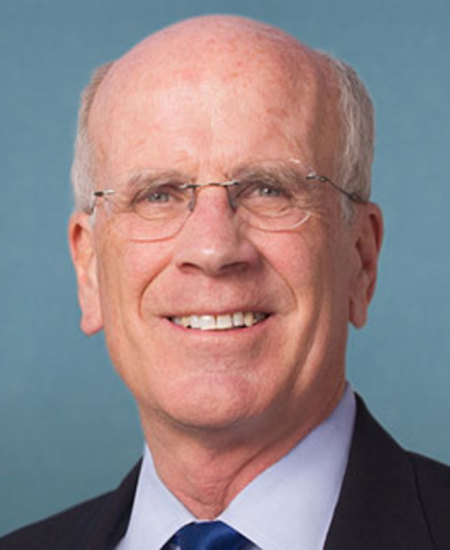
WASHINGTON, D.C .—In a Judiciary subcommittee hearing today, U.S. Senator Peter Welch (D-Vt.) , Ranking Member of the Judiciary Subcommittee on the Constitution , emphasized how the Supreme Court’s recent Louisiana v. Callais decision showcased a high degree of partisanship and disregard for Americans’ voting rights. Ranking Member Welch also highlighted how the Court’s ruling, which will make it harder to prove racial gerrymandering, reflects a greater trend of the highest court’s increasingly far-right politicization. “The Voting Rights Act did not come out of nowhere. It came out of a long history of legislated discrimination. I do believe that Louisiana v. Callais turns back the clock on that hard-won progress. And we’re already seeing states from Louisiana to South Carolina to Tennessee have called for redistricting ahead of midterm elections in six months. Millions of voters will be impacted,” said Senator Welch . “And whether the Supreme Court intended to or not, by blessing partisan gerrymandering on the one hand, while gutting the Voting Rights Act , the Roberts Court has achieved the same outcome as Jim Crow laws in the South had done generations before. It’s removed African American representation on a massive scale. That is fact—that’s not an assertion. That’s a fact.” “Our democracy depends, ultimately, on protecting and preserving the right of individual citizens to pick their politicians, not intensifying the control that politicians have about who the voters are that they will permit to be involved in the election.” Read Senator Welch’s opening statement here and watch his full remarks below : Todd Cox, Associate Director-Counsel at the NAACP Legal Defense and Education Fund, testified on behalf of the Democratic minority. Witnesses for the Republican majority included Edward Greim, Partner at Graves Garrett Greim, and Will Chamberlain, Senior Counsel at Article III Project. Read and watch an excerpt from Ranking Member Welch’s exchange with Mr. Greim, who argued in favor of Callais before the Supreme Court: Sen. Welch: I’m not asking you the lawyer question here. I’m asking you the citizen question. You know in a democracy, there’s a tug of war, and would you dispute my point that when you have the majority in a legislature—and pick your legislature, a Democratic California, a Republican Louisiana—and those legislators, on whatever it is, go in a back room, they go over the maps, they go over the computer projections, and they have one goal. And that is to make certain that the maximum number of Rs or Ds get elected. You’re ok with that? Mr. Greim: As a citizen and as a lawyer, I understand that that’s actually the system that we have. That’s actually what the Constitution says. We want to change that— Sen. Welch: Alright. What’s happened with that is we have a race to the bottom now…We ought to be having a battle over ideas as opposed to picking the voters that we want to vote for us. You have a problem with that? Mr. Greim: My problem is the Constitution assigns— Sen. Welch: Do you have a problem with that? Look: I’m asking as a citizen. We are now in this total race to the bottom where legislators—we’re going to be doing redistricting every two years. We’re going to be doing that in every state if there’s a change in the legislature they’re going to be doing the same thing. Isn’t it time to get rid of partisan redistricting and gerrymandering? And isn’t it time to stop the every two-year cycle of redistricting? Mr. Greim: The genius of our country, of our Constitution, is that we allow the political branches to fail. We allow them to sometimes hit the bottom and then they pay the price at the polls. And that’s what should happen. Sen. Welch: The Supreme Court just interfered with the decision that this Congress made that they would focus on impact, as opposed to ‘intent.’ ••• Senator Welch is a proud cosponsor of the John R. Lewis Voting Advancement Act , legislation that would update and restore critical safeguards of the original Voting Rights Act of 1965 that have been eroded in recent years by federal court rulings. The legislation would strengthen our democracy by reestablishing preclearance for jurisdictions with a pattern of voting rights violations, protecting minority communities subject to discriminatory voting practices, and defending election workers from threats and intimidation. ###
5e056ab5-2e77-4aa8-b308-320c30797610Issued within 24 hours
Other senators' releases published in the day before or after this one.