Congresswoman Brittany Pettersen Joins Effort Calling Out Trump’s Attempt to Dismantle Head Start
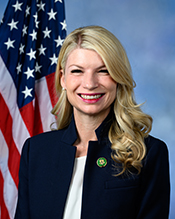
WASHINGTON – Congresswoman Brittany Pettersen (CO-07), today joined fellow members of the Democratic Women’s Caucus in calling out the Trump Administration’s latest effort to dismantle Head Start, a critical program that provides early education, health services, and other support to children and families across the country. In a letter to the Department of Health and Human Services Secretary Robert F. Kennedy, Jr., the lawmakers push back on the administration’s proposed rule that would roll back longstanding health, safety, staffing, and educational standards, putting the quality and reliability of Head Start services at risk for families who depend on them. “Head Start ensures our most vulnerable kids have access to the care, nutrition, and health services they need in those early years. I am proud to be a voice for the parents, like me, who are enraged by the anti-family, backward agenda of this administration,” said Congresswoman Brittany Pettersen. "I will fight every effort by Trump to dismantle this program and work to protect Colorado families and kids across the country.” In the letter, the Members write,“in strong opposition to the Department of Health and Human Services’ (HHS) proposed rule Reducing Federal Burden for Head Start Programs .” They continue, “this proposed rule guts an essential early childhood program and its services for hundreds of thousands of women and families nationwide, which would increase their costs and burden to replace those services. In today’s environment of rising costs, it is cruel to make life more difficult and expensive for these families.” More than 11,000 Colorado children depend on Head Start, not to mention the massive shortfall in child care slots across the state – which is short of more than 82,000 total child care slots, with nearly 14,000 children actively on waitlists. Nevertheless, Trump’s proposed rule would diminish Head Start quality of services by rolling back vital HSPPS which outline certain program requirements and define quality standards. Therefore, the removal of these uniform federal safeguards allow programs to reduce staffing, qualifications, service hours, screenings, and support services. It does not directly order every program to provide worse care, but it permits—and financially anticipates—reductions that current rules prohibit. It will undermine its ability to develop evidence-based programs that improve education, health, nutrition, parental involvement, and social services—forcing families to either lose these resources or turn to more expensive options elsewhere. Head Start could no longer connect families to jobs, education, and housing opportunities or effectively help children succeed in school. For 60 years, Head Start has served over 40 million families and children with accessible social services, healthcare, and improved early learning standards. The program provides low-income children, children with disabilities, dual language learners, and children experiencing homelessness with the resources needed to succeed in school. Even after six decades, Head Start remains popular, with four in five Americans saying they’re in support of the program— evidence that Trump’s efforts to gut it are out of step with what Americans want. U.S. Representative Brittany Pettersen (CO-07) has consistently pushed back against federal rollbacks targeting the Head Start program. Most recently, Pettersen introduced the Supporting Our Military Childcare Workforce Act, which would take steps to address the childcare workforce crisis. She is a member of the Democratic Women’s Caucus and is a member of the House Financial Services Committee. The full text of the letter can be found HERE and below. Dear Secretary Kennedy: We, as members of the Democratic Women’s Caucus, write in strong opposition to the Department of Health and Human Services’ (HHS) proposed rule Reducing Federal Burden for Head Start Programs [RIN 070-AD0].1 This proposed rule would strip the Head Start Program Performance Standards (HSPPS) of more than 90 percent of its standards, likely taking away vital services from children and families.2 It eliminates and substantially weakens federal requirements governing early learning, health, mental health, and dental services, safety standards family engagement and family social services, and other services that have defined Head Start for six decades. This proposed rule guts an essential early childhood program and its services for hundreds of thousands of women and families nationwide, which would increase their costs and burden to replace those services. In today’s environment of rising costs, it is cruel to make life more difficult and expensive for these families. I. Undermining Congressional Intent This proposed rule is not modernization. It is the largest rollback of Head Start quality protections in the program’s history, and it will fall hardest on low-income children, children with disabilities, dual language learners, and children experiencing homelessness who Head Start was created to serve. The administration claims to be removing red tape and saving money. In reality, this proposed rule would override Congressional intent by removing standards that make Head Start the program that it is today and that Congress explicitly directed HHS to create based on research and consultation with experts. Congress established Head Start as a comprehensive program that goes beyond child supervision and offers life-changing early education, access to healthcare and food, and works with families to connect them to jobs, education, housing, and other social services that strengthen families. Since its founding, Head Start has served over 40 million families and children. Congress directed HHS to establish evidence-based performance standards covering education, health, nutrition, parental involvement, and social services, because these high-quality services are all important for helping achieve Head Start’s goal of promoting school readiness and helping children succeed in school and beyond. Children’s well-being should not depend on the state in which a child happens to live.4 Preserving the statutory shell of Head Start while removing the federal standards that give those requirements meaning would undermine congressional intent and diminish the quality of services for women and families who rely on Head Start. II. Compromising Program Consistency The program’s federal to local foundation—that this proposed rule seeks to diminish—is critical to achieve Head Start’s mission to provide quality care no matter where the child lives. Head Start works because of its nationwide standards, not despite them. Rigorous research has found that Head Start generates substantial long-term economic benefits, including an estimated $1.86 in benefits for every dollar invested.5 That return depends on strong teachers, strong ratios, and strong services—qualified staff, appropriate classroom size and teacher to child ratios that support learning, developmental screening and follow-up, health and mental health services, family engagement and support services, and evidence-based early learning—not a patchwork of state requirements that would create different standards throughout the country. III. Eroding Quality and Safety The proposed rule would eliminate Head Start’s specific federal requirement that children be supervised at all times, reduce mandatory annual staff training on preventing abuse and neglect, repeal the prohibition on corporal punishment, shaming, humiliation, and seclusion practices, and remove the timelines that ensure a child’s developmental, dental, and medical needs are actually screened and followed up on. The proposed rule would not only poorly impact children, it would further harm the Head Start workforce by changing teacher-child ratios and class sizes. The Department’s own analysis assumes this rule will let programs put 16 to 32 percent more children in front of each teacher, and HHS is counting on that to book $668 million a year in “savings.” The Children’s Equity Project found that approximately 80 percent of children currently enrolled in Head Start could face larger class sizes and worse teacher-child ratios if programs defaulted to state requirements instead of the current federal requirements.6 That means these children would be in larger classroom sizes without additional teacher assistance. Fewer teachers per child is not simply a matter of flexibility. It means fewer adults available to provide individualized attention, support learning, respond to developmental needs, and keep children safe. These proposed changes also come after HHS released a rule in 2024, “Restoring Flexibility to Support Head Start Program Access [RIN 0970-AD21].” RIN 0970-AD21 repealed the higher wages and improved benefits established for Head Start staff in 2024. This new proposed rule would increase Head Start staff’s workload without additional pay or benefits to reflect the greater stress. Both rules result in more work and less pay for the Head Start workforce at a time when staffing challenges are prevalent. The proposed rule would also rollback Head Start’s requirement for certain staff qualifications. Specifically, the rule would remove the minimum required qualifications for program directors, classroom coaches, and disability management staff. For education staff, the rule would eliminate requirements for training on curriculum, behavior management, disability student support, and dual language learner support. Head Start’s federal requirements implement these qualifications and training to protect the integrity of each classroom across the country. Weakening Head Start’s federal workforce and credentialing standards would further reduce classroom quality, at the very time programs are already struggling to recruit and retain qualified educators. It is critical to equip Head Start staff with the necessary skills to sustain Head Start’s comprehensive, high-quality educational programming. IV. Rolling Back Student Support Systems This proposed rule would strip Head Start’s ban on expelling children and its strict limits on suspension which is deeply concerning. These protections exist because preschoolers are already suspended and expelled at rates far above K-12 students. Additionally, disparities in suspension and expulsion are already significant for children of color, boys, and children with disabilities. Federal data show that children of color account for a disproportionate share of preschool suspensions, while children served under Individuals with Disabilities Education Act (IDEA) make up 23 percent of enrollment but 74 percent of expulsions.7 Removing these federal protections will not close those gaps. It will widen them. The proposed rule would also substantially change how Head Start programs support children who are learning English. It would require Head Start instruction to be conducted in English, with an exception for Tribal programs. This action would reverse dual-language and home- language supports that have been part of the standards since 1975—even though the evidence consistently shows dual language learners in Head Start make larger gains than their English- speaking peers when supported in both languages.8 The Department’s own estimate puts the cost of this single mandate at nearly $240 million, including real harm to Head Start teachers who will lose their jobs. We should not weaken an evidence-based practice that helps children build English proficiency while maintaining the language skills they develop with their families and sets a strong foundation for them to succeed in school. V. Conclusion It is vital that Head Start has an uncompromised framework of established quality standards. It needs the Department to fund what already works and to ensure programs have the resources and workforce necessary to meet the standards Congress established. We urge HHS to withdraw this proposal in full. Sincerely, Signers of the letter include Reps. Teresa Leger Fernández (NM-03), Chair Democratic Women's Caucus; Debbie Dingell (MI-06), Co-Chair, Caregiving Task Force, Democratic Women's Caucus; Brittany Pettersen (CO-07), Co-Chair, Caregiving Task Force, Democratic Women's Caucus; Lateefah Simon (CA-12), Co-Chair, Caregiving Task Force, Democratic Women's Caucus; Kristen McDonald Rivet (MI-08); Jan Schakowsky (IL-09); Jasmine Crockett (TX-30), Co-Chair, Communications Task Force, Democratic Women's Caucus; Bonnie Watson Coleman (NJ-12); Diana DeGette (C0-01); Jennifer L. McClellan (VA-04); Madeleine Dean (PA-04); Frederica S. Wilson (FL-24); Deborah K. Ross (NC-12), Co-Chair, Policy Task Force, Democratic Women's Caucus; Pramila Jayapal (WA-07), Congressional Asian Pacific, American Caucus Liaison, Democratic Women's Caucus; Shontel M. Brown (OH-11), Co-Chair, Communications Task Force, Democratic Women's Caucus; Nydia M. Velázquez (NY-12); Julia Brownley (CA-26); Delia C. Ramirez (IL-03); Debbie Wasserman Schultz (FL-25); Joyce Beatty (OH-03), National Leaders & Advocacy, Organizations Liaison, Democratic Women's Caucus; Chellie Pingree (ME-01); Rashida Tlaib (MI-12); Sara Jacobs (CA-51), Co-Chair, Member Services Task Force, Democratic Women's Caucus; Mary Gay Scanlon (PA-05); Lucy McBath (GA-06), Congressional Black Caucus Liaison, Democratic Women's Caucus; Adelita S. Grijalva (AZ-07); Nikema Williams (GA-05), Chief Whip, Democratic Women's Caucus; Suzanne Bonamici (OR-01); Sydney Kamlager-Dove (CA-37), Co-Chair, Policy Task Force, Democratic Women's Caucus; Andrea Salinas (OR-06), Congressional Hispanic Caucus Liaison, Democratic Women's Caucus; Julie Johnson (TX-32), Equality Caucus Liaison, Democratic Women's Caucus; Lois Frankel (FL-22), Chair Emerita, Democratic Women's Caucus; Doris Matsui (CA-07); Judy Chu (CA-28), Co-Chair & Liaison, Reproductive Freedom Task Force, Democratic Women's Caucus; Chrissy Houlahan (PA-06); Nellie Pou (NJ-09); Summer L. Lee (PA-12); Terri A. Sewell (AL-07); Yassamin Ansari (AZ-03); LaMonica McIver (NJ-10), New Member Liaison, Democratic Women's Caucus; Betty McCollum (MN-04); Yvette D. Clarke (NY-09); Emily Randall (WA-06), Whip, Democratic Women's Caucus; Dina Titus (NV-01); Sarah McBride (DE-AL), Whip, Democratic Women's Caucus; Melanie Stansbury (NM-01), Co-Chair, Member Services Task Force, Democratic Women's Caucus; Gwen S. Moore (WI-04); Analilia Mejia (NJ-11); Sarah Elfreth (MD-03); April McClain Delaney (MD-06); Valerie P. Foushee (NC-04); Marilyn Strickland (WA-10); Jahana Hayes (CT-05); Sylvia R. Garcia (TX-29); Suzan K. DelBene (WA-01); Marcy Kaptur (OH-09); Laura Friedman (CA-30); Robin L. Kelly (IL-02); Nancy Pelosi (CA-11); Val Hoyle (OR-04); Haley M. Stevens (MI-11); Norma J. Torres (CA-35), New Democrat Coalition Liaison, Democratic Women's Caucus; Alexandria Ocasio-Cortez (NY-14); Maggie Goodlander (NH-02); Jill Tokuda (HI-02), Progressive Caucus Liaison, Democratic Women's Caucus; Lori Trahan (MA-03); Kim Schrier, M.D. (WA-08); Kathy Castor (FL-14); Steven Horsford (NV-04); Maxine Dexter, M.D. (OR-03); Nikki Budzinski (IL-13); Nanette Diaz Barragán (CA-44); Grace Meng (NY-06); Angie Craig (MN-02); Salud Carbajal (CA-24); Becca Balint (VT-AL); Veronica Escobar (TX-16); Emilia Strong Sykes (OH-13), Vice Chair, Democratic Women's Caucus; Luz M. Rivas (CA-29); Gabe Amo (RI-01); Ayanna Pressley (MA-07), Co-Chair & Liaison, Reproductive Freedom Task Force, Democratic Women's Caucus; Sharice L. Davids (KS-03); Jared Moskowitz (FL-23); Ilhan Omar (MN-05); Hillary J. Scholten (MI-03), Vice Chair, Democratic Women's Caucus; Lauren Underwood (IL-14); and André Carson (IN-07). ### To access downloadable, high-quality photos, click here . To stay up-to-date on what Pettersen is doing in Congress, follow her on Twitter here , Facebook here , or Instagram here . Residents can also sign-up for her e-newsletter subscription here .
6483ff09-b3d3-483e-bb23-94adffa31274Issued within 24 hours
Other senators' releases published in the day before or after this one.