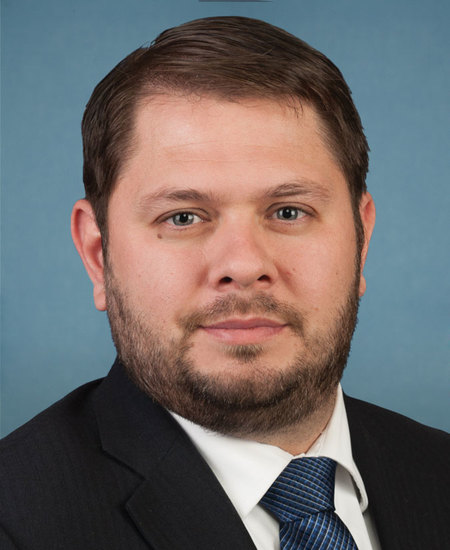
Gallego Demands Answers from Trump Administration on Combatting Ghost Jobs
40 percent of employers admitted to posting job listings with no intention of filing them, one survey reported WASHINGTON – Today, U.S. Senator Ruben Gallego (D-AZ) , a member of the U.S. Senate Committee on Banking, Housing, and Urban Affairs sent letters to the Department of Labor, Federal Trade Commission, and the Bureau of Labor Statistics, asking the administration for answers on how they plan to combat the growing epidemic of “ghost jobs,” online job postings listed by companies that do not actually exist or have no active intent to hire. “Ghost jobs waste time and energy for job seekers responding to jobs that may never be filled. This impossible job search erodes worker confidence and undermines trust in the labor market. This trend is particularly harmful for recent graduates and young workers who do not have professional networks or references that help experienced candidates land jobs, leaving them frustrated as they apply to hundreds of jobs on online hiring platforms,” Gallego writes in the letter. According to a survey conducted by the career site Resume Builder, 40 percent of employers admitted to posting job listings with no intention of filling them. And with the increased use of artificial intelligence by online hiring platforms, companies can easily advertise an opening, recruit less actively, and leave job postings open for extended periods. Gallego continues: “A job posting an employer has no genuine intention to fill is a deceptive job advertisement and this practice deserves a thorough investigation. Additionally, posting ghost jobs allows employers to artificially exert undue leverage on existing employees by retaining lists of future potential workers ready to replace existing employees, raising questions about whether posting ghost jobs is a form of anticompetitive labor market behavior distorting true labor supply and demand.” To gain a better understanding of the issue, Gallego requested that DOL and the FTC answer the following questions: Has the FTC, DOL, or the Joint Labor Task Force conducted any analysis on the prevalence and impact of ghost jobs on job seekers? If so, please share your findings. If not, please describe any future plans to conduct such an analysis. Is the Joint Labor Task Force currently undertaking any inter-agency coordination on ghost jobs? Does the FTC or the Joint Labor Task Force consider ghost jobs a form of deceptive job advertising? Has the FTC or DOL conducted any analysis on employers posting job listings to gather a pool of applicants to discourage existing employees from seeking higher wages or promotions? Has the FTC had any communication with third party job platforms or companies regarding the accuracy of listed job openings? Has the FTC considered drafting a rule to regulate ghost jobs, including requiring employers or third-party hiring platforms to disclose when a posting is not tied to an active vacancy or immediate hiring need? Gallego requested the BLS answer the following questions: Has the Bureau of Labor Statistics (BLS) conducted any analysis on the prevalence and impact of ghost jobs on JOLTS data? If so, can BLS share this analysis? If not, does BLS have plans to conduct such an analysis? How does BLS define “actively recruiting” for JOLTS purposes? When employers self-report job openings in JOLTS, what is the verification process to confirm the openings reflect genuine hiring intent? Since 2021, there has been a persistent 30 percent gap between the number of job openings and hires. Has BLS investigated the cause of this discrepancy? Does BLS believe that employers have any incentive to over-report job openings in JOLTS survey responses? If so, how does BLS attempt to correct for this issue? Does BLS require employers to report the length of time a job posting was open? If not, would BLS consider adding a “time-to-fill” requirement, a metric measuring how long a job opening has been available, for JOLTS reporting? Has BLS engaged with the Department of Labor or the Federal Trade Commission regarding the impact of ghost jobs on job seekers? Has BLS engaged with the Federal Reserve on the impact of ghost jobs distorting labor market data? Click here to read Senator Gallego’s letters.
6652a2f6-3ffe-434e-9f87-6ec4846cacc4Issued within 24 hours
Other senators' releases published in the day before or after this one.