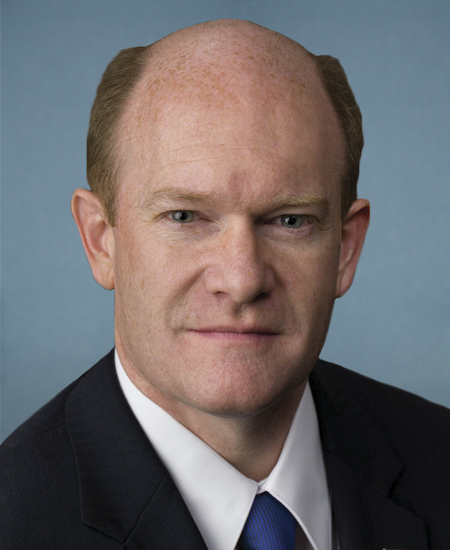
Senators Coons, Blunt Rochester, colleagues send letter to Trump administration calling for answers on green card application changes
In a letter to USCIS, senators and representatives question the new requirements for green card applicants to apply abroad and demonstrate their presence is in the ill-defined “national interest” WASHINGTON – U.S. Senators Chris Coons (D-Del.), Lisa Blunt Rochester (D-Del.), Dick Durbin (D-Ill.), Alex Padilla (D-Calif.), U.S. Representatives Jamie Raskin (D-Md.) and Pramila Jayapal (D-Wash.), and dozens of their colleagues demanded an explanation from the Trump administration on the recent changes to the green card application process. In a letter to United States Citizenship and Immigration Services (USCIS) Director Joseph Edlow, the lawmakers cited a recent USCIS memorandum that requires noncitizens seeking a green card to apply abroad, as well as – for the first time – establish their presence in the United States as “in the national interest.” The lawmakers wrote : “We write to object to your new policy memorandum regarding adjustment of status. Adjustment of status is the statutory process by which immigrants may apply for lawful permanent residence, often called a ‘green card,’ from within the United States. On May 21, 2026, U.S. Citizenship and Immigration Services (USCIS) issued a policy memorandum (PM-602-0199) with guidance claiming that adjustment of status is an ‘extraordinary form of relief.’ Without any basis in the law and in a departure from decades of precedent, this guidance creates a policy preference for consular processing abroad over adjustment of status in the United States, requiring applicants to meet new, undefined discretionary criteria to be processed domestically. We urge you to reverse this new policy and restore adjudications of adjustment of status applications in a manner consistent with the law, longstanding practice, and congressional intent.” The lawmakers continued : “PM-602-0199 states that adjustment of status ‘is a matter of discretion and administrative grace not designed to supersede the regular consular processing of immigrant visas.’ This is simply incorrect. There is no statutory preference for consular processing, and legislative history shows that Congress has long maintained a strong preference in favor of allowing eligible noncitizens to adjust status in the United States. Adjustment of status was first introduced into law over 70 years ago, in the Immigration and Nationality Act of 1952. The practice was introduced and later expanded in recognition of the significant number of eligible individuals seeking green cards who resided in the United States. In the limited circumstances in which Congress intended to restrict adjustment of status, statutory text has been amended to prevent certain classes of noncitizens from using the process. When individuals are in the United States and eligible for adjustment of status, legislative history shows that Congress has a strong preference that such individuals have an opportunity to adjust their status while remaining in the U.S.” The lawmakers concluded , before making a series of requests for information: “By directing adjudicators to treat adjustment of status as an ‘extraordinary form of relief’ and by creating a policy preference for consular processing, the memorandum undermines the very purposes Congress sought to advance when enacting and amending section 245 of the INA. Congress established adjustment of status as a cornerstone of the modern immigration system to promote family unity, administrative efficiency, and economic stability. Any effort to dismantle that statutory framework through internal agency policy is unacceptable.” In addition to Senators Coons, Blunt Rochester, Durbin, and Padilla, the letter is signed by U.S. Senators Angela Alsobrooks (D-Md.), Michael Bennet (D-Colo.), Cory Booker (D-N.J.), Catherine Cortez Masto (D-Nev.), Tammy Duckworth (D-Ill.), John Fetterman (D-Pa.), Ruben Gallego (D-Ariz.), Kirsten Gillibrand (D-N.Y.), Mazie Hirono (D-Hawaii), Tim Kaine (D-Va.), Mark Kelly (D-Ariz.), Angus King (I-Maine), Amy Klobuchar (D-Minn.), Jeff Merkley (D-Ore.), Patty Murray (D-Wash.), Jack Reed (D-R.I.), Jacky Rosen (D-Nev.), Bernie Sanders (I-Vt.), Brian Schatz (D-Hawaii), Adam Schiff (D-Calif.), Tina Smith (D-Minn.), Chris Van Hollen (D-Md.), Raphael Warnock (D-Ga.), Peter Welch (D-Vt.), Sheldon Whitehouse (D-R.I.), Ron Wyden (D-Ore.) In addition to Raskin and Jayapal, the letter is also signed by U.S. Representatives Jake Auchincloss (D-Mass.), Yassamin Ansari (D-Ariz.), Becca Balint (D-Vt.), Nanette Barragán (D-Calif.), Joyce Beatty (D-Ohio), Donald Beyer (D-Va.), Nikki Budzinski (D-Ill.), Suzanne Bonamici (D-Ore.), André Carson (D-Ind.), Greg Casar (D-Texas), Joaquin Castro (D-Texas), Salud Carbajal (D-Calif.), Judy Chu (D-Calif.), Gilbert Ray Cisneros Jr. (D-Calif.), Yvette Clarke (D-N.Y.), Steve Cohen (D-Tenn.), J. Luis Correa (D-Calif.), Joe Courtney (D-Conn.), Jasmine Crockett (D-Texas), James Walkinshaw (D-Va.), Mark DeSaulnier (D-Calif.), Diana DeGette (D-Colo.), April McClain Delaney (D-Md.), Maxine Dexter (D-Ore.), Debbie Dingell (D-Mich.), Adriano Espaillat (D-N.Y.), Veronica Escobar (D-Texas), Lizzie Fletcher (D-Texas), Maxwell Frost (D-Fla.), John Garamendi (D-Calif.), Sylvia Garcia (D-Texas), Robert Garcia (D-Calif.), Jesús “Chuy” Garcia (D-Ill.), Jimmy Gomez (D-Calif.), Adelita Grijalva (D-Ariz.), Chrissy Houlahan (D-Pa.), Val Hoyle (D-Ore.), Hank Johnson (D-Ga.), Julie Johnson (D-Texas), Sydney Kamlager-Dove (D-Calif.), Timothy Kennedy (D-N.Y.), Ro Khanna (D-Calif.), Raja Krishnamoorthi (D-Ill.), Summer Lee (D-Pa.), Zoe Lofgren (D-Calif.), Stephen Lynch (D-Mass.), Doris Matsui (D-Calif.), Betty McCollum (D-Minn.), Christian Menefee (D-Texas), Grace Meng (D-N.Y.), Analilia Mejia (D-N.J.), Dave Min (D-Calif.), Kweisi Mfume (D-Md.), Seth Moulton (D-Mass.), Jerrold Nadler (D-N.Y.), Eleanor Holmes Norton (D-D.C.), Nancy Pelosi (D-Calif.), Brittany Pettersen (D-Colo.), Chellie Pingree (D-Maine), Mark Pocan (D-Wis.), Nellie Pou (D-N.J.), Mike Quigley (D-Ill.), Delia Ramirez (D-Ill.), Deborah Ross (D-N.C.), Andrea Salinas (D-Ore.), Jan Schakowsky (D-Ill.), Hillary Scholten (D-Mich.), Mary Gay Scanlon (D-Pa.), Brad Sherman (D-Calif.), Lateefah Simon (D-Calif.), Adam Smith (D-Wash.), Suhas Subramanyam (D-Va.), Melanie Stansbury (D-N.M.), Greg Stanton (D-Ariz.), Mark Takano (D-Calif.), Bennie Thompson (D-Miss.), Derek Tran (D-Calif.), Ritchie Torres (D-N.Y.), Juan Vargas (D-Calif.), Marc Veasey (D-Texas), Nydia Velázquez (D-N.Y.), and Frederica Wilson (D-Fla.). Read the full letter below: Dear Director Edlow: We write to object to your new policy memorandum regarding adjustment of status. Adjustment of status is the statutory process by which immigrants may apply for lawful permanent residence, often called a “green card,” from within the United States. On May 21, 2026, U.S. Citizenship and Immigration Services (USCIS) issued a policy memorandum (PM-602-0199) with guidance claiming that adjustment of status is an “extraordinary form of relief.”1 Without any basis in the law and in a departure from decades of precedent, this guidance creates a policy preference for consular processing abroad over adjustment of status in the United States, requiring applicants to meet new, undefined discretionary criteria to be processed domestically. We urge you to reverse this new policy and restore adjudications of adjustment of status applications in a manner consistent with the law, longstanding practice, and congressional intent. PM-602-0199 states that adjustment of status “is a matter of discretion and administrative grace not designed to supersede the regular consular processing of immigrant visas.” This is simply incorrect. There is no statutory preference for consular processing, and legislative history shows that Congress has long maintained a strong preference in favor of allowing eligible noncitizens to adjust status in the United States. Adjustment of status was first introduced into law over 70 years ago, in the Immigration and Nationality Act of 1952.2 The practice was introduced and later expanded in recognition of the significant number of eligible individuals seeking green cards who resided in the United States.3 In the limited circumstances in which Congress intended to restrict adjustment of status, statutory text has been amended to prevent certain classes of noncitizens from using the process. When individuals are in the United States and eligible for adjustment of status, legislative history shows that Congress has a strong preference that such individuals have an opportunity to adjust their status while remaining in the U.S. When expanding adjustment of status, Congress has often raised concerns with forcing noncitizens in the United States to use consular processing.5 A 1960 House Report accompanying legislation expanding adjustment of status expressed congressional dissatisfaction with “the fallacious procedure known as ‘preexamination’ . . . consisting of round trips to Canada for the sole purpose of obtaining an immigrant visa.”6 In the American Competitiveness in the Twenty-First Century Act of 2000, Congress enacted into law transitional protection for individuals stuck in the employment-based green card backlog.7 The accompanying Senate report noted that the provision “enables these individuals to remain in H-1B status until they are able to receive an immigrant visa and adjust their status within the United States, thus limiting the disruption to American businesses.” PM-602-0199 would also create new criteria that do not exist in law—and are not supported by the law—for individuals to be processed for a green card from within the United States. A spokesperson for the Department of Homeland Security (DHS) recently noted: “This policy will have no noticeable impact on highly qualified applicants and skilled professionals who have followed the law. These aliens benefit the national interest and provide economic benefits to the United States and will continue to merit the favorable exercise of discretion.”9 However, for decades, adjustment of status has ordinarily been granted to eligible individuals unless there are adverse factors weighing against a favorable exercise of discretion.10 This is consistent with the law—if noncitizens are otherwise eligible for a favorable exercise of discretion that would result in a grant of adjustment of status, there is no legal or statutory basis to make an additional discretionary determination of “national interest” to allow them to be processed within the United States. Thus, the policy memorandum imposes what amounts to a new substantive standard—requiring applicants to affirmatively demonstrate that their adjustment serves the national interest or provides economic benefit—without any congressional authorization for such a test. Worse still, it does so without any effective date, explanation of how pending applications will be adjudicated, transition period, or clear guidance as to which categories of applicants would be affected. This is a major policy shift. USCIS has long recognized Congress’s preference for allowing eligible noncitizens to obtain lawful permanent residence through adjustment of status in the United States.11 For decades, USCIS and its predecessor agencies have adjudicated millions of adjustment applications pursuant to section 245 of the Immigration and Nationality Act (INA). Since 1980, more than half of all individuals granted lawful permanent residence have obtained that status through adjustment of status in the U.S. rather than consular processing abroad.12 If individuals are forced to pursue immigrant visas through consular processing abroad, many will face months or years of separation from spouses, children, parents, and other family members due to extensive visa appointment backlogs at U.S. consulates worldwide.13 And as discussed above, Congress has expressly weighed in against processes that would push individuals from within the United States to consular processing abroad. For individuals who have built lives in the United States—including those who have children who are U.S. citizens, have stable employment, pay taxes, and participate in their communities—this forced separation will impose significant hardships on their U.S.-citizen family members and communities.15 The policy also threatens substantial economic disruption. Skilled workers, entrepreneurs, medical professionals, researchers, students transitioning to permanent residence, and employees sponsored by U.S. businesses may be forced to depart the country for extended periods while awaiting immigrant visa processing abroad.16 Such disruptions would impose significant costs not only on affected individuals and families, but also on American employers and the broader U.S. economy. By directing adjudicators to treat adjustment of status as an “extraordinary form of relief” and by creating a policy preference for consular processing, the memorandum undermines the very purposes Congress sought to advance when enacting and amending section 245 of the INA. Congress established adjustment of status as a cornerstone of the modern immigration system to promote family unity, administrative efficiency, and economic stability. Any effort to dismantle that statutory framework through internal agency policy is unacceptable. As such, please provide responses to the following questions: What is the effective date of this policy? Is USCIS applying this policy to adjustment of status applications that were filed and pending before the memorandum’s release date of May 21, 2026? To which categories of adjustment of status applicants does the policy apply? To how many applicants does USCIS estimate this will apply? Has USCIS issued any formal written guidance or training to adjudicators regarding implementation of this policy? If so, please provide those materials. What standards or criteria are adjudicators being instructed to apply when exercising discretion under this policy? What supervisory review mechanisms are in place to ensure consistency in adjudication? Please provide any related materials. The memorandum appears to establish a new standard requiring applicants to demonstrate that their adjustment of status serves the “national interest,” and DHS spokespersons have suggested this may include persons who provide an “economic benefit.” What are the criteria for “national interest” and “economic benefit” that would merit a favorable exercise of discretion to permit processing domestically? Given that this policy will substantially increase demand for immigrant visa processing at U.S. consulates abroad, did USCIS consult with the Department of State in developing this policy? How does USCIS intend to provide a viable pathway to lawful permanent residence for individuals who are subject to the immigrant visa consular processing pause, travel bans, or who cannot access consular processing due to the absence of a functioning U.S. consulate in their country of nationality? The memorandum makes reference to noncitizens with “dual intent” as an exception, but includes a footnote stating that “maintaining lawful status in a dual intent nonimmigrant category is not sufficient, on its own, to warrant a favorable exercise of discretion.” How will this new policy be applied to individuals with dual intent seeking to adjust status within the United States? We look forward to your prompt response to our inquiries.
7457bf2c-b220-4542-afd0-78c26bd0f9f4Issued within 24 hours
Other senators' releases published in the day before or after this one.