Defense Officials to Fischer: If DOD is Forced to Vacate Spectrum Frequencies, U.S. Would Assume High Level of Risk for Homeland Defense
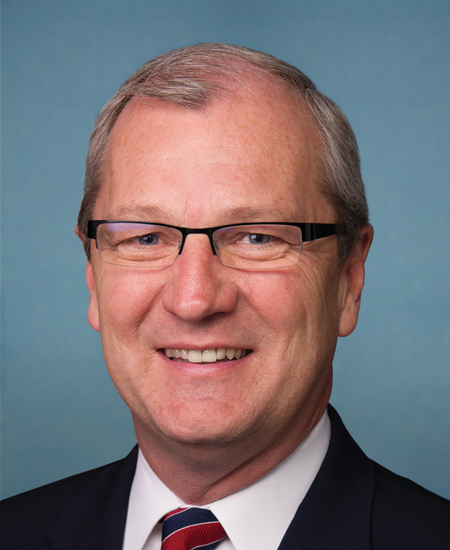
Today, during a hearing on the Senate Armed Services’ Subcommittee on Strategic Forces, U.S. Senator Deb Fischer (R-Neb.) questioned Commander of United States Northern Command and North American Aerospace Defense Command Gen. Gregory Guillot and Director of Missile Defense Agency Lt. Gen. Heath Collins, who confirmed that if the Department of Defense (DOD) were forced to vacate frequencies in the lower 3 or key portions of the 7/8 GHz spectrum bands, the United States would assume an extraordinarily high level of risk for homeland defense.
Click the image above to watch a video of Fischer’s questioning
Click
here
to download audio
Click
here
to download video
TRANSCRIPT
:
Fischer:
General Guillot, I've appreciated our past conversations about the need for increased domain awareness, for we cannot shoot what we cannot see. As we look towards Golden Dome and the future of missile defense, what additional improvements need to be made with respect to domain awareness?
General Guillot:
Madam Chair, I think that what I call the domain awareness layer of Golden Dome is the most critical that we need to have first, for the reasons that you just mentioned. Any chance of using advanced interceptors or defeat capabilities would not be possible if we can't detect and track these threats. I think that it's a seabed-to-space approach. We need to have undersea sensors to detect submarines that can now get closer to North America than they could before, based on improved stealthiness of those ships. And then a ground layer that can see much further out because of the advanced standoff weapons that our adversaries can now employ. We need an air layer, like the E-7, to close the kill chain with fighter aircrafts or surface-to-air systems, and then a space layer. The space layer would both track airborne moving targets or aircrafts, but also systems like the Hypersonic and Ballistic Tracking Space Sensor (HBTSS) that could track hypersonics, as well as the warning capability that we need to detect the launches to begin with.
Fischer:
Is there anything you can tell us in this setting about Golden Dome and the options that may be available on the sensors and the radar systems that would be used?
General Guillot:
Madam Chair, I don't know what the Golden Dome will look like, but I suspect that it would be able to use a lot of the systems that are already in place and currently in development, which would give us a full capability in probably something closer to zero to five years, as opposed to something, you know, a decade out into the future. A couple of those systems would be the HBTSS that I just mentioned for the hypersonics, space-based AMTI, which we have a number of prototype systems on orbit now, over-the-horizon radars which are also operational in, not in the United States, but elsewhere. And then for instance, the E-7 which many other countries operate.
Fischer:
So given that, how much risk would Golden Dome incur if the department was forced to vacate the lower 3GHz or a portion of the 7-8GHz spectrum that it now has?
General Guillot:
Madam Chair, it's my assessment that we would assume an extraordinarily high level of risk if we lose control of those portions of the spectrum. Many of the systems that we rely on every day today, much less in the future, for Homeland Defense, reside in that spectrum range.
Fischer:
Thank you. General Collins, can you provide us with an update on the Hypersonic and Ballistic Tracking Space Sensor, or the HBTSS system?
Lt. Gen. Collins:
Yes, Madam Chair, thank you. So, the Hypersonic and Ballistic Tracking Space Sensor is a prototype program that the Missile Defense Agency (MDA) pursued to prove out the technology such that from space we could close the kill chain on a hypersonic weapon. And the focus of that was to prove out that the space system could have the accuracy, the track quality, and get that data into the command-and-control system fast enough to be able to close that fire control loop. Those two systems, launched in February of last year, have gone through two test bed launches where we had a test bed target launch fly a hypersonic profile, and we have collected data from the sensors during that. So far, we have proven out the timeliness, latency of the fire control loop with those systems, as well as the sensitivity of those systems to close the loop. We're going back with some algorithm updates into the payload to improve on the track quality. But we see that closing as well. It's been a very successful prototype program, and all along, we've worked in parallel with the Space Force and Space Development Agency. They now have our HBTSS-like requirements as part of their proliferated warfighting space architecture. And in the tranches to come in the following years, they will slowly be building up an operational hypersonic tracking layer for us.
Fischer:
Thank you. Perhaps in another setting we can talk about a more definitive timeline when that would be available. Thank you.
757dc0bd-75bd-4fab-9683-390bcb31aca1Issued within 24 hours
Other senators' releases published in the day before or after this one.