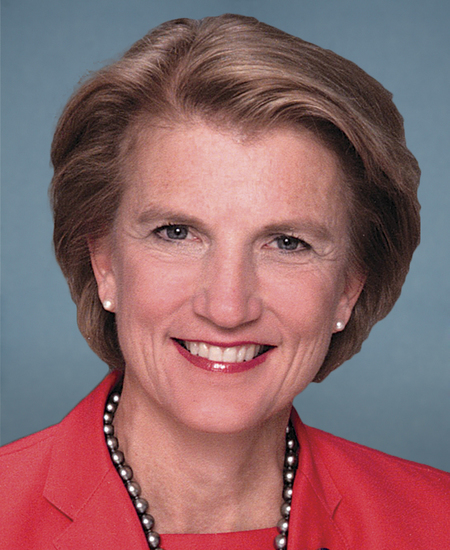
VIDEO: Capito Chairs Labor-H Subcommittee Hearing on Department of Labor Budget
To watch Chairman Capito’s questions, click here or the image above. WASHINGTON, D.C. – Today, U.S. Senator Shelley Moore Capito (R-W.Va.), Chairman of the Senate Appropriations Subcommittee on Labor, Health and Human Services, Education, and Related Agencies (Labor-HHS), chaired a hearing with Acting Secretary of Labor Keith Sonderling to consider President Trump’s Fiscal Year 2027 (FY27) budget request, as well as the many priorities of the agency. HIGHLIGHTS: ON MINER SAFETY Chairman Capito: “I mentioned about coal miners in my opening statement. I know that the miner injury, you just released the statistic that mining injury hit a record low in 2025. But of course, when you lose six in one state, who lost their lives. That's six too many, as I'm sure you agree. Can you discuss how this budget prioritizes mind safety? I know you have some cuts at MSHA or maybe some redistributions, if you could explain that to me.” Acting Secretary Sonderling: “Yeah, and obviously, mine health safety is one of our top priorities at the Department of Labor, especially with the president's commitment to bringing energy and energy manufacturing, back to the United States. In this administration, we are really proud that in 2025. The injury rates were to the lowest. And that's really what matters to us, and we're going to continue to do that by really working with miners, really working on compliance assistance. And although there are some budget cuts related to MSHA's operations, that's really related to efficiency. Seven offices have gone to five. We're investing in technology in these helmets that use AI and heat mapping and can actually see violations and transcribe the violations. That's going to make our investigators 30% more efficient. But more importantly, we are hiring mine health safety inspectors and investigators. We expect 160 new inspectors, and that's really our top priority. So even with the president's budget, how it's framed. It's more on efficiency, it's more on technology, while continuing to make sure that the mines in West Virginia and around the country are safe, and we're seeing that by the all injury rate, being at a record low.” ON UNEMPLOYMENT WASTE, FRAUD, AND ABUSE Chairman Capito: “I wanted to ask about unemployment insurance, waste, fraud, and abuse. The GAO report said that the Department of Labor had an improper payment rate of about 15%, which is well above the federal compliance threshold. I did note in my statement in the preamble to my statement. I don't think I knew this, but there is a federal compliance threshold of 10%, which I personally think is too high. That means one of every $10 that goes out is an acceptable rate if it's improperly used. And this has been a big emphasis for the president. So, what are you doing about this to improve programs, integrity, tamp down improper payments? What do you do when you do you go to an enforcement mechanism? Do you recoup any of the dollars? And what do you do with those dollars?” Acting Secretary Sonderling: “And in my opening statement, I brought this up. We are a member of the White House Task Force related to fraud, and this is our top priority of the Department of Labor. And we're working, it's a two-prong approach. Number one, from the Department of Labor's perspective, to make sure that improper payments stop, and that the states have the proper identity verification systems to make sure that not a single dollar goes out. And what we saw during the pandemic, this committee knows very well, up to $135 billion occurred related to UI fraud. And now we're looking at our systems, we've asked for additional funding to make sure that our integrity systems can help us with the identify verification and other tools. So that's on the front end really working within the department, with the states, um, to make sure that no money goes out improperly, that there's proper identification system. On the back end, it's working with our inspector general's office, who has that criminal authority to go after bad actors who stole this money, and that's what we're doing. So, it's working to stop money from going out and making sure the verification systems are there. And then on the back end, aggressively prosecuting unemployment insurance fraud, we've deployed strike teams to high-risk states. So, we're really looking on ways to use technology and programs to work with our state partners, to make sure that they have the tools they need for identity.” # # #
784cfb20-d54d-41f5-a8d6-464075a57935Issued within 24 hours
Other senators' releases published in the day before or after this one.