Warren, Hayes Lead Bicameral Legislation to Address Food Insecurity on College Campuses
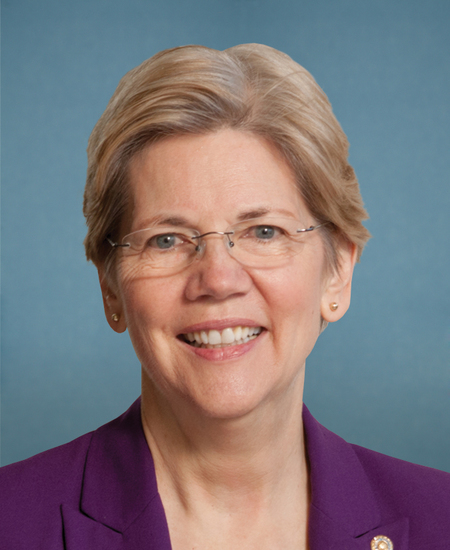
Bill Text (PDF) Washington, D.C. — U.S. Senators Elizabeth Warren (D-Mass.), Chris Murphy (D-Conn.), Alex Padilla (D-Calif.), Bernie Sanders (I-Vt.), and John Fetterman (D-Pa.), along with Representatives Jahana Hayes (D-Conn.) and Norma Torres (D-Calif.), introduced the Student Food Security Act of 2026 , bicameral legislation to address food insecurity faced by college students nationwide. According to a 2024 Government Accountability Office (GAO) report , nearly 3.8 million college students may face food insecurity, risking their college completion and undermining federal and state investments in higher education. The GAO report found that almost 60 percent of potentially eligible students were not enrolled in the Supplemental Nutrition Assistance Program (SNAP), highlighting how current eligibility requirements are leaving food-insecure students behind. The Student Food Security Act would support food-insecure students by expanding eligibility for SNAP, allowing students to use SNAP benefits at on-campus dining facilities, increasing outreach by federal and state agencies to food-insecure students, and establishing an annual grant program to aid colleges and universities in better identifying and serving students with food and housing needs. “Students shouldn’t have to go hungry to make ends meet while getting their degree,” said Senator Warren. “Outdated SNAP rules shut eligible students out of critical assistance, leaving them struggling to afford groceries. The Student Food Security Act ensures no one is forced to choose between paying tuition and putting food on the table.” “Every student deserves the opportunity to pursue a college education without the added burden of worrying about where their next meal will come from. Yet, food insecurity remains a reality for far too many students, creating barriers that extend beyond the dining hall and into the classroom. At a time when cuts to SNAP threaten access to critical food assistance, we must do more to ensure students are not left without the resources they need to succeed,” said Congresswoman Jahana Hayes. “ The Student Food Security Act takes a comprehensive approach to addressing campus hunger. By expanding SNAP access, strengthening campus outreach, and providing $1 billion annually to help colleges and universities meet the basic needs of students, this legislation will strengthen the safety net for students facing food insecurity. “No student should have to sacrifice their health or their education just to make ends meet,” said Senator Padilla. “Our bill would expand access to nutrition assistance and essential resources so that more students can meet their basic needs while balancing their studies.” “Getting an education shouldn’t mean you also have to worry about where your next meal is coming from. No student should have to choose between a degree and a meal,” said Senator Fetterman. “I’m proud to join my colleagues in reintroducing legislation that expands SNAP and gives these institutions more tools to support all of their students.” “As everyday costs continue to rise, too many college students are going hungry while trying to earn their degrees. No student should have to skip meals or choose between buying food and paying for school,” said Congresswoman Torres. “The Student Food Security Act will expand access to SNAP so more students can afford nutritious meals and stay focused on their education and includes the BASIC Act, legislation I lead to invest $1 billion in community colleges and four year institutions to help students with basic needs. We should be giving students every opportunity to succeed and focus on their studies, not allowing hunger to stand in the way of a college degree.” Specifically, the Student Food Security Act : Increases the SNAP eligibility of low-income college students by expanding eligibility to students who qualify for work-study, have a $0 Student Aid Index, meet the financial eligibility criteria for a maximum Pell Grant (even if they have not filed the FAFSA), or are an independent student whose household is otherwise eligible. This would make permanent an expansion of SNAP eligibility that was first enacted in response to the COVID-19 pandemic. Increases outreach to eligible students by directing the U.S. Department of Education to work with the U.S. Department of Agriculture, the Secretary of Housing and Urban Development, and other relevant agencies to notify students they may be eligible for benefits when they file their application for federal student aid. Requires the Department of Education to report to Congress with data on student food and housing insecurity, broken out by race and ethnicity, income, first-generation status, Pell eligibility, disability, and student parent status. It also permanently adds validated food security, housing security, and homelessness questions to the National Postsecondary Student Aid Study (NPSAS). Creates a SNAP student hunger demonstration program to allow students to use their SNAP benefits at on-campus dining facilities at up to ten institutions. Establishes a $1 billion per year grant program to help institutions support the basic needs of students, which includes physiological and safety necessities that are central conditions for a student to learn. This includes, but is not limited to, nutritious food, health care, childcare, technology, transportation, personal hygiene and clothing, and more. Grants can be used for research, planning, and implementation of strategies which educate students on federal, state, local, and tribal assistance programs. Institutions with increased numbers of Pell Grant recipients will be prioritized. At least 25 percent of grants must go to community colleges, and at least 25 percent must go to Historically Black Colleges and Universities (HBCUs), Tribal Colleges and Universities, and other Minority-Serving Institutions. The Student Food Security Act is cosponsored by Senators Richard Blumenthal (D-Conn.), Chris Van Hollen (D-Md.), Ed Markey (D-Mass.), and Adam Schiff (D-Calif.), and Representatives Ro Khanna (D-Calif.), Jasmine Crockett (D-Texas), Troy Carter (D-La.), Nydia Velázquez (D-N.Y.), Andrea Salinas (D-Ore.), Summer Lee (D-Pa.), Dina Titus (D-Nev.), André Carson (D-Ind.), and Salud Carbajal (D-Calif.). The Student Food Security Act has been endorsed by the Alliance to End Hunger, Connecticut Foodshare, The Hope Center for Student Basic Needs, National Education Association (NEA), and the Institute for College Access and Success. ###
7cc11429-2411-499c-88f5-47e8789bbb99Issued within 24 hours
Other senators' releases published in the day before or after this one.