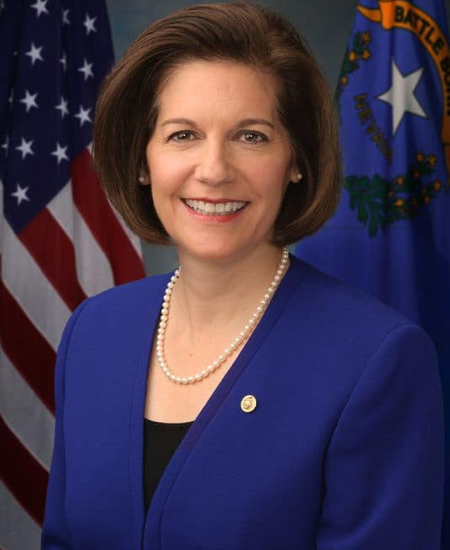
Armstrong Delivers Inaugural Floor Speech: “It’s Time to Get America Building Again”
FOR IMMEDIATE RELEASE: July 16, 2026
CONTACT: Chrissy Harbin , Miranda Dabney
WASHINGTON, D.C. — Senator Alan Armstrong (R-OK) gave his first speech on the Senate Floor this afternoon, highlighting the American Energy and Mineral Infrastructure Act as well as his larger mission to pass meaningful permitting reform legislation to help America build again.
Remarks as prepared:
“Mr. President, for generations, Americans understood that building our critical infrastructure was not a partisan cause. It was a national responsibility.
“Previous generations built the power plants, pipelines, highways, transmission lines, and mining sites that raised our standard of living, enabled the growth of our economy, protected our national security, and expanded opportunity across this country.
“The generations before us were builders and their efforts gave us the great nation we often take for granted today. They understood that large-scale infrastructure was not merely a collection of projects. It was the backbone of national prosperity.
“That broad consensus built out the most advanced infrastructure of its time, delivering affordable energy and economic growth. Over time, America showed that we did not have to choose between a strong economy or a cleaner environment. We could achieve both because we had the confidence to build and innovate.
“Today, however, we have moved away from that spirit of national purpose. Instead of building for the future, we are increasingly living off what previous generations were willing to imagine, finance, and construct. We have been relying on the fruits of their labor for decades. And today, we are beginning to see the harsh realities of infrastructure that is too aged and insufficient to support the next wave of growth.
“America’s energy problem is not a lack of resources, nor it is a lack of ingenuity. It is our failure to build the infrastructure needed to move those resources to the people who need them.
“And we should be honest about how we got here. Like a frog in the boiling pot we have slowly gotten into this dangerous condition that holds our great nation back. Over time, too many political leaders became complacent. It became easier to oppose a project than to defend the need to build one.
“When every pipeline, transmission line, power plant, and industrial project is treated as something to stop rather than something to build responsibly, the costs do not disappear. They accumulate slowly, until families are paying more, reliability is deteriorating, and investment is moving elsewhere.
“Nowhere is that failure clearer than in the Northeast. Pennsylvania sits atop one of the most prolific natural gas formations in the world. Yet only a few hundred miles away, families and businesses in New England pay some of the highest energy prices in the country because the region lacks sufficient pipeline capacity.
“That constraint creates an artificial scarcity. When demand rises during the winter, natural gas must serve both home heating and electricity generation. Because the pipelines cannot deliver enough fuel, prices surge, generators turn to dirtier alternatives.
“We saw this during the 2018 bomb cyclone. New England was forced to burn additional oil and import LNG from Russia, even though abundant American natural gas was available nearby.
“That outcome was not caused by a shortage of American energy. It was caused by a shortage of American infrastructure—and by years of political decisions that made blocking projects easier than building it.
“I saw this problem firsthand while leading Williams Companies. We pursued the Constitution Pipeline, a 120-mile project designed to carry low-cost Pennsylvania natural gas to constrained markets in the Northeast. We had our federal certificate. We had bought the pipe and the right-of-way. We were already clearing the route.
“But we were stopped by a state government that used Section 401 of the Clean Water Act as a political veto, waiting until Earth Day to deny a permit for reasons that had absolutely nothing to do with water quality.
“It’s ironic. Opponents to natural gas projects act like they are saving the planet, but what their efforts really do is make us shift to energy sources that have much higher emissions, like having folks in New England burn fuel oil.
“I also saw the chilling effect of judicial overreach. We built a billion-dollar pipeline project to move gas into New Jersey. It was up and running, operating at a 90% load factor during the peak of winter. And yet, nine months after it began serving customers, a court vacated the certificate.
“Mr. President, put yourself in that boardroom for a minute. Imagine explaining to your board that you just spent a billion dollars on a project the government now says you have no license to operate. What do you think that Board is going to say the next time you bring them a large project to build?
“And these consequences are not limited to heating bills. The same infrastructure constraints leave our electricity system with less flexibility and almost no margin for error when demand surges.
“In fact, we saw this two weeks ago in the PJM market. Electricity that normally trades at approximately $60 per megawatt-hour rose to roughly $300. At certain locations on the system, prices reached as high as $2,500, while grid operators took emergency steps to restrict electricity use at certain facilities.
“Those wholesale price spikes do not remain confined to an electricity market. They eventually appear in the utility bills paid by families and businesses.
“I have spent a good deal of time over the past several months sitting in the presiding chair and listening to Democratic leaders rail against high gasoline prices.
“Well, gasoline is not the only energy bill families have to pay. In New York, retail electricity prices have risen by approximately 60 percent over the last five years—significantly more than gasoline prices. Yet we hear far less outrage about the rising cost of keeping the lights on, heating a home, or running a small business.
“And we cannot simply blame those increases on energy producers. Wholesale natural gas prices have declined on an inflation-adjusted basis. We cannot blame them on instability in the Strait of Hormuz, either.
“The problem is much closer to home. It is the result of years of complacency here in government and a political culture that rewarded saying no while ignoring the cost of failing to build. When we prevent pipelines and transmission lines from connecting abundant supply with growing demand, the consequences are predictable: prices rise, reliability declines, generators rely more heavily on costly backup fuels.
“The economic consequences extend far beyond the utility sector. A manufacturer, data center, or industrial facility will not commit billions of dollars to a region if it cannot obtain reliable energy at a competitive price. Those projects move elsewhere, taking jobs, tax revenue, and economic opportunity with them.
“That is the central contradiction of our current system: America can produce extraordinary quantities of affordable energy, but our permitting process too often prevents us from delivering it.
“That is not an inevitable outcome. It is the result of political choices—and it can be corrected by political courage. That is why the opportunity before us is so significant. And this is why permitting reform is a passion of mine.
“I constantly ask a simple question: Why wouldn’t we do this?
“In this body, we often debate how much taxpayer money we should spend to solve a problem. But permitting reform presents us with something fundamentally different: an opportunity to strengthen the country that requires zero taxpayer investment.
“By cutting unnecessary delays and restoring predictability to the permitting process, we can attract private investment, lower consumer costs, create jobs, and grow this economy.
“It is, quite literally, economic opportunity lying on the ground. We simply need to pick it up.
“That leads me to another question: Who would be against this?
“Who would oppose a plan that attracts private investment back to our shores by providing the clarity that project developers desperately need
“Perhaps our enemies would oppose it. They certainly see our inability to build as a huge vulnerability and weakness of our democracy. They benefit when our projects are trapped in an endless loop of reviews, appeals, and litigation.
“Or perhaps the cottage industry of litigants who have learned to profit from delay. These interest groups have increasingly used administrative tools—originally intended to protect legitimate environmental interests—to stall or block projects for political purposes and end up doing more harm than good for the environment. They may not actually care about environment, but I do. They need a villain to drive their fundraising, and they’ve made the energy company that villain, even though it is the utility customer who ultimately pays the price.
“Everyday Americans probably don’t see the connection between a 401 water quality certificate and their skyrocketing utility bills, but I do. I have seen firsthand how these arbitrary standards are used as political footballs. When we allow these delays, we aren’t hurting “Big Energy”; we are forcing American families to pay three times the rate for their power because of the massive risk we’ve injected into the system.
“It is time to stop the regulatory creep and the endless litigation. It is time to embrace a fuel-source neutral approach that focuses on one thing: building a stronger, more secure America. Unless you are a trial lawyer looking for a payout or a foreign adversary looking for a weakened America, there is no reason to be against this.
“Mr. President, this country was built by men and women who understood that great nations must be the best places to host tomorrow’s industries.
“We should honor that inheritance not by merely maintaining what was left to us, but by demonstrating the same courage and ambition.
“The defining geopolitical contests of this century will be won by the nations that can deploy their resources, not just those that possess them. America has the energy, the capital, and the technology to lead. The only remaining question is whether we have the political will to build the infrastructure necessary to turn those advantages into sustained global leadership.
“I am retired from the industry. I have zero political ambition beyond this seat. I am here because I have seen how this system strangles our great country. Let’s stop choosing short-term popularity over long-term economic and national security.
“We have a bill. Let’s work together to legislate a solution.
“We cannot let what has been one of our greatest strengths turn into our biggest vulnerability. It is time for this Senate to show courage and LEAD. It is time to restore confidence in America’s capacity to outrun our competition. It is time to get America building again.”
More information on Sen. Armstrong’s American Energy and Mineral Infrastructure Act can be found here .
###
7e11bbf5-ad83-40bd-a776-982588709513Issued within 24 hours
Other senators' releases published in the day before or after this one.