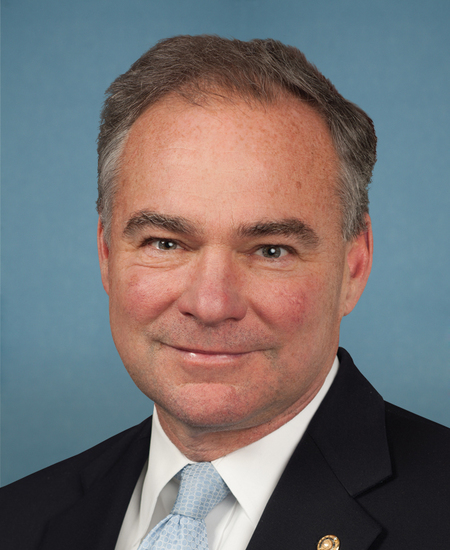
Durbin Questions Witnesses In Senate Judiciary Subcommittee Hearing On Flock Cameras & Protecting Americans’ Right To Privacy
September 23, 2026 Durbin Questions Witnesses In Senate Judiciary Subcommittee Hearing On Flock Cameras & Protecting Americans’ Right To Privacy WASHINGTON – U.S. Senate Democratic Whip Dick Durbin (D-IL), Ranking Member of the Senate Judiciary Committee, today questioned witnesses during a Senate Judiciary Subcommittee on Crime and Counterterrorism hearing entitled “Always Watching: Flock’s Nationwide AI Surveillance Network.” Today’s hearing examined the importance of protecting Americans’ right to privacy and underscored the need for meaningful oversight and accountability measures over Automated License Plate Readers (ALPRs), including Flock cameras, that have been unjustly used for federal immigration enforcement, to share information across state lines, or to stalk Americans. Durbin began his questioning by asking Chad Marlow, senior policy counsel for ACLU, about how data collected by Flock cameras could be used during the Trump Administration’s cruel mass deportation campaign. “We are concerned in Illinois with Operation Midway Blitz, where ICE and the Department of Homeland Security came into our state and started looking for people to deport… It turned out that the majority of people they were deporting were not committing any crimes. Our state passed a law which limits law enforcement from using Flock data for immigration purposes. Have you heard of such laws in other states?” Durbin asked Mr. Marlow. Mr. Marlow explained that while some states have laws limiting the use of Flock data for immigration purposes, federal law supersedes those laws. As a result, if a federal agency were to present a judicial warrant or administrative subpoena, any state would be required to comply. Further, one actor within a state government who has access to a data-sharing database could easily search and release information on someone else’s behalf. Durbin then asked Alasdair Whitney, legislative counsel for the Institute for Justice, about how warrants could prevent federal agencies from unconstitutionally obtaining information through the use of Flock cameras. “Mr. Whitney, I heard your testimony, saying the answer is a warrant. A warrant is certainly recognized under our Constitution as a valid use of government power and authority if used properly. Is that the problem here, that they collect the information before there is any specific allegation that wrongdoing has taken place?” Durbin asked. Mr. Whitney noted that the data collection itself is a problem, but further, unlimited access to people’s personal data is even more of a concern. Mr. Whitney asserted that the Constitution lays out what an unlawful search and seizure looks like, and even with modern technology, a warrant must be obtained in order to access data collected by Flock cameras. Durbin asked Sherriff Ross Teeple of Pinal County, Arizona, about his decision to end his department’s contract with Flock cameras after initially supporting the technology as it had supported the department in resolving Silver Alerts, an emergency public notification system used by law enforcement to locate missing and endangered older adults or individuals with cognitive impairments. “Sheriff Teeple, what was the breaking point for you? You used this information and then decided there was too much of a violation of the Fourth Amendment. Where did you break with the precedent that had been set before you?” Durbin asked. Sheriff Teeple explained that his own community members raised privacy concerns about Flock cameras. When Sheriff Teeple brought these questions and concerns to Flock, he was stonewalled and received little information that alleviated his constituents’ concerns. Specifically, Flock inaccurately told Sherriff Teeple that their cameras didn’t capture photos well enough to recognize a person. However, Sherriff Teeple, using his own department’s database, was easily able to identify people in images captured by Flock cameras. After Flock failed to provide Sherriff Teeple with suitable answers to his concerns, he cancelled the department’s contract with the company. Durbin replied to Sherriff Teeple: “Thank you for raising that point because it is not a matter of just reading license plates. That seems so routine, but it comes to the point where you can identify and recognize the people in the car. You can imagine in a state like Illinois, and in your state as well, the Hispanic population views this as a threat to their existence, where they can be pulled over for driving while looking Hispanic. Unfortunately, we have seen too many instances where people with no criminal records, American citizens, are removed from their homes, arrested, and deported. It is just the kind of thing that is hard, if not impossible, to explain.” Durbin concluded his questioning by asking Lindsey Isaacs about her experience being wrongfully arrested and spending 13 days in jail on eight felony charges for a crime she did not commit. She was arrested on accounts of vehicular homicide after a Flock camera misidentified her vehicle in a fatal October 2025 crash. It took seven months for the faulty charges to be dropped. “When I listen to your description of your experience, the thing that struck me was that the law enforcement agency involved had tangible evidence in your car that could be viewed [that would prove you were not responsible for the accident]. Did you take a look at it later and see the damage they were referring to?” Durbin asked Ms. Isaacs. Ms. Isaacs explained that her car was brand new and had no damage that would indicate she was involved in a vehicular homicide. “If the notion here is to gather accurate information so we don’t make the mistake that led up to your incarceration, there was a failure here. A complete failure and misuse of the information. I’m sorry for what you went through, and thanks for your courage in testifying,” Durbin concluded. Video of Durbin’s questions in Committee is available here . Audio of Durbin’s questions in Committee is available here . Footage of Durbin’s question in Committee is available here for TV stations. -30- Print Email Share Tweet
7e6959f0-b117-448b-80ee-5dbf41252e9bIssued within 24 hours
Other senators' releases published in the day before or after this one.