Van Hollen, Colleagues File Amicus Brief Urging Full Hearing of Federal Appeals Court on Trump Administration’s Latest Attack on the Merit-Based Federal Workforce
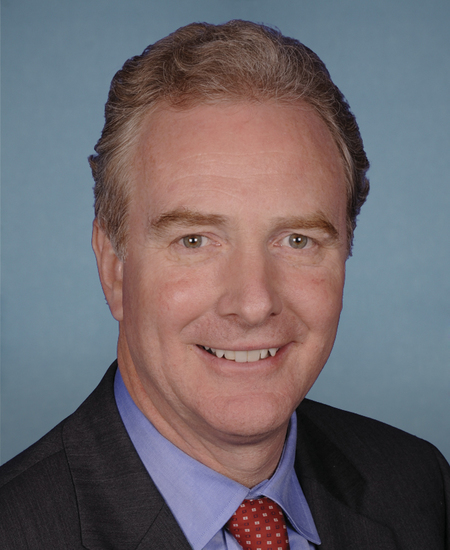
U.S. Senator Chris Van Hollen (D-Md.) was joined by Senators Mark Warner (D-Va.), Tim Kaine (D-Va.), Gary Peters (D-Mich.), Andy Kim (D-N.J.), and Angela Alsobrooks (D-Md.) in submitting an amicus brief to the United States Court of Appeals for the Federal Circuit in the case ofJackler and Jaroch v. Department of Justice, warning of serious consequences for the integrity of the merit-based federal civil service if a Trump Administration Merit Systems Protection Board (MSPB) ruling eroding protections for immigration judges is allowed to stand.
The MSPB recently ruled that the attorney general has constitutional authority under Article II to fire immigration judges at will, potentially limiting those judges’ ability to appeal their terminations. The decision arose from the 2025 firings of two judges and marks a significant shift in precedent that would allow agencies to argue that certain employees who are deemed “inferior officers” are not entitled to traditional civil service protections. In the amicus brief, the Senators outline their concerns with the ruling itself and the possibility that it will open the door to broader constitutional challenges to protections for employees broadly across the federal workforce. Given the gravity of the consequences of this MSPB ruling, the Senators urge the court to grant a hearing en banc, or hearing of the full active bench.
“The Merit Systems Protection Board’s decision poses serious consequences for the constitutional systems of separation of powers and checks and balances, and it will affect thousands of federal workers, many of whom are constituents of amici,”the Senators began in the brief.“The Board’s decision, if left standing, would subvert the Constitutional authority of the Congress to enact any legislation governing inferior officers in the executive branch. This defies over 140 years of Supreme Court precedent and gives the President unchecked authority to take any action regarding inferior officers, constrained only by the few express limitations stated in the Constitution.”
“The Board’s decision, if affirmed, will have far-reaching consequences across the federal workforce. If an Immigration Judge’s duties can be construed to encompass the authority of an inferior officer of the United States, then the same is true for countless other federal positions. And if inferior officers can be exempted from 5 U.S.C. § 7513, then they can be exempted from most any other statute and subject to the President’s nearly unchecked discretion. Because of these consequences, this matter involves questions of exceptional importance, and Amici respectfully ask this Court to grant the petition for initial hearing en banc,”they stressed.
Full text of the argument in the brief can be viewedhereand below.
INTRODUCTION
Anen bancinitial hearing is warranted. The Merit Systems Protection Board’s decision poses serious consequences for the constitutional systems of separation of powers and checks and balances, and it will affect thousands of federal workers, many of whom are constituents ofamici.
The Board’s decision, if left standing, would subvert the Constitutional authority of the Congress to enact any legislation governing inferior officers in the executive branch. This defies over 140 years of Supreme Court precedent and gives the President unchecked authority to take any action regarding inferior officers, constrained only by the few express limitations stated in the Constitution.
The President is obligated by the Constitution to take care that laws are faithfully executed. This includes laws that check the executive’s power like the Civil Service Reform Act of 1978 and the Pendleton Act of 1883. The constitutional authority of Congress to enact civil service due process legislation for even inferior officers, and the federal workforce at large, has been recognized by the Supreme Court sinceUnited States v. Perkinsin 1886.Congress also has the express power under Article I, Section 8 of the Constitution to establish a uniform law on naturalization, a power exercised in the creation of the class of employees called Immigration Judges.
The Board’s decision, if affirmed, will have far-reaching consequences across the federal workforce. If an Immigration Judge’s duties can be construed to encompass the authority of an inferior officer of the United States, then the same is true for countless other federal positions. And if inferior officers can be exempted from 5 U.S.C. § 7513, then they can be exempted from most any other statute and subject to the President’s nearly unchecked discretion.
Because of these consequences, this matter involves questions of exceptional importance, andAmicirespectfully ask this Court to grant the petition for initial hearingen banc.
DISCUSSION
I. The President’s Removal Authority and Consequences for Checks and Balances and the Balance of Power.
The Board’s decision opens the door for the President to sidestep the employee protections carefully set forth in the Civil Service Reform Act (CSRA) and unduly cedes Congressional power to the executive branch.See5 U.S.C. §§ 7511, 7513.
a. Congress’ power to Legislate in Immigration Law and for the Federal Civil Service.
“The President’s power, if any, must stem from an act of Congress or from the Constitution itself.”Youngstown Sheet & Tube Co. v. Sawyer, 343 U.S. 579, 585 (1952). “When the President takes measures incompatible with the expressed or implied will of Congress, his power is at its lowest ebb, for then he can rely only upon his own constitutional powers minus any constitutional powers of Congress over the matter.”Id. at 637-38 (Jackson, J., concurring).
The central constitutional provision undergirding the Board’s decision is the take care clause: that the President must take care that the laws be faithfully executed. Decision, at 12-13; U.S. Const. Art. II, §1, cl. 1. However, the Board fails to note that this case overlaps with Congress’ power “to establish a uniform rule of naturalization” and enact all laws necessary and proper to carry out that power. U.S. Const. Art. I, § 8., cl. 4, 18. Indeed, in its wisdom, Congress determined that a class of employees called “Immigration Judge[s]” responsible for adjudicating inadmissibility and deportations was necessary to further a uniform rule of naturalization.See8 U.S.C. § 1229a. This is an exercise of Congress’ power under Article I. That power must be acknowledged. And the President’s power here is “at its lowest ebb.”Youngstown Sheet, 343 U.S. at 637-38 (Jackson, J., concurring).
Furthermore, Congress has extensively legislated protections over the federal civil service throughout the nation’s history including, but not limited to, the Pendleton Act (1883); the Lloyd-Lafollette Act (1912), the Civil Rights Act (1964), CSRA (1978), Whistleblower Protection Act (1989), and Whistleblower Protection Enhancement Act (2012).See e.g.,United States v. Fausto, 484 U.S. 439, 443-447 (1988) (discussing the history of the CSRA);Elgin v. Dep't of the Treasury, 567 U.S. 1, 5 (2012). These statutes all provide checks on the President’s authority over the executive branch; it is far from a novel concept for Congress to legislate the boundaries of the executive branch’s authority as it relates to the federal workforce.
As the Supreme Court has explicitly held, Congress has unquestioned authority to govern by statute the removals of inferior officers:
We have no doubt that when Congress, by law, vests the appointment of inferior officers in the heads of Departments it may limit and restrict the power of removal as it deems best for the public interest. The constitutional authority in Congress to thus vest the appointment implies authority to limit, restrict, and regulate the removal by such laws as Congress may enact in relation to the officers so appointed.
The head of a Department has no constitutional prerogative of appointment to offices independently of the legislation of Congress, and by such legislation he must be governed, not only in making appointments but in all that is incident thereto.
U.S. v. Perkins,116 U.S. 483, 485 (1886). In 140 years of subsequent decisions, the Supreme Court has repeatedly affirmedPerkins,holding that Congress’ authority to legislate restrictions on removal of inferior officers and other federal employees. See, e.g., Seila Law, LLC v. Consumer Finance Protection Bureau,519 U.S. 197, 204 (2020);Free Ent. Fund v. Public Co. Acctg. Oversight Bd.,561 U.S. 477, 483 (2010);Myers v. U.S.,272 U.S. 52, 159-161 (1926); see also Morrison v. Olson,487 U.S. 654, 691-693 (1988).
The Supreme Court further instructs that federal and other public employees’ rights to civil service protections from removal grounded in statute and regulations rise to the level of 5thAmendment due process.See Cleveland Board of Education v. Loudermill,470 U.S. 532, 539-41 (1985);accord, e.g., Fed. Deposit Ins. Corp. v. Mallen,486 U.S. 230, 240-241 (1988); Do v. Dept. of Housing and Urban Development,913 F. 3d 1089, 1093-94 (Fed. Cir. 2019).
In 1978, Congress enacted the CSRA, which created the MSPB, the Office of Personnel Management (OPM), and the Office of Special Counsel (OSC).See5 U.S.C. §§ 1101-1105, 1201-1222. “The CSRA devised an adjudication system that was to serve as ‘a vigorous protector of the merit system’—the crux of this was the ‘establishment of astrong and independent[MSPB] and Special Counsel.’”Nat'l Ass’n of Immigr. Judges v. Owen, 139 F.4th 293, 306 (4th Cir. 2025) (quoting S. Rep. 95-969, at 6-7) (emphasis in case text). “Congress was deeply concerned with preventing regression back to the ‘spoils’ system of the 19th century, in which employees advanced on the basis of ‘political or personal favoritism.’”Id. (quoting S. Rep. 95-969, at 2-3). Consequently, in Title 5, Congress set forth the “merit systems principles” which, in part, provide that employees are to be “protected against arbitrary action, personal favoritism, or coercion for partisan political purposes.” 5 U.S.C. § 2301(b)(8)(a).
b. Congress expressed its Article I interest in setting the parameters for Immigration Judges.
The CSRA explicitly defines the civil service as “consist[ing] of all appointive positions in the executive, judicial, and legislative branches of the Government of the United States, except positions in the uniformed services[.]” 5 U.S.C. § 2101(1). Congress also explicitly defined which employees the CSRA does and does not apply to, and therefore which employees have removal protections. 5 U.S.C. § 7511(a), (b). Courts generally recognize that the CSRA and Title 5 stand for the overarching purpose of providing certain protections federal employees.See e.g., Grosdidier v. Chairman, Broad. Bd. of Governors, 560 F.3d 495, 497 (D.C. Cir. 2009) (“[t]he CSRA protects covered federal employees against a broad range of personnel practices, and it supplies a variety of causes of action and remedies to employees when their rights under the statute are violated.”);Pham v. American Federation of Government Employees, Local 916, 799 F.2d 634, 636 (10th Cir. 1986) (“[t]he CSRA aspired to ‘promote a more efficient civil service while preserving the merit principle in Federal employment.’ These merit principles represent a continuing concern for a politically neutral, merit-based administration of the Civil Service system.”) (quoting S. Rep. No. 969, 95th Cong., 2d Sess. 1 (1978)).
Below, the agency and the Board both acknowledged that Jackler and Jaroch are employees under 5 U.S.C. § 7511. Decision, at 12 (“the agency asserts that the appellants met the definition of “employee” under 5 U.S.C. § 7511 and thus were entitled to appeal certain adverse actions to the Board”). As discussed, Congress established immigration judges as the adjudicators of deportation and admissibility. 8 U.S.C. § 1229a(a)(1). However, Congress did not opt to modify the general CSRA removal protections of Immigration Judges in separate statute, nor are they defined in the Code of Federal Regulations.See8 C.F.R. § 1003.10.
When Congress sets forth certain parameters for a position created by statute, it does so with intention.SeeConnecticut Nat'l Bank v. Germain, 503 U.S. 249, 253-254 (1992) (“[w]e have stated time and again that courts must presume that a legislature says in a statute what it means and means in a statute what it says there.”). In the context of Administrative Patent Judges, Judge Hughes of this Court has articulated a rule that where “Congress described specific removal procedures for [the Director and Commissioner of Patents] strongly implies it intended that all other USPTO employees and officers enjoy the Title 5 protections provided in [35 U.S.C. § 3(c)].”Polaris Innovations Ltd. V. Kingston Tech. Co., 792 Fed. Appx. 820, 831 (Fed. Cir. 2020) (Hughes, J., concurring). Furthermore, “Congress knows how to exempt a civil service position from the protections found in chapters 75 and 77 of title 5 if it so desires.”King v. Briggs, 83 F.3d 1384, 1388 (Fed. Cir. 1996). Therefore, if Congress intended to give Immigration Judges the status of inferior officers, it would have expressly done so. Or, alternatively, if it was concerned that Immigration Judges would be subject to at-will removal because of their influence and authority over executive policy, it would have crafted some sort of for-cause protection scheme seen elsewhere in the removal case law.See e.g.,Free Enter. Fund v. Pub. Co. Accounting Oversight Bd., 561 U.S. 477, 514 (2010);Seila Law LLC v. Consumer Fin. Prot. Bureau, 591 U.S. 197, 204 (2020).
This case presents two employees situated within a longstanding framework established by Congress, and an executive branch assertion to pluck those employees out of that framework under the authority of Article II. The Board held here that Article II does not permit Congress to enact removal protections for inferior officers exercising significant policymaking authority in 5 U.S.C. § 7513, permitting the terminations of Jackler and Jaroch without due process. Decision, at 16. That wholly ignores Congressional authority under the constitution and the protections of the CSRA.
“[T]he conflict between the ‘merit system’ and the ‘spoils system’ is far from over.”Craig v. Celeste, 646 F. Supp. 47, 48 (S.D. Ohio 1986). An initial hearingen bancis warranted for this constitutional impasse.
II. The Board’s expansive interpretation of Article II could consume broad sections of the federal workforce.
The Board’s holding rested on the assertion that “the appellants as immigration judges wielded vast administrative authority in an area of significant consequence, and the decisions entrusted to their discretion can ‘involve policy choices that bear on this Nation’s international relations.’” Decision, at 16 (quotingArizona v. United States, 567 U.S. 387, 395 (2012)). The Board pointed to the fact that Immigration Judges “exercised their ‘independent judgment and discretion’… including conducting hearings and exercising [] adjudicative authorities” and “many circumstances exist where an immigration judge’s decision will remain the final decision of the United States.” Decision, at 15.
There are currently over 2 million federal employees. Amici represent approximately 330,599 workers across 4 states. Many of these Federal Employees could likely fall within the ambit of an inferior officer under the Board’s construction of inferior officers, thus rendering them at-will employees. These may include Social Security Administration claims representative issuing replacement Social Security cards, an IRS employee reviewing and approving a tax return, a national parks ranger issuing camping permits, a Customs and Border Protection Officer letting someone into the United States, or a Department of Agriculture food safety inspectors giving a satisfactory rating to a food processing plant. All of these employees exercise discretion and judgment, review evidence, and make determinations that could be a final decision of the United States in the same way that an Immigration Judge does.
Further, the Board’s reasoning contains no limiting principle that would cabin the holding to only 5 U.S.C. § 7513 or only the CSRA. Instead, the Board’s reasoning would fundamentally void all Congressional statutes affecting federal employees, including but not limited to minimum wage statutes, Lloyd-Lafollette Act protections to vindicate Congressional oversight authority, Hatch Act and Pendleton Act protections that ensure the civil service does not return to the spoils system, and countless others. All such protections would become solely a function of discretionary executive largesse—a position that the Administration now ventures again.See, e.g.,91 Fed.Reg. 5580, 5594-5595, 5599, 5600 fn.180, 5602 (Feb. 6, 2026). This is not a novel position but rather a position repeatedly rejected by courts going as far back asPerkinsand must now be rejected again.The ramifications here are monumental. This decision could lead to a judicially authorized reshaping of separation of powers and system of checks and balances, and the exclusion of a substantial portion of the executive branch from the oversight of Congress.
CONCLUSION
Due to the questions of exceptional importance at issue, this Court should grant the petition for initial hearingen banc.
7f77d851-8aef-4303-b2a1-c0c633b9f0f2Issued within 24 hours
Other senators' releases published in the day before or after this one.