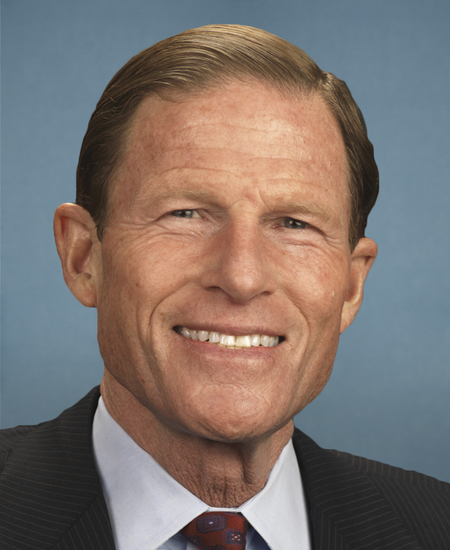
Blumenthal Slams DOT Proposal Promoting Deceptive & Misleading Advertising Hurting Consumers
[WASHINGTON, D.C.] – U.S. Senator Richard Blumental (D-CT) wrote to U.S. Department of Transportation (DOT) Secretary Sean Duffy opposing a proposed rule that would weaken consumer protections by allowing airlines to advertise misleading ticket prices. DOT’s proposed rule would gut the existing Full Fare Rule, which requires airlines and ticket agents to display the total cost of a ticket at least as prominently as its subcomponents—making sure consumers aren’t misled by deceptive pricing. In his letter, Blumenthal highlights how DOT’s proposed rule prioritizes airline companies, promoting advertising that hurts consumers, writing, “The proposed rulemaking contemplates repealing the Full Fare Rule entirely – eliminating longstanding requirements that airlines clearly and transparently disclose the total price consumers must pay. Put simply, enacting this rule would only serve the interests of airfare advertisers at the direct expense of consumers.” “In addition to inflating costs, implementing the proposed rule would upend decades of settled expectations in the transparency of airfare, enabling more confusing and deceptive advertising,” continued Blumenthal. “Americans should have confidence that the price they see advertised is the price they will pay when they get to check out. DOT’s proposed rule serves the opposite result.” “At a time when the cost of airfare has skyrocketed in significant part due to the war of choice that President Trump initiated against Iran in February, 2026, now is the worst possible time to empower airfare advertisers to return to an era of extracting more money from consumers through confusing and deceptive airfare advertising,” concluded Blumenthal. Blumenthal is a longstanding advocate for consumer protections and transparency in air fare pricing for travelers, leading legislation such as the Airline Passenger Bill of Rights and the Junk Fee Prevention Act and releasing a report with the Permanent Subcommittee on Investigations regarding sky high airline junk fees. Blumenthal’s full letter to Duffy can be found here and below. Dear Secretary Duffy, I write to provide comments and express my strong opposition to the Department of Transportation’s (DOT) proposal to weaken consumer protections by allowing airlines to advertise confusing or misleading ticket prices. DOT’s proposed rule titled Enhancing Flexibility of Air Fare and Price Advertising (“the rule”) would permit airlines and other travel vendors to obscure the total cost of travel by allowing them to advertise individual components of the airfare, including mandatory fees, with the same prominence as the total fare. [1] Even more concerning, the proposed rulemaking contemplates repealing the Full Fare Rule entirely –eliminating longstanding requirements that airlines clearly and transparently disclose the total price consumers must pay. Put simply, enacting this rule would only serve the interests of airfare advertisers at the direct expense of consumers. Accordingly, I urge DOT to reverse course and withdraw the notice of proposed rulemaking immediately. The proposed rulemaking would gut DOT’s 2011 Full Fare Rule, which requires airlines and other vendors to advertise the total price of airfare to consumers and prohibits displaying individual component fees as or more prominently than the total fare. [2] This rule addressed the common airline practice of relying on deceptive base fare advertising – often called “drip pricing” – to attract budget-conscious travelers before presenting them with a higher total cost of travel at the conclusion of their purchase. [3] The simple motivation behind the Full Fare Rule is just as valid today as it was in 2011: “In order to understand the true cost of travel, consumers need to be able to see the entire price they need to pay to get to their destination the first time the airfare is presented to them.” [4] DOT’s proposal to dismantle the Full Fare Rule would increase costs for consumers. The Department’s poorly reasoned Regulatory Impact Analysis (RIA) presents a distorted cost-benefit analysis of the proposed changes. [5] Air carriers have complied with the Full Fare Rule for more than a decade; more importantly, consumers expect airfare advertising to prominently present the total cost of travel. [6] Contrary to DOT’s conclusory statements, if the rule is implemented, it is inevitable that more consumers will need to invest additional time searching for the full fare or government charges, and will be surprised by unexpected, mandatory fees. [7] And as DOT admits, the consequences of scrapping the Full Fare Rule would be even more dire by inviting the re-emergence of “drip pricing” practices that impose “significant costs” on consumers. [8] In sum, DOT falls short of providing a minimum of evidence and sound reasoning on which to base the proposed, drastic changes to airfare advertising consumer protections. [9] In addition to inflating costs, implementing the proposed rule would upend decades of settled expectations in the transparency of airfare, enabling more confusing and deceptive advertising. [10] Given that fees can constitute a significant portion of the total cost of travel, allowing advertisers to present airfare components more prominently will inevitably mislead and confuse many consumers. [11] The risk of consumer confusion and deception has only grown since the Full Fare Rule was implemented in 2011. Americans should have confidence that the price they see advertised is the price they will pay when they get to check out. DOT’s proposed rule serves the opposite result. Instead of undermining significant consumer and passenger protections, DOT, the airline industry’s sole regulator, should complete implementation of its regulation to improve the transparency of airline ancillary fees and robustly enforce the statutory prohibition on unfair and deceptive practices in air travel. [12] Moreover, at a time when the cost of airfare has skyrocketed in significant part due to the war of choice that President Trump initiated against Iran in February, 2026, now is the worst possible time to empower airfare advertisers to return to an era of extracting more money from consumers through confusing and deceptive airfare advertising. [13] The proposed rule makes clear who DOT intends to benefit. As one commentor noted, “the major airline lobby groups love this.” [14] The Department of Transportation must defend the interests of the American public – not corporate profits. That is why I strongly urge DOT to expeditiously withdraw the notice of proposed rulemaking and return to acting in the interest of the traveling public. Thank you for your attention to this important matter. I look forward to monitoring the status of this proposed rule and hope to see action taken that will protect and promote the interests of the flying public. Sincerely, -30- [1] 91 FR 39932; Docket No. DOT–OST–2025–0831. [2] 76 FR 23110, Enhancing Airline Passenger Protections; Allyson Versprille, “Trump’s DOT Moves to Roll Back Obama-Er Airfare Marketing Rule,” Bloomberg News , June 30, 2026, https://www.bloomberg.com/news/articles/2026-06-30/trump-s-dot-moves-to-roll-back-obama-era-airfare-marketing-rule. [3] Mateusz Maszczynski, “Airlines May Soon Be Allowed to Advertise Just the Cheaper Base Fare Excluding Taxes or Fees Under DOT Proposal,” PYOK , July 5, 2026, https://www.paddleyourownkanoo.com/2026/07/01/airlines-may-soon-be-allowed-to-advertise-just-the-cheaper-base-fare-excluding-taxes-or-fees-under-dot-proposal/. [4] 76 FR 23143. [5] Enhancing Flexibility of Air Fare Price Advertising Regulatory Impact Analysis, RIN 2105-AF37 (Feb. 2026) [hereinafter RIA]. [6] See Comment from National Consumers League, et al. (Aug. 21, 2026), https://www.regulations.gov/comment/DOT-OST-2025-0831-1336. [7] RIA at 7. [8] RIA at 9. Indeed, eliminating the Full Fare Rule would, as the American Society of Travel Advisors explains, “risk introducing unnecessary inconsistency into the marketplace and could make comparison shopping more difficult for consumers.” Comment from American Society of Travel Advisors, Docket No. DOT-OST-2025-0831, (July 30, 2026), https://www.regulations.gov/comment/DOT-OST-2025-0831-0105. [9] RIA at 6 (“The benefits of the proposed rule are qualitative in nature.”); id. at 7 (“the economic effects of the proposed rule are unquantified”); id. at 8 (“The implications of repealing the FFAR in whole or in part, particularly regarding future advertising requirements and enforcement policies, are highly uncertain.”); id. at 9 (“The effects of repealing the FFAR in whole or in part are unquantified and uncertain.”). [10] See Comment from National Consumers League, et al. (Aug. 21, 2026), https://www.regulations.gov/comment/DOT-OST-2025-0831-1336. [11] See The Sky’s the Limit, The Rise of Junk Fees in American Travel, Majority Report, Permanent Subcommittee on Investigations (Nov. 24, 2024), https://www.hsgac.senate.gov/wp-content/uploads/2024.11.25-Majority-Staff-Report-The-Skys-the-Limit-The-Rise-of-Junk-Fees-in-American-Travel-1.pdf. [12] 89 FR 34620. [13] Rajesh Kumar Singh, Alessandro Parodi, Joanna Plucinska, “Airline ticket prices may stay high as carriers bank fuel relief from Iran deal,” Reuters, June 22, 2026, https://www.reuters.com/world/asia-pacific/airline-ticket-prices-may-stay-high-carriers-bank-fuel-relief-iran-deal-2026-06-22/. [14] Gary Leff, Airfare Prices Could Get More Confusing As DOT Moves To Weaken Full Fare Advertising Rules , View From the Wing (June 30, 2026), https://viewfromthewing.com/airfare-prices-could-get-more-confusing-as-dot-moves-to-weaken-full-fare-advertising-rules/.
8262ba42-e7bf-4c42-bc34-4838200fcbbdIssued within 24 hours
Other senators' releases published in the day before or after this one.