Congressional Jewish Caucus Urges Secretary Rubio To Preserve The Office Of The Special Envoy For Holocaust Issues As A Permanent And Distinct Entity
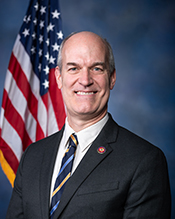
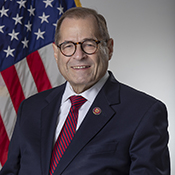
Washington, D.C. – Today, Co-Chairs Congressman Jerrold Nadler (NY-12) and Congressman Brad Schneider (IL-10) led the Congressional Jewish Caucus in calling on Secretary of State Marco Rubio to preserve the office of the Special Envoy for Holocaust Issues (SEHI) as a permanent and distinct entity within the Department of State and not for SEHI to be absorbed under the Special Envoy to Monitor and Combat Antisemitism (SEAS). This letter highlights that SEHI is the only office in the federal government solely devoted to pursuing justice for Holocaust survivors and advocating on their behalf, and the need to appoint a career official as the next SEHI, with the seniority, diplomatic experience, and specialized expertise necessary to negotiate complex restitution and compensation matters. “Since its establishment in 1999, the Office of the Special Envoy for Holocaust Issues has been the only office in the federal government solely devoted to pursuing justice for Holocaust survivors and advocating on their behalf,” the members wrote . “The office has also been supported on a bipartisan basis in Congress and administrations of both parties have actively affirmed its importance. For decades, SEHI has worked with foreign governments, international institutions, and Jewish organizations to pursue restitution and compensation for survivors and their families, recover Nazi-looted property, preserve Holocaust memory, and address unresolved Holocaust-era obligations. As the number of living Holocaust survivors continues to decline, this work is only becoming more urgent.” “That is why we oppose any effort to consolidate or eliminate SEHI and are troubled by the reported plan for the Office of the Special Envoy to Monitor and Combat Antisemitism (SEAS) to absorb the SEHI office. SEHI and SEAS have clearly distinct mandates and responsibilities,” the members continued. “Both are full-time responsibilities that require full-time principals with unique areas of focus and full-time staff with unique expertise. Combining them would not streamline efficiency or eliminate any meaningful duplication; it would risk diminishing the focus, experience, and institutional capacity necessary for each.” “The SEHI portfolio requires deep institutional knowledge, advanced diplomatic acumen, and sustained relationships with governments and international organizations,” the members added . “We ask that you appoint, as soon as possible, a senior career State Department official whose sole and full-time responsibility is serving as Special Envoy for Holocaust Issues. That official should have the seniority, diplomatic experience, and specialized expertise necessary to negotiate complex restitution and compensation matters and to maintain the relationships that SEHI has built over decades.” Signers of the letter include Reps. Jake Auchincloss, Becca Balint, Suzanne Bonamici, Steve Cohen, Lois Frankel, Laura Friedman, Dan Goldman, Josh Gottheimer, Sara Jacobs, Greg Landsman, Mike Levin, Jared Moskowitz, Jerrold Nadler, Jamie Raskin, Jan Schakowsky, Brad Schneider, Kim Schrier, Eugene Vindman, and Debbie Wasserman Schultz. View the full letter here and below. Dear Secretary Rubio, As members of the Congressional Jewish Caucus, we write to urge you to immediately appoint a new Special Envoy for Holocaust Issues (SEHI) and to preserve SEHI as a distinct, permanent office led by a dedicated career State Department official. Since its establishment in 1999, the Office of the Special Envoy for Holocaust Issues has been the only office in the federal government solely devoted to pursuing justice for Holocaust survivors and advocating on their behalf. The office has also been supported on a bipartisan basis in Congress and administrations of both parties have actively affirmed its importance. For decades, SEHI has worked with foreign governments, international institutions, and Jewish organizations to pursue restitution and compensation for survivors and their families, recover Nazi-looted property, preserve Holocaust memory, and address unresolved Holocaust-era obligations. As the number of living Holocaust survivors continues to decline, this work is only becoming more urgent. That is why we oppose any effort to consolidate or eliminate SEHI and are troubled by the reported plan for the Office of the Special Envoy to Monitor and Combat Antisemitism (SEAS) to absorb the SEHI office. SEHI and SEAS have clearly distinct mandates and responsibilities. SEAS is responsible for confronting contemporary antisemitism around the world, while SEHI focuses on Holocaust-era restitution, historical justice, remembrance, and accountability. These missions are complementary, but they are not interchangeable. Both are full-time responsibilities that require full-time principals with unique areas of focus and full-time staff with unique expertise. Combining them would not streamline efficiency or eliminate any meaningful duplication; it would risk diminishing the focus, experience, and institutional capacity necessary for each. The effort is also especially troubling given the highly specialized nature of SEHI’s work and the longstanding success of having it led by a career diplomat with the expertise and continuity necessary to conduct sensitive restitution negotiations. The SEHI portfolio requires deep institutional knowledge, advanced diplomatic acumen, and sustained relationships with governments and international organizations. This unique mandate needs an independent office, fully integrated within the Bureau of European and Eurasian Affairs, and without additional or perhaps superseding agenda items both with external interlocutors and internal stakeholders. Strong institutions must outlast individual officeholders and administrations. We are troubled by the suggestion that the plan to merge these offices may be motivated, at least in part, by a desire to expand the influence of certain personnel within the State Department. Jewish organizations across the ideological and institutional spectrum have recognized the importance of maintaining a dedicated SEHI. In their letter to you, leading organizations including the Conference on Jewish Material Claims Against Germany, World Jewish Restitution Organization, American Jewish Committee, Anti-Defamation League, B’nai B’rith International, and more urged you to appoint a senior diplomat promptly and preserve the uniqueness of this important office. Their concern is shared by former SEAS and Holocaust experts who understand that preserving the distinct mission of SEHI is not bureaucratic duplication—it is an essential part of the United States’ commitment to Holocaust survivors and their families. We urge you to heed their call and to reject any effort to eliminate, consolidate, or dual-hat the SEHI position. Instead, we ask that you appoint, as soon as possible, a senior career State Department official whose sole and full-time responsibility is serving as Special Envoy for Holocaust Issues. That official should have the seniority, diplomatic experience, and specialized expertise necessary to negotiate complex restitution and compensation matters and to maintain the relationships that SEHI has built over decades. This appointment should be made with urgency. The recent departure of Special Envoy Germain creates a vacancy at precisely the moment when continuity is most important. There are fewer Holocaust survivors with each passing year. Every delay risks losing opportunities for restitution, accountability, and historical preservation that may never return. The United States created SEHI because Holocaust survivors and their families require a dedicated advocate within our government. That need has not diminished. It has become more urgent. We urge you to put an end to the effort to consolidate these offices and to appoint a new, dedicated, career Special Envoy for Holocaust Issues without delay. ###
8e5290ad-b48b-4fbd-8025-88dfca36d725Issued within 24 hours
Other senators' releases published in the day before or after this one.