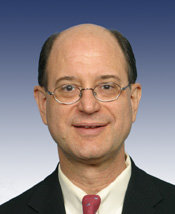
Congressman Brad Sherman Statement on Trump Administration Deal Opening the Door to a Nuclear-Armed Saudi Arabia
September 2, 2026 Press Release "Profoundly disturbed by the path this agreement creates for a nuclear-armed Saudi Arabia..." WASHINGTON, D.C. — Congressman Brad Sherman (CA-32), senior member of the House Foreign Affairs Committee, issued the following statement after reviewing the proposed U.S.-Saudi Arabia Section 123 Agreement for peaceful nuclear cooperation submitted to Congress by the Trump Administration: “I have read the proposed 123 Agreement that the Trump Administration has sent to Congress, both the unclassified and classified portions. The classified portion of the Agreement includes a blank page labeled “to be filled in later.” Clearly the Trump Administration has not submitted the Agreement for review as required by the Atomic Energy Act of 1954, which requires that Congress see the whole agreement. I am profoundly disturbed by the path this agreement creates for a nuclear-armed Saudi Arabia. This deal claims to facilitate peaceful nuclear technology for Saudi Arabia but intentionally excludes the very safeguards that determine whether or not a country with nuclear technology can use it to build nuclear weapons: the Gold Standard and Additional Protocol. Not only that, but this agreement explicitly allows uranium enrichment on Saudi soil under certain conditions. And only President Trump, not the Congress, will determine if those vague conditions have been met. Crown Prince Mohammad Bin Salman has been clear about his intentions to pursue a nuclear weapon, and Saudi Arabia has already shown a willingness to advance down that path covertly by standing up an undeclared, Chinese-backed yellowcake-extraction facility just a few years ago. Saudi Arabia is in a volatile region that has seen the collapse of many dictatorships that were thought to be stable. It was the United States that provided preliminary nuclear technology to Iran through the Atoms for Peace program when it was ruled by a friendly, pro-Western monarch – and all of the technology in the hands of the Shah in 1978 fell into the hands of the Ayatollah in 1979. Today, we are fighting a war designed to prevent Iran from having an uncontrolled nuclear program. Now, the Trump Administration is green-lighting an uncontrolled nuclear program for Saudi Arabia. While the current Saudi government is far less problematic than the one in Tehran, no one knows who will be in power in Riyadh ten years from now. This region has seen the collapse of many dictatorships that were thought to be stable, and this deal gambles the nuclear security of the United States and the world on the very weak assumption that pro-Western leaders will continue to head Saudi Arabia in the decades to come. A Saudi nuclear bomb would shred the nonproliferation regime of the last half century. Once Saudi Arabia has an uncontrolled nuclear program with America’s blessing, Egypt, Turkey, and perhaps South Korea and Brazil will not be far behind. This should not be a Democratic or Republican issue – this is about American national security, and the United States’ longstanding bipartisan commitments to non-proliferation. It was the policy of the first Trump Administration that a nuclear deal with Saudi Arabia needed to include the Gold Standard and Additional Protocol provisions. Secretary of State Marco Rubio recognized the need for these safeguards years ago when he joined me in introducing the Saudi Nuclear Nonproliferation Act in 2016, and I applaud Senator Kennedy (R-LA) for registering his opposition to this no-safeguards Saudi nuclear deal last month. Members of Congress – Republican and Democrat alike – must reject this deal with a Joint Resolution of Disapproval until the necessary safeguards are included.” ### Issues : Foreign Policy Working for a Peaceful World
91c600bc-0eff-415d-b4a1-612adeded5a1Issued within 24 hours
Other senators' releases published in the day before or after this one.