Warnock, Warren Launch Investigation into Trump Admin’s Cuts to Rural Child Care
In the past year, the Trump Administration has withheld Head Start funding and froze federal grants that helps lower the cost of child care
According to CNBC, a year of child care in Georgia costs more than a year of in-state tuition at the University of Georgia
Senators Reverend Warnock, Warren, and lawmakers: “The Trump administration is failing families across the country and adding to the affordability crisis facing working-class families.”
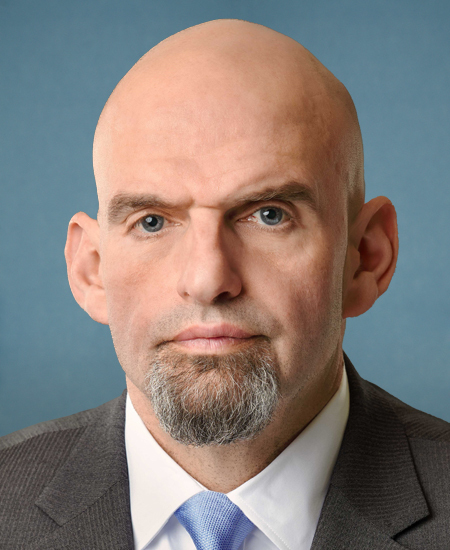
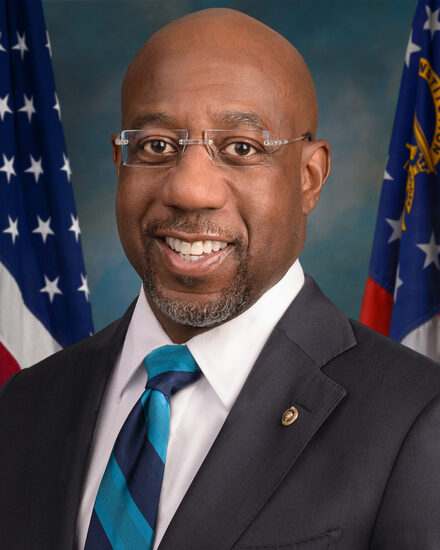
Washington, D.C. –Today, U.S. Senators Reverend Raphael Warnock (D-GA) and Elizabeth Warren (D-MA) led several of their Senate colleagues in announcing a new investigation into the Trump Administration’s cuts to affordable child care that disproportionately affect rural families.
The senators questioned the Department of Health and Human Services’ Administration of Children and Families (ACF) and the U.S. Department of Agriculture (USDA) about these threats to child care programs in rural communities, in addition to the staffing and funding cuts to these agencies.
“Families across the country are being forced to choose whether to scale back work, forgo essential items, or break the bank to access and afford child care. The Trump administration’s dangerous cuts to the agencies whose programs make child care more accessible and affordable only make this situation worse,”wrote the senators.
Under the Trump administration, the cost of child care is continuously rising. In August 2025, child care prices were five percent higher than they were a year prior. Forcing parents, especially mothers, to reduce their working hours or leave the workforce entirely. This expense is especially burdensome for rural families, who often spend more of their income on child care and have fewer options. Many families are being forced to make difficult decisions, cutting back on basic necessities and delaying having children due to a lack of affordable options that meet their needs.
Over the last year, the Trump Administration has cut essential programs that would lower costs for families and provide child care providers with additional funding by:
“Trump vowed to lower costs for Americans, yet his administration’s actions disregard “one of the biggest expenses families face—child care—and the resources needed to alleviate the country’s ongoing child care crisis,”the senators continued.
The senators asked that by February 16th, 2026, the USDA provide details on how staffing reductions have impacted rural child care programs, any funding modifications to these programs, an analysis of the effects of the government shutdown on rural child care services, and an evaluation of the current child care crisis in rural areas.
In September 2025, Senator Warnock reintroduced theChild Care Access Means Parents in Schools (CCAMPIS) Reauthorization Act, which would boost funding and expand child care access for parents returning to school. Additionally, the senator has introducedthe Child Dependent Tax Credit Enhancement Act, which aims to increase the Child Tax Credit from the existing maximum of $2,000 per child aged 0-16 to $4,320 for children under 6, and $3,600 for children aged 6-17. Making this tax credit permanent would provide significant relief for working families by reducing child care expenses.
In addition to Senators Warnock and Warren, the letter was also signed by Senators Angela Alsobrooks (D-MD), Ben Ray Luján (D-NM), and Alex Padilla (D-CA).
The full letter text can be foundHEREand BELOW:
“Dear Under Secretary Lindsey and Assistant Secretary Adams,
We write today regarding recent data that indicates American families—particularly in rural areas—are struggling with rising child care costs since President Trump took office. These results come as the Trump administration has slashed staff at agencies and programs that support affordable child care, including the Administration of Children and Families (ACF) and the United States Department of Agriculture Rural Development (USDA RD), raising serious concerns that the Trump administration is failing families across the country and adding to the affordability crisis facing working-class families. To inform our legislative responsibilities with regard to the nation’s child care system and the economy, we request that you provide information regarding ACF and USDA’s current capacity to support child care, particularly in rural communities.
The Nationwide Child Care Crisis
Child care costs in the United States are skyrocketing. In August 2025, child care prices were five percent higher than they were the year prior, and a recent Economic Policy Institute study found that child care for one infant is now more expensive than public college tuition in 38 states, and rent in 17 states Child care has become “one of the biggest expenses families face,” forcing parents—especially mothers—to reduce their working hours or leave the workforce entirely. This problem is especially acute in rural areas, where families spend even more of their income on child care. Recent polling indicated that about one in five rural families say “they’re having trouble finding work, are cutting back on basic necessities, and are putting off growing their families due to a lack of affordable options that meet their family’s needs.”
At the same time, child care providers struggle to attract and retain staff—meaning child care is not just expensive, it is also hard to come by. The child care workforce faces “sluggish” job growth, driven by low wages and a lack of benefits. Almost half of child care workers “[depend] on at least one public support program, such as Medicaid”—which faces huge cuts under Republicans’ One Big Beautiful Bill Act (OBBBA), exacerbating the child care staffing problem. In rural communities, child care is even more scarce, with nearly two-thirds of individuals living in a child care desert. Low wages, onerous commutes, and lack of resources—like professional development and higher education—impose additional hurdles for rural child care providers, leaving these communities especially vulnerable to chronic workforce shortages and the program cuts under the OBBBA.
Even more recently, the Trump administration has targeted providers and families yet again—rescinding a Biden-era final rule that changed the Child Care and Development Fund (CCDF) to create more financial stability for providers while lowering costs for families. Specifically, this rule ensured “on-time payments based on enrollment” to providers and capped family copayments for child care at seven percent of a family’s income. Eliminating this rule, which has “sparked many of the recent positive changes in child care policy in states across the country,” will drive up costs for families and add “chaos and confusion” to a child care system already in crisis. At the same time, the administration has attempted to freeze $2.4 billion in CCDF funding for child care programs in California, Colorado, Illinois, Minnesota, and New York. States are challenging the legality of this freeze, but the consequences would be devastating should the courts permit the administration to permanently withhold the funds. The freeze could impact more than 500,000 children, potentially costing families more than $400 million annually in lost parent earnings and cost businesses around $119 million annually in reduced revenue from workforce disruptions. An additional 156,000 mothers of young children could “be pushed out of work” due to the loss of their child care.
The United States’ child care crisis shortchanges families, providers, and the country’s overall economic growth. The Trump administration’s actions are making this crisis worse, and polling conducted since President Trump took office indicates that the overwhelming majority of rural Americans say the ability to “find and afford quality child care” is either “a major problem” or in a “state of crisis.” This poll also indicates that rural Americans want “federal action,” specifically in the form of increasing funding that expands “options for affordable, quality child care.” The Trump administration has done the exact opposite.
The Trump Administration’s Attacks on Child Care
President Trump vowed to “make America affordable” and “bring prices down, starting on Day One.” Despite child care being one of the biggest costs American families face, the Trump administration has taken a wrecking ball to the federal programs that aim to make child care more accessible and affordable, including ACF and USDA’s Rural Development Office. ACF administers Head Start, which is essential to children across the country. Head Start is especially crucial in rural communities, where it is often the only licensed child care program available.
President Trump, however, has attacked Head Start at every turn since his inauguration. Just weeks after taking office, the Trump administration illegally froze funding for grantees, which forced some Head Start programs to temporarily close—threatening the security of thousands of families’ child care. In April, the Trump administration began to arbitrarily hold grantees’ funds hostage, demanding they comply with onerous and vague new regulations or risk losing their funding entirely. Weeks later, HHS unexpectedly closed half of ACF’s field offices and laid off 500 of its employees—around 30 to 40 percent of the agency—many of whom grantees relied on for help navigating funding delays and vague new requirements. Even more recently, while the government was shut down, HHS “accidentally laid off nearly twice as many people as intended” during their reduction-in-force (RIF) notices—including around 47 employees from ACF. These RIFs further depleted ACF of critical staff at a time when the agency was already dangerously understaffed, and 134 Head Start centers serving over 58,000 children faced lapses in their funding grants due to the shutdown.
USDA also administers various crucial programs that invest in child care infrastructure, specifically in rural communities, to make care more accessible. This includes the agency’s Rural Housing Service, Rural Business-Cooperative Service, and Rural Utilities Service, which increase child care supply by “support[ing] center-based child care facilities” and qualifying “home-based child care.” In Fiscal Year 2024, approximately $2.3 billion was allocated to USDA RD programs, which helped to fund the construction of new child care centers and provide support with renovations to existing programs, including covering the cost of “equipment, furnishings, and utilities necessary to support child care in rural areas.” In addition to investing in child care infrastructure, USDA plays an essential role in providing child care centers and home-based providers with nutritious meals and snacks for children through programs like the Child and Adult Care Food Program—which served around 4.4 million children last year—and the Supplemental Nutrition Assistance Program (SNAP)—which many Head Start families rely on.
Instead of strengthening the programs that aim to address the rural child care crisis, President Trump is firing the people who administer them. USDA has been one of the most devastated departments during the Trump administration, with over 20,000 staff reductions since January. USDA field offices—which already struggled with low staffing—have also faced cuts and closures, and the agency’s proposed reorganization plan would exacerbate this issue by further consolidating these regional hubs. Draining USDA RD offices of local employees who know their communities best strips these offices of the “institutional knowledge and operational capacity” needed to effectively administer USDA RD programs—including the programs that support child care.
Meanwhile, the agency slashed funding for food assistance programs that serve child care centers. In March, USDA confirmed that around one billion dollars of “funding previously announced” for programs that enabled rural schools and child care programs to buy local food from farmers was “no longer available” and would be “terminated following 60-day notification.” Later, in an unprecedented move, the Trump administration refused to tap into contingency funds to fund SNAP benefits for the month of November during the government shutdown, putting 42 million Americans at risk of food insecurity—including families who also simultaneously access Head Start. Only after multiple court orders did the Trump administration agree to partially fund SNAP benefits for November.
While new polling shows that families across the country need the federal government to use its resources to address the child care crisis, the Trump administration is haphazardly slashing staff and closing field offices at agencies that distribute those resources. ACF’s and USDA’s programs help rural communities “address the need for improved access to affordable, high-quality child care and early learning,” as well as “promote a robust rural economy.” President Trump vowed to lower costs for Americans, yet his administration’s actions disregard “one of the biggest expenses families face”—child care—and the resources needed to alleviate the country’s ongoing child care crisis.
Conclusion and Questions
Families across the country are being forced to choose whether to scale back work, forgo essential items, or break the bank to access and afford child care. The Trump administration’s dangerous cuts to the agencies whose programs make child care more accessible and affordable only make this situation worse. To inform our legislative responsibilities with regard to the nation’s child care system and the economy, and to help us better understand USDA and ACF’s current capacity to support child care, particularly in rural communities, we request that you provide the following information by February 16, 2026:
1. How have workforce reductions, furloughs during the shutdown, and agency reorganization efforts affected the programs at your agency that support child care programs in rural communities?
a. Does your agency track the accessibility and affordability of child care in rural communities? If so, please explain how your agency tracks this information and the agency’s findings.
b. Is your agency monitoring how changes in staffing levels and field offices are affecting the affordability and accessibility of child care in rural communities? If so, please provide details on what the agency is finding.
2. How many rural child care programs were supported by funding from your agency in Calendar Year 2024?
a. How many were supported in Calendar Year 2025?
b. How many of these do you intend to fund in Calendar Year 2026?
c. Have any of these programs been halted or terminated due to workforce reductions and changes at field offices?
d. How many of these programs experienced delays in receiving their funding due to these organizational changes?
3. How much funding for USDA RD programs was allocated to child care infrastructure projects in Calendar Year 2024?
a. How much funding was allocated to these programs in Calendar Year 2025?
b. How many do you intend to allocate to these programs in Calendar Year 2026??
c. Which USDA RD programs primarily funded these projects?
d. How many child care infrastructure projects were funded by USDA RD programs, and what parts of the country were these projects located?
e. How many children do you anticipate these infrastructure projects serving?
f. Did you conduct any analysis on how these projects will impact the affordability and accessibility of child care? If so, please share your findings.
4. Does your agency track child care costs in a community or region when determining where to direct funding or support child care programs?
a. If so, what trends in child care costs has your agency found?
5. Did the recent government shutdown delay or halt funding for any of the rural child care programs your agency supports?
6. Do you believe that there is a child care crisis in rural communities, and that these communities need further investment in child care programs to expand access and improve affordability of care?
a. What tools can your agency use to best address this crisis and create more rural child care programs?”
###
93d22829-71a8-4da4-98e5-47b26d47f6b9Issued within 24 hours
Other senators' releases published in the day before or after this one.