Rep. Gluesenkamp Perez Introduces Legislation to Expand Timber Markets and Support Wood Products
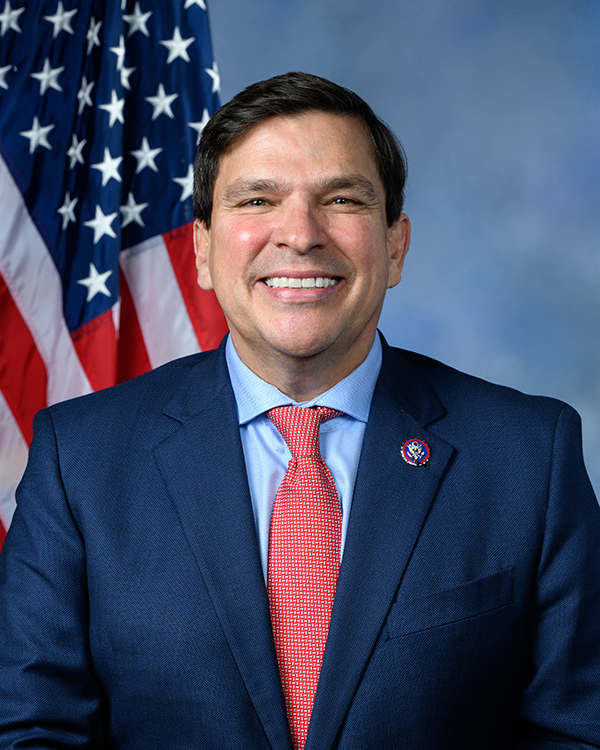
Resources / Press Share on Rep. Gluesenkamp Perez Introduces Legislation to Expand Timber Markets and Support Wood Products Oct 29, 2026 Press WASHINGTON, DC — Last week, Reps. Marie Gluesenkamp Perez and Bruce Westerman (R-AR) introduced the Strong American Wood (SAW) Act, a comprehensive legislative package to expand market options for wood products and bring relief to America’s mills and timber communities. Southwest Washington has been home to one of the nation’s most robust timber economies for decades. However, in recent years, mill closures in the state have led to reductions in timber markets. As plastics increasingly replace paper products, saw mills have struggled to remain viable without paper mills to buy their products. This means that at the same time, forest thinning becomes more expensive–leading to more severe wildfires–while microplastics continue to poison our bodies. To fix this, the SAW Act would: Expand the Carbon Storage Tax Credit to cover biochar and solid-stored carbon. Lower barriers-to-entry for woody biomass to be used in transportation fuels. Create more economic and research opportunities for the commercialization of wood products like woody biomass and biochar. Remove tariffs on machinery not produced in the U.S. that is needed to modernize and expand mills. Direct tariff and countervailing duty collections from the long-standing U.S./Canada Softwood Lumber Agreement to be used to create revolving loan funds to promote new home building using domestic wood products and to promote U.S. softwood lumber products. Remove all Buy American/Build America exemptions for all U.S. government-sourced components that could be purchased as a domestic forest product. Establish a domestic timber procurement requirement across all federal building components. Recognize domestic pulp and paper, hardwood, and softwood supply chains as critical national security materials and direct investigations into whether foreign pulp & paper and wood products imports undermine our national security. Preserve American-owned and operated forests by implementing 100% expensing for reforestation expenditures following a natural disaster. Require secondary inspections for wood products and wood-look-alike products to ensure importers disclose full chemical inputs in these products. Require an EPA study to assess the impacts of wildfires on air quality, specifically on PM2.5 levels, and the role pulp & paper and wood products manufacturing plays in reducing wildfires. Return the EPA PM2.5 rule to 12 micrograms per cubic meter allowing for clean air and flexibility for producers. Establish a statutory response to European Union Deforestation Regulations (EUDR) that unfairly targets U.S. wood products produced from the world’s most sustainably managed forests. EUDR promotes wood products from virgin forests such as the Amazon rainforests while discriminating against products from managed working forests like those found in the United States and Scandinavia, where forest sustainability practices far outperform those in southern and Central Europe, Asia, South America, and Africa. “As wildfire emissions continue to spiral, cheap plastic substitutes for timber and paper products pollute our rivers and bodies and folks who work in the woods and mills are continually scapegoated-it’s past time we reevaluate the effectiveness of governmental policies around wood products,” said Rep. Gluesenkamp Perez. “I’m proud to join Bruce Westerman in introducing this legislation and prouder yet to stand with my community in demanding policies that strengthen our timber markets and affirm our commitment to the people who actually make the things we need.” “American pulp and paper producers and wood products manufacturers are foundational industries across rural America. They are under immense pressure from static market conditions, subsidized foreign goods, and an overly burdensome domestic regulatory environment. The effects are underscored by mill closures, reduced production, job loss, and declining investment. These impacts threaten long-term competition in the marketplace, impact rural livelihoods, and put our forest health at risk – priming our forests as tinderboxes for devastating wildfire,” said Rep. Westerman. “The bottom line is that the United States is the world’s largest importer of wood and paper products while our mills are closing and our forests are going up in flames. That should not be so, and it’s why I introduced the Strong American Wood Act to ease regulatory burdens stifling mill growth, to allow U.S. producers to compete with subsidized foreign producers, and to expand markets for our domestic wood and paper products.” Rep. Gluesenkamp Perez has been a strong advocate for working forests and wildfire prevention in Congress. Last year, she introduced the Community Wood Facilities Assistance Act to strengthen the U.S. Forest Service’s (USFS) Community Wood Energy and Wood Innovation Grant Program (CWEWIP) by
98385743-8b7b-4284-949e-baac95c8d428Issued within 24 hours
Other senators' releases published in the day before or after this one.