Bill to Fund Key Health, Workforce, and Education Programs in Maine Signed into Law
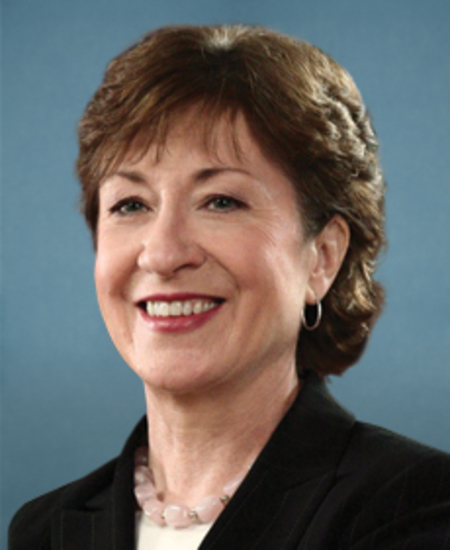
Washington, D.C.– U.S. Senator Susan Collins, Chair of the Appropriations Committee, secured significant funding and legislative language for Maine in the Fiscal Year (FY) 2026 Labor, Health and Human Services, Education, and Related Agencies Appropriations Act. The bill, which passed the Senate last week and was approved by the House of Representatives this afternoon, has been signed into law.
“To address Maine’s shortage of health care professionals, we must invest in workforce development programs, provide support for students in lower-income communities seeking higher education, and increase access to affordablechild care,”said Senator Susan Collins, Chair of the Appropriations Committee.“This bill willprovide support in each of these areas, as well as make targeted investments into life-saving research on Alzheimer’s, cancer, diabetes, and tick-borne diseases.As Chair of the Appropriations Committee, I worked hard toensure this funding and legislativelanguage wasincluded in the final funding bill.”
Funding and legislative language secured by Senator Collins includes:
Local Projects:$112.4 million for Congressionally Directed Spending projects in Maine.
Department of Health and Human Services (HHS):
National Institutes of Health (NIH):$48.7 billion for NIH, an increase of $415 million, including:
Alzheimer’s:In addition to NIH funding, the bill provides $41.5 million for CDC Alzheimer’s disease activities, as well as:
NIH Indirect Costs:Maintains language prohibiting changes to indirect cost rates. Last year, Senator Collinsannouncedher opposition to the proposed 15 percent cap on indirect costs, which are usually negotiated between NIH and the grant recipient. In April, Senator Collinschairedthe first full Committee hearing with a focus on the importance of biomedical research. At Senator Collins’ invitation, Dr. Hermann Haller, President of the Mount Desert Island Biological Laboratory,providedtestimony on how the proposed NIH cap would affect biomedical research occurring in Maine and at institutions across the country. At a June hearing to review the FY 2026 budget request for NIH, Senator CollinsquestionedNIH Director Jayanta Bhattacharya on the proposed cap on indirect costs.
Duchenne Muscular Dystrophy:$9 million for CDC Muscular Dystrophy activities.
Lyme and Tick-Borne Disease:$27 million for CDC Lyme activities and $64.6 million for vector-borne diseases to support continued implementation of Senator Collins’Kay Hagan Tick Act. The bill also includes $110 million for NIH Lyme and tick-borne disease research and $5 million for LymeX in the HHS Office of the Secretary.
Substance Use Disorders:$1.6 billion for the State Opioid Response Grants; $1.9 billion for the Substance Use Prevention, Treatment, and Recovery Services Block Grant; and $145 million for the Rural Communities Opioid Response program to support efforts to combat the opioid epidemic and other substance use disorders; $640.6 million for NIH’s Helping to End Addition Long-Term (HEAL) Initiative; and $505.6 million for CDC’s opioid overdose prevention and surveillance work. In the 12-month period ending August 2025, there were 69,712 drug overdose deaths reported, indicating a continuing downward trend.
Health Workforce Programs:$305.5 million for Title VIII Nursing Workforce programs and $48.2 million for the Health Resources and Services Administration (HRSA) Geriatric workforce education programs, which include the Geriatrics Workforce Enhancement Program and Geriatric Academic Career Awards.
Building Communities of Recovery:$17 million for Building Communities of Recovery grants through the Substance Abuse and Mental Health Services Administration (SAMHSA).
SIREN Rural EMS: $13.5 million for SAMHSA’s Rural Emergency Medical Services Training and equipment program.
Lifespan Respite Care:$11 million for ACL’s Lifespan Respite Care Program.
Low Income Home Energy Assistance Program (LIHEAP):$4 billion for LIHEAP, an increase of $20 million. At a hearing earlier last year on the FY 2026 budget request for HHS, Senator CollinsquestionedSecretary Robert F. Kennedy, Jr. on the proposed elimination of LIHEAP. At theurgingof Senator Collins, HHSreleasedmore than $400 million in FY 2025 funding for LIHEAP in May. Maine has received $41.6 million in FY 2025 LIHEAP funding.
CDC Dog Importation Rule:Includes report language on CDC’s flawed dog importation rule and calls for CDC to maintain the current pause on implementation of the rule and to restart the rule process. Following an effort led by Senator Collins in 2024, the CDCannouncedthat it will be making critical revisions to its dog importation rule and delay implementation of a problematic provision.
Early Education:$8.8 billion for the Child Care and Development Block Grant andnearly $12.4 billion for Head Start.
Department of Labor (DOL):
Job Corps:$1.8 billion for JobCorps. Senator Collins has strongly opposed the Administration’s proposed elimination of Job Corps. At a hearing to review the Fiscal Year 2026 budget request for the DOL last May, Senator Collinsspokeabout Adais Viruet-Torres, a graduate of Loring Job Corps Center and Husson University who overcame homelessness and now works as a nurse practitioner. In April, Senator Collinssenta letter to Secretary Lori Chavez-DeRemer urging DOL to lift the halt on enrollment at Loring Job Corps Center and Penobscot Job Corps Center. Senators Collins and Jack Reed (D-RI) sent aletterSecretary Chavez-DeRemer requesting DOL to provide information on Job Corps contracts, background check processing, and evaluation plan.
Apprenticeships:$285 million for the Apprenticeship Grant Program.
H-2B Visas:Continued inclusion of bill language to ensure the efficacy of the H-2B program. The bill also includes $61.5 million for Foreign Labor Certification program administration, in part to help with H-2B processing, as well as report language directing the Department of Labor (DOL) to take steps to ensure prompt processing of H-2B visa applications.
DOL Workforce Opportunity for Rural Communities Initiative:$8 million for workers in areas served by the Northern Border Regional Commission.
Department of Education:
TRIO:$1.2 billion to support low-income individuals and first-generation college students. At a hearing last year on the FY 2026 budget request for the U.S. Department of Education, Senator CollinsquestionedSecretary of Education Linda McMahon on the proposed elimination of TRIO programs.
Title I Grants to LEAs:$18.4 billion for Title I Grants to LEAs.Maine received $61.7 million in FY 2025 funds through this program.
IDEA State Grants:$15.2 billion for IDEA State Grants.Maine received $70.8 million in FY 2025 funds through this program.
Perkins Career and Technical Education (CTE) State Grants:$1.4 billion for CTE State Grants. Maine received $7 million in FY 2025 funds through this program.
Pell Maximum Award:Maintains the maximum Pell award for a total of $7,395 for the 2026-2027 school year. Maine students are expected to receive approximately $126.6 million in Pell Grants through FY 2025 funds.
Rural Education Achievement Program (REAP):$225 million to support rural school districts.
Special Olympics Unified Champion Schools:$38 million for Special Olympics programs.
###
994ee647-039f-4456-b8e4-4721a5e7ad22Issued within 24 hours
Other senators' releases published in the day before or after this one.