Fischer Questions Michael Kratsios and Mark Meador at Nomination Hearing
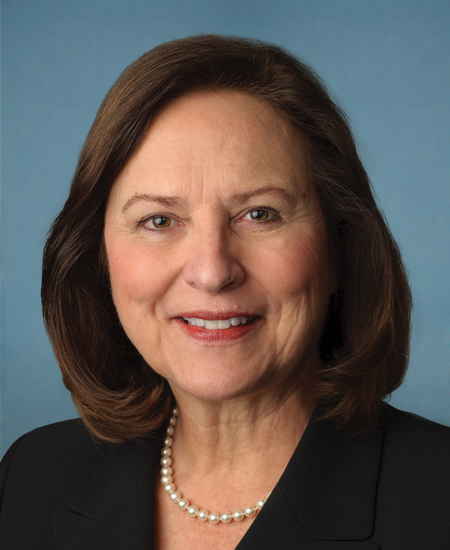
U.S. Senator Deb Fischer (R-Neb.), a member of the Senate Committee on Commerce, Science, and Transportation, questioned two of President Trump’s nominees: Mr. Michael Kratsios, nominated to be the Director of the Office of Science and Technology Policy (OSTP), and Mr. Mark Meador, nominated to be a Federal Trade Commissioner.
During the hearing, Senator Fischer asked Mr. Kratsios about emerging technologies and the Department of Defense’s essential role in shaping national spectrum policy, especially given its unique testing abilities for wireless technology. She also asked about the lessons learned from the America’s Mid-Band Initiative Team (AMBIT) spectrum auction.
Additionally, Senator Fischer questioned Mr. Meador about how he would effectively use agency resources to uphold the Federal Trade Commission’s (FTC) mission. She emphasized the importance of the FTC’s coordination with the Department of Justice (DOJ) on enforcement efforts to protect consumers.
Click the image above to watch a video of Senator Fischer’s questioning
Click
here
to download audio
Click
here
to download video
On the DoD’s Cutting-Edge Spectrum Testing and Innovation:
Senator Fischer:
Mr. Kratsios, I welcome your enthusiasm for advancing American leadership on emerging technologies. As you know, OSTP is responsible for coordinating science and tech policy among federal agencies.
When you were the United States Chief Technology Officer, one of your focuses was advancing DoD's unique testing abilities to drive innovation. And at the time, you stated that the Department of Defense is “at the forefront of cutting-edge 5G testing and experimentation.” Do you still believe that?
Michael Kratsios:
I do, yes.
Senator Fischer:
And when it comes to 5G and other spectrum matters, do you believe that DOD testing should be faithfully integrated into a national spectrum policy?
Michael Kratsios:
Yes, DOD is a critical component of the spectrum strategy.
On AMBIT:
Senator Fischer:
Previously, I understood you were involved with "America's Mid-Band Initiative Team," known as AMBIT, and you brought that up a couple times yesterday in our discussion. And so, I looked into it a little bit more to familiarize myself with it. That was an auction of mid-band spectrum held by DOD, and it was to make those licenses available to wireless companies. Is that correct?
Michael Kratsios:
Yes.
Senator Fischer:
Did the AMBIT auction cause more congestion for defense systems operating in the lower 3 [GHz] band?
Michael Kratsios:
In my opinion, I think AMBIT provided an opportunity for a technical analysis of that spectrum range and find a way to be able to still complete the national security mission by moving some of the workloads that were in the auction band to lower bands.
Senator Fischer:
So, they had to compress that band even more then in order to accommodate that into the lower 3. Is that correct?
Michael Kratsios:
Yeah, so some of the activities that were in the band that ultimately were auctioned were moved down to lower bands.
Senator Fischer:
I also understand that AMBIT struggled on the back end with major relocation costs from the defense systems that were displaced in that process of compressing them. Is that correct?
Michael Kratsios:
I haven't tracked the details of that since I left office, but there's always transition costs associated with freeing up bands, typically.
Senator Fischer:
Are you familiar with any of the costs? Are those readily available, so we can access those? Do you know how that cut into the net revenue that was expected from the auction?
Michael Kratsios:
I'm not familiar with those details, but I can try to see what's publicly available.
Senator Fischer:
That would be great.
On Responsible FTC Enforcement:
Senator Fischer:
Mr. Meador, over the years, the Federal Trade Commission has faced off in court against the deepening pockets of major corporations, especially when it comes to Big Tech. If confirmed, how would you prioritize litigation and effectively use agency resources in upholding the FTC mission?
Mark Meador:
That's a very important topic. I will say the FTC staff have gotten very good at doing a lot with often much less. If confirmed, my first step will be to consult with the Chairman and the Commissioners and of course, the staff, who understand what challenges they are facing. What do we have on our docket and what resources do we have available? And then we're collaborating with all of them to determine which cases are the highest priority to protect the largest number of consumers from the gravest threats.
On FTC Coordination with the Department of Justice:
Senator Fischer:
It's my understanding that at times there can be tension with that enforcement coordination with the Department of Justice. Do you have any comments on that? Or if that would occur, what would you do?
Mark Meador:
Sure, this is something that has happened frequently in the past. Some of it has unfortunately been very public. I'm confident that President Trump has selected leaders for this administration who can work very well together. I think it is of paramount importance that both agencies be singing from the same hymn sheet, be aligned on policy and enforcement decisions, and there should really be no daylight between them when it comes to how they're enforcing the antitrust laws.
I think anything is possible if you don't care who gets the credit. And so, when it comes to merger clearance, we should be focusing on protecting consumers as fast as possible, not trying to get one up on the other agency.
Senator Fischer:
Thank you both for putting yourselves forward to serve in these very dangerous times that we live in. I really appreciate it and thank you to your families as well.
9d880cb8-8946-4c6b-a3e7-0e9fc2695bc2Issued within 24 hours
Other senators' releases published in the day before or after this one.