Blackburn Introduces Legislation to Expand Access to Mental Health Care for Veterans Through Partnerships with Community Providers
Blackburn Introduces Legislation to Expand Access to Mental Health Care for Veterans Through Partnerships with Community Providers
March 20, 2026
WASHINGTON, D.C. –
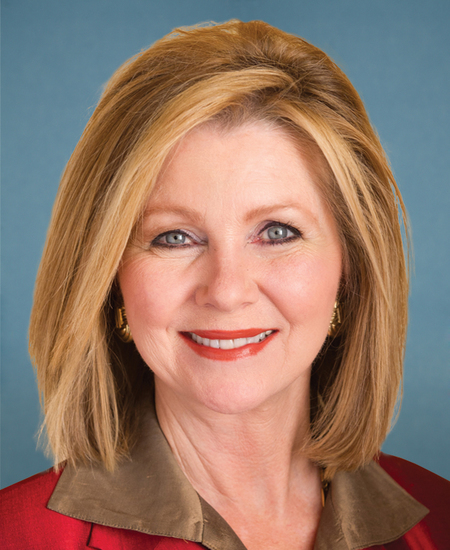
U.S. Senator
Marsha Blackburn
(R-Tenn.) introduced the
Recognizing Community Organizations for Veteran Engagement and Recovery (RECOVER) Act
to expand access to evidence-based mental health care by strengthening partnerships between the U.S. Department of Veterans Affairs and community-based organizations:
“Far too many of our nation’s heroes have been lost to suicide, and we need to prevent future tragedies by ensuring veterans have access to timely mental health care,”
said Senator Blackburn.
“The
RECOVER Act
would promote public-private partnerships between the VA and community-based mental health care providers and ensure veterans get the quality mental health support they've earned.”
U.S. Representative
Mike Bost
(R-Ill.)
introduced
companion legislation in the House.
BACKGROUND
U.S. military veterans and their families face a growing crisis in access to timely and appropriate mental health care.
In 2021, an average of
17.5
veterans died by suicide each day. In 2020, the veteran suicide rate was
57%
higher than that of non-veteran adults. At the same time, demand for mental health services continues to strain available resources, with many VA facilities exceeding the Department’s
20-day
wait time standard for mental health appointments.
Community-based organizations frequently work alongside the VA to fill gaps in mental health care, but many of these partnerships lack the resources necessary to deliver clinical care at scale. Despite increased federal investment in suicide prevention, access to timely care remains inconsistent for many veterans.
RECOVER ACT
Specifically, the
RECOVER Act
would establish a three-year pilot program at the VA and:
Authorize $20 million annually for three years to provide grants to nonprofit organizations operating outpatient mental health facilities that serve veterans.
Allow eligible facilities to receive grants of up to $1.5 million per year to expand or operate mental health services for veterans.
Require participating clinics to ensure clinicians receive training in mental health care tailored to veterans.
Ensure that mental health care provided through the program is free of charge to veterans.
Encourage providers to connect veterans with VA health care enrollment and services.
Promote public-private partnerships between the VA and community-based mental health providers to supplement existing VA capacity.
Require grants to be distributed across both rural and urban areas, prioritizing medically underserved communities and areas with high veteran suicide risk.
Require participating clinics to collect outcomes data and report results to ensure accountability and measure effectiveness.
Direct the VA to evaluate the pilot program and report to Congress on improvements in access to care and mental health outcomes.
ENDORSEMENTS
This legislation is supported by the
Tragedy Assistance Program for Survivors (TAPS)
,
Mission Roll Call
,
Cohen Veterans Network
,
Jewish War Veterans
,
Berry Law
,
Easterseals Serving DC/MD/VA
, and
Centerstone
.
“This important legislation would establish a comprehensive, three-year pilot program that would provide targeted financial grants to qualifying outpatient mental health facilities to help increase critical access to culturally competent and evidence-based mental health care for veterans in underserved rural and urban areas,”
said the Tragedy Assistance Program for Survivors.
“In Mission Roll Call’s national suicide prevention polling in July 2025, nearly 80 percent of veterans told us that preventing suicide requires clinical treatment and community-based support working together, not in isolation. More than 90 percent said it is extremely or very important to include community-based organizations in prevention efforts…The RECOVER Act reflects those priorities by strengthening evidence-based mental health capacity in the community, ensuring providers are trained to understand veteran risk, and requiring outcome reporting so Congress and the VA can assess what is actually working,”
said Mission Roll Call.
“The Cohen Veterans Network (CVN) in support of H.R. 2283, the RECOVER Act…CVN helps alleviate these pressures by providing barrier-free, high-quality outpatient treatment in military community settings, alongside the VA…H.R. 2283, the RECOVER Act, represents a vital step forward in this effort. This legislation would establish a pilot grant program to support non-profit clinics like CVN in delivering culturally competent, evidence-based mental health care without cost being a barrier to the veteran,”
said Cohen Veterans Network.
“The RECOVER Act allows for strategic investment ($20M in a 3 year pilot program with grants up to $1.5M to qualified non-profit outpatient mental health facilities), fills critical gaps without duplicating services, uses evidence based care, strengthens VA services, and creates accountability through data-driven metrics,”
said Jewish War Veterans.
“Berry Law supports the purpose of this legislation. For a VA compensation claims perspective, community-based mental health services can indirectly strengthen the quality of evidence used in service-connected claims by improving access, documentation, and continuity of care,”
said Berry Law.
RELATED
Blackburn, Hassan Introduce Bipartisan Bill to Improve Access to Specialty Care for Female Veterans
Blackburn, Schiff, Grassley Introduce Legislation to Improve Access to Care for Veterans with Hearing Loss
Blackburn Leads Colleagues in Introducing Bicameral “Veterans’ Bill of Rights Act”
Click
here
for bill text.
https://www.blackburn.senate.gov/2026/3/veterans/blackburn-introduces-legislation-to-expand-access-to-mental-health-care-for-veterans-through-partnerships-with-community-providers
9ee562ed-5c6a-4735-9b1b-c56f5d78540bIssued within 24 hours
Other senators' releases published in the day before or after this one.