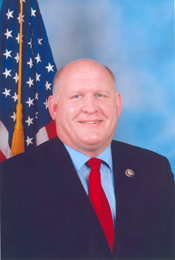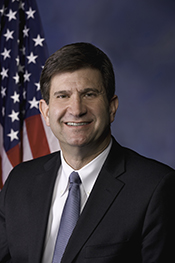
Schneider, Goldman Lead Bipartisan Effort Urging Secretaries Rubio and Bessent to Prevent Further Middle Eastern Instability by Protecting the West Bank Economy
September 9, 2026 Press Release LINCOLNSHIRE, IL – Today, Congressman Brad Schneider (IL-10) along with Congressman Craig Goldman (TX-12), Co-Chairs of the Abraham Accords Caucus, led a bipartisan group of colleagues to urge Secretary of State Marco Rubio and Secretary of the Treasury Scott Bessent to continue their efforts to prevent Hamas and other Iranian-backed groups from exploiting economic instability in the West Bank. “The United States must confront and degrade terrorist organizations like Hamas and other Iran-backed actors that threaten U.S. interests and our allies, but we must not unnecessarily destabilize the West Bank in the process,” said Schneider . “As a Co-Chair of the Abraham Accords Caucus, I am committed to advancing efforts that build lasting peace and security for Israelis, Palestinians, and all the countries across the Middle East. A functioning Palestinian economy promotes greater stability and increased possibility for progress towards peace. The United States must work with Israel and the Palestinian Authority to advance reforms that keep clearance revenues flowing, disrupt terror financing, and preserve financial stability. I will continue working with colleagues across the aisle to put peace, stability, and security first, so that Israeli and Palestinian children can build prosperous futures.” “Supporting Israel’s security and defeating terrorist groups is central to America’s foreign policy,” said Goldman . “Economic instability in the West Bank risks creating a vacuum that Hamas and other Iranian-backed terrorist organizations could exploit, further threatening Israel’s security and undermining regional peace and integration. Alongside Rep. Schneider, I’m urging Secretary Rubio and Secretary Bessent to continue policies that promote regional stability while ensuring strict accountability and preventing financial channels from illicitly supporting terrorism.” “We recognize Israel’s legitimate security concerns since October 7, and we are not asking for Israel to relax vigilance against terror financing,” the members wrote . “However, continued withholding of billions in clearance revenues risks accelerating the West Bank’s fiscal collapse – an outcome that would serve the interests of extremist and Iran-backed groups, not Israel, nor the United States. We therefore urge you to work with Israel and the Palestinian Authority on practical, security conscious mechanisms that keep clearance revenues flowing to legitimate Palestinian institutions while ensuring none are diverted to terror financing.” “We share the United States’ long-held position that the Palestinian Authority must implement meaningful reforms,” the members continued . “Real and sustainable reform, however, cannot succeed if the Palestinian institutions expected to carry it out are deprived of the revenues and financial infrastructure necessary to function. Despite its significant shortcomings and flaws, the Palestinian Authority remains the only current viable governing alternative to Hamas and thus must play an essential role in promoting regional stability and security. A fiscal collapse of the Palestinian Authority would weaken security cooperation, disrupt essential public services, marginalize pragmatic leadership in the West Bank, and create further openings for Hamas and other extremists.” The letter is also signed by Reps. Gus Bilirakis (FL-12), Jimmy Panetta (CA-19), Ann Wagner (MO-02), and Debbie Wasserman Schultz (FL-25). View the full text of the letter here and below. Dear Secretary Bessent and Secretary Rubio: We write to urge continued attention to preventing Hamas and other Iran-backed bad actors from exploiting economic instability in the West Bank. A fiscal crisis that weakens the Palestinian Authority creates exactly the kind of vacuum these groups seek to exploit for recruitment, weapons smuggling, and the erosion of security cooperation with Israel. A functioning economy in the West Bank is also important to establish greater stability for Palestinian citizens, fostering responsible and accountable governance, sustaining Israel’s long-term security, and preserving momentum toward broader regional integration, including continued expansion of the Abraham Accords. We recognize Israel’s legitimate security concerns since October 7, and we are not asking for Israel to relax vigilance against terror financing. However, continued withholding of billions in clearance revenues risks accelerating the West Bank’s fiscal collapse – an outcome that would serve the interests of extremist and Iran-backed groups, not Israel, nor the United States. We therefore urge you to work with Israel and the Palestinian Authority on practical, security conscious mechanisms that keep clearance revenues flowing to legitimate Palestinian institutions while ensuring none are diverted to terror financing. All parties, including the Palestinian Authority, must do their part. Continued reform and anti-corruption measures by the Palestinian Authority are necessary to advance responsible fiscal treatment by the Israeli government. Paired together, these reforms and fiscal actions will support the greater regional stability we all seek. The West Bank economy has historically been comparatively strong, with higher real GDP per capita than Jordan and a Human Development Index score in the high-human-development category. Notwithstanding serious economic problems, particularly in refugee camps, this relative prosperity has shown the value of moderation, secular government, and private enterprise. The contrast is especially stark when compared with Hamas’s authoritarian governance over Gaza before October 7, 2023, and the material deprivation of the civilians in Gaza since Hamas’s attack on Israel. There can be no doubt that the success of the West Bank is due in part to high levels of human capital and deep integration with Israel’s economy. Additionally, the West Bank private sector depends on functioning correspondent banking relationships and the timely transfer of clearance revenues collected by Israel on behalf of the Palestinian Authority. We are concerned that the Finance Ministry’s decision to hold clearance revenue transfers, combined with longstanding failures of governance and reform by the Palestinian Authority, is undermining these relationships and endangering the future of the West Bank. The Trump Administration has appropriately paired support for viable Palestinian institutions with clear demands for reform and accountability. The State Department welcomed the Palestinian Authority’s February 2025 decree restructuring its prisoner-payment system as an apparently positive step while making clear that serious concerns remain as to whether these reforms satisfy the Taylor Force Act, which Congress enacted to end the P.A.’s abhorrent pay for slay practice. We appreciate your commitment to ending this program and refusal to presume compliance before sufficient evidence has been presented. Secretary Rubio, your work through President Trump’s Board of Peace similarly reflects the Administration’s recognition that defeating Hamas requires credible, accountable Palestinian governance. And Secretary Bessent, under your leadership, Treasury has aggressively targeted Hamas’s illicit financial networks while distinguishing them from legitimate Palestinian interests. We appreciate the efforts by your respective Departments to preserve correspondent banking relationships between Israeli and Palestinian banks. The State Department welcomed Israel’s extension of indemnification through the end of 2026 and correctly warned that destabilizing regulated banking channels, as we are presently seeing, would push transactions toward cash and other unregulated systems, undermining efforts to combat money laundering and terrorist financing. We share the United States’ long-held position that the Palestinian Authority must implement meaningful reforms. Real and sustainable reform, however, cannot succeed if the Palestinian institutions expected to carry it out are deprived of the revenues and financial infrastructure necessary to function. Despite its significant shortcomings and flaws, the Palestinian Authority remains the only current viable governing alternative to Hamas and thus must play an essential role in promoting regional stability and security. A fiscal collapse of the Palestinian Authority would weaken security cooperation, disrupt essential public services, marginalize pragmatic leadership in the West Bank, and create further openings for Hamas and other extremists. We ask you to continue your efforts to elevate accountability and ensure a viable future for the West Bank economy. With the risk of increased hostilities involving Iran continuing across the Middle East, we must prevent further instability in the region. We look forward to your response and request that you provide a classified briefing when Congress returns to Washington on the progress you have made on this issue over the summer. Thank you for your consideration.
9fdf4ce2-d863-4664-9124-fb7527f01400Issued within 24 hours
Other senators' releases published in the day before or after this one.