Hayes Responds to Proposed Rule to Remove an Additional 6.3 Million Americans from SNAP
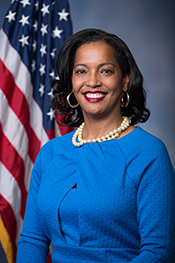
WASHINGTON, D.C. – Today, Ranking Member of the Subcommittee on Nutrition and Foreign Agriculture, Jahana Hayes (CT-05) issued the following statement in response to the U.S. Department of Agriculture proposed rule to eliminate broad-based categorical eligibility (BBCE), which allows individuals who qualify for Temporary Assistance for Needy Families (TANF) or similar state benefits to qualify for the Supplemental Nutrition Assistance Program (SNAP). “The cruelty of the Trump Administration has no limits. The newly released proposed rule once again targets the most vulnerable among us by narrowing eligibility and blocking families from vital food assistance,” said Ranking Member Hayes. “Eliminating $187 billion in funding in H.R. 1 was not enough; Republicans are now advancing a rule that will push an additional 6.3 million people off SNAP. This change does not aim to mitigate fraud or abuse – it is to inflict harm on families struggling to get by.” According to the Trump administration regulatory impact analysis of the proposed rule: 6.3 million individuals in 3.2 million households will lose their SNAP benefits entirely. The 3.2 million families impacted make up 17 percent of SNAP households. SNAP benefits will be cut by $50.82 billion. Federal spending on benefits will be cut by $44.65 billion over 5 years (FY2027-FY2031), and state spending on benefits will be cut by $6.17 billion. SNAP administrative expenses will increase by $1.24 billion. Federal spending on administrative expenses will increase by $309.5 million over five years. State spending on administrative costs will increase by $928.5 million. Increased burden on participants is estimated to be approximately $71.7 million over five years. Because SNAP participation is often used to streamline eligibility for basic needs programs, the effects of the proposed rule reach beyond the program. 1.78 million children would no longer be categorically eligible for school meals. Of those children: 97 percent would likely remain eligible but need to go through an onerous paperwork process to maintain eligibility. 93,000 children would be shifted from free to reduced-price school meals. 28,000 children would lose free school meals entirely and have to pay full price. 42,000 children will no longer receive Summer EBT (“Sun Bucks”) beginning in the summer of 2029. An estimated 13,000 of these children would lose benefits they qualify for due to administrative burden (i.e., not applying for SEBT, even though they remain eligible). 5,500 women, infants and children would be kicked off the Special Supplemental Nutrition Program for Women, Infants and Children (WIC). The number of states opting in to broad-based categorical eligibility has increased steadily each year because of its positive impact on participants and program administration. Currently, 46 states, Republican and Democratic alike, opt to use BBCE. Since the implementation H.R.1, the One Big Beautiful Bill, an estimated 5.5 million Americans have already been kicked off SNAP , including around 2 million children.
a0476576-e40b-4f58-b09a-eed9b6a226faIssued within 24 hours
Other senators' releases published in the day before or after this one.