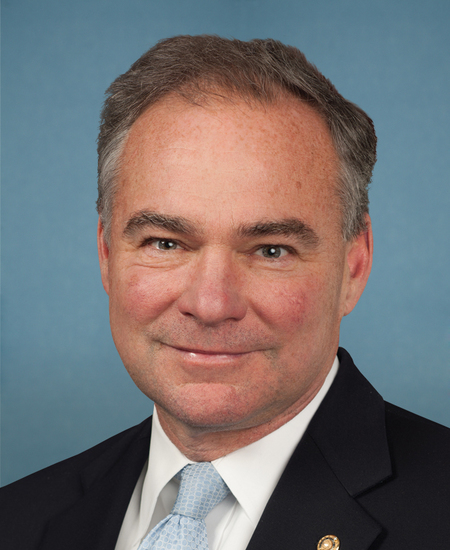
Warner, Kaine Press VA For Answers On Staffing Shortages At Virginia Facilities
WASHINGTON — U.S. Sens. Mark R. Warner and Tim Kaine (both D-VA) are once again pressing the Department of Veterans Affairs (VA) on staffing challenges at facilities across Virginia, reiterating concerns that the Trump administration’s policies are ultimately undermining the VA’s ability to provide timely, high-quality care to veterans. Virginia is home to more than 629,000 veterans, one of the largest veteran populations in the country, and the second-highest share of veterans as a percentage of population among all states. New reports of staffing challenges at VA facilities are raising questions about the impact on care for veterans in the Commonwealth and across the country. In a letter to VA Secretary Doug Collins, the senators pressed the Department to explain its staffing decisions in light of recent reports and new findings from the VA Office of Inspector General (OIG). In May, Sens. Warner and Kaine pressed Secretary Collins on the elimination of more than 1,700 vacant positions at VA facilities across Virginia, including the elimination of more than 700 vacancies at the Hampton VAMC, 300 at the Richmond VAMC, 200 at the Salem VAMC, and several hundred at community clinics and other facilities. The senators’ letter asked a range of questions regarding VA decision making, data collection, communications, and the criteria used to make determinations about personnel and vacancy reductions. In its August response, the VA acknowledged its elimination of vacant positions but failed to provide details on the criteria used to make those determinations or the staffing models supporting its decisions. Since the senators’ May letter, a new VA OIG report identified severe occupational staffing shortages reported by VA facility representatives. Across the Hampton VA Health Care System this covered 86 occupational categories designated as a “severe shortage,” including 64 clinical occupations. The Central Virginia VA Health Care System identified severe shortages in 15 clinical occupational categories, and the Salem VA Health Care System reported shortages across 12 occupational categories. The senators raised concerns that some of the occupations identified as experiencing shortages overlap with categories in which vacant positions were previously eliminated. In their new letter, the senators also pointed to reports highlighting staffing and retention challenges at the newly opened VA Health Care Center in Fredericksburg, which continues to staff up since its opening in Spring 2025. The reporting also detailed concerns about continuity of care, including a veteran who described cycling through four primary care providers in approximately 18 months. The senators wrote, “Taken together, these data points continue to suggest a disconnect between the workforce policies put forward by your Department, your Department’s public messaging related to their impact, and the reported experiences coming out of VA facilities across the country. It is less clear today than when we first wrote you, that your Department has a clear handle on facility staffing needs across the country. That is why in addition to repeating our requests for the following information, we request a briefing for our offices, detailing current VA workforce dynamics across Virginia.” The senators are once again demanding detailed information about how the VA determined which positions to eliminate, whether facility leaders raised concerns about the cuts, and whether Virginia facilities are meeting minimum staffing requirements. They are also seeking updated data on employee departures, hiring needs, and the use of recruitment and retention incentives, as well as an accounting of requests to hire above staffing caps. Given the Department’s inadequate response to their initial inquiry, the senators are additionally requesting a briefing on staffing conditions at VA facilities across Virginia. Read the full letter here and below. Dear Secretary Collins: We write to follow up on our May 14 letter regarding staffing and workforce challenges at Department of Veterans Affairs (VA) facilities across Virginia and the Department’s decision to eliminate more than 1,700 vacant positions across the Commonwealth. Our concern and focus remain ensuring that VA facilities have the workforce necessary to provide Virginia veterans with timely, high-quality care. Recent information, however, continues to support these doubts. While we note your August 26 response to our letter, which provided updated information regarding filled full-time equivalent (FTE) positions and vacancies for which the VA was hiring at the Hampton, Richmond, and Salem VA Medical Centers, many of our questions remain unanswered. Your response stated that approximately 26,000 unfilled positions nationwide were eliminated because VA determined that those positions were unneeded, and that these positions had “made it difficult for VA to properly identify and prioritize staffing needs across its facilities.” The response did not, however, outline criteria by which vacancies were determined to be “unneeded,” share the staffing models backing current facility staffing levels, or detail any facility-level concurrence with these staffing decisions. Since our initial letter, additional information has continued to raise questions about staffing levels at VA facilities serving Virginians. Last month, the VA Office of Inspector General (OIG) released its annual report on severe occupational staffing shortages. This report represents the direct views of facility representatives across the country and their characterizations of these staffing challenges. Nationwide, respondents identified 4,712 severe occupational staffing shortages. Officials reported Medical Officer shortages at 97 percent of VA facilities and Nurse shortages at 86 percent of facilities. The reporting at Virginia medical centers and their associated healthcare systems seems to reinforce our earlier concerns. The report notes in the Hampton VA Health Care System 86 occupation categories designated as “severe shortage,” including 64 clinical occupations; in the Central Virginia VA Health Care System officials identified 15 clinical occupation categories as “severe shortage”; and in the Salem VA Health Care System officials identified 12 occupation categories as “severe shortage,” eight clinical and four nonclinical. Our review of the vacancy information previously provided to our offices indicates some degree of overlap between previously eliminated vacant positions in Virginia, and occupations identified in Virginia facilities as experiencing severe shortages. This raises questions as to how these facility vacancies had been considered “unneeded” by Department leadership, at the same time as facility representatives were identifying severe shortages for similar or overlapping positions. In addition to the information from OIG, recent media reporting has asserted that for the new VA Health Care Center in Fredericksburg, staffing challenges have extended beyond recruitment – at least one patient has described successive providers leaving in the past year and a half, suggesting retention and possible continuity of care challenges in a facility that’s been open barely 18 months. Taken together, these data points continue to suggest a disconnect between the workforce policies put forward by your Department, your Department’s public messaging related to their impact, and the reported experiences coming out of VA facilities across the country. It is less clear today than when we first wrote you, that your Department has a clear handle on facility staffing needs across the country. That is why in addition to repeating our requests for the following information, we request a briefing for our offices, detailing current VA workforce dynamics across Virginia. Your response to our previous letter simply noted that the decision to eliminate approximately 26,000 unfilled positions nationwide “was made in coordination with facilities across the country.” What were the criteria by which facility leaders were directed to identify positions “that they don’t need”? Was this determination based on current conditions, or future projections? Were facilities provided a quota or target of any kind? Did Department personnel involved in this process receive any concern, pushback, or other feedback in opposition to the vacancy cuts – particularly related to clinical impact, overall workforce health, or personnel morale – from any facility- or VISN-level personnel? What was the process for addressing these concerns? Did facility leaders concur with the final determinations regarding vacancy cuts? We again note the statutory requirement for the VA to “develop, validate, and implement a staffing model…that includes appropriate target staffing levels nationally, regionally, and locally to ensure timely access to care and effectively oversee the provision of care by the Department, whether at a facility of the Department or through a non-Department provider”. We further recognize that various staffing models and caseload requirements already exist in the Department for positions from nurses to housing services case managers. Based on the position allocations for each facility in Virginia, which facilities are meeting the current minimum staffing for these models and caseload requirements? Which facilities are not meeting these requirements and by how much? Congress has provided VA with additional tools and resources specifically intended to help the Department recruit and retain personnel in difficult-to-fill positions, including via expanded recruitment, relocation, and retention incentives; critical-skills incentives; student loan repayment authorities; and additional pay flexibilities. Relevant to severe occupational shortages in Virginia and elsewhere around the country, how and where have you utilized available recruitment, relocation, or retention incentives, as well as employment flexibilities? Have these authorities been so far utilized to the maximum extent? For facilities in Virginia, including newly opened Fredericksburg and Chesapeake clinics, how many personnel have left employment with the VA since January 2025? Please provide data broken down by facility. Please provide a complete list of positions for each facility in Virginia broken down by location and hiring status as of October 1, 2026. Have any facilities in Virginia requested authorization to recruit for a position above their allocation? If so, please provide an accounting of each request and its status. For any denied requests, please provide justification for the denial. What are the steps for facility leaders to request positions above the cap? Please provide the names and titles of individuals above the facility level who review and decide to approve or deny these requests. For facilities in Virginia with funding to hire for vacant positions that were cut in Fiscal Year 2026, what was that funding used for instead? We appreciate your attention to this matter and look forward to your response. ###
b0b1986b-c162-420d-8063-a37535337509Issued within 24 hours
Other senators' releases published in the day before or after this one.