Press Release
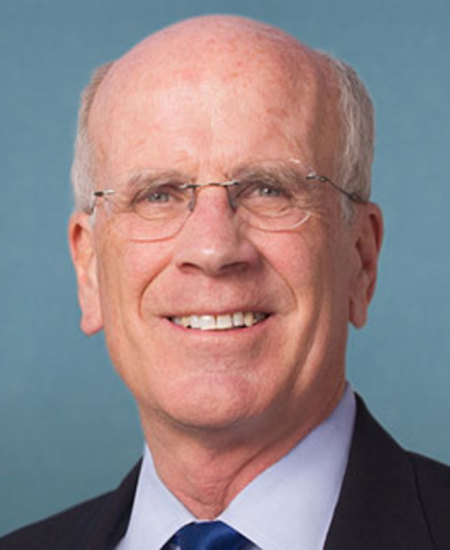
WASHINGTON, D.C. — In honor of National Police Week, the Senate Judiciary Committee today advanced several bipartisan bills co-sponsored by Senator Peter Welch (D-Vt.) that support law enforcement and promote community safety. This includes the Carla Walker Act , sponsored by Sen. Welch and Sen. John Cornyn (R-Texas), which would dedicate existing federal grant funds to support forensic genetic genealogy (FGG) DNA analysis and help solve previously unsolvable cold cases. Recently, Vermont State Police used forensic genetic genealogy to identify the remains of Brian Canfield, who disappeared while fishing in Hartland, VT, in 2001. A DNA sample from the man’s brother was matched to a skull found in 2006. “Advancements in forensic DNA technology have revolutionized our ability to fight crime. In Vermont, detectives were able to use forensic genetic genealogy analysis to help provide answers to a family who thought they might never come. We’ve also seen how this technology can be a powerful tool in giving those wrongly accused a chance to clear their names,” said Senator Welch . “Our bipartisan bill will help investigators across the country harness the incredible power of FGG technology to crack cold cases and deliver justice to countless victims and families, and I’m thankful for Senator Cornyn’s leadership on it.” “I’m proud this bill advanced out of the Judiciary Committee today, and I’m proud to cosponsor commonsense, bipartisan legislation to keep our communities safe and support police and law enforcement in Vermont,” Welch continued . “Carla Walker’s case was not solved for 46 years, but thanks to forensic genetic genealogy, her murderer was caught, tried, and convicted in 2021,” said Senator Cornyn . “This bill creates a pilot program to fund the use of forensic genetic genealogy, which enables law enforcement to investigate and prosecute cold cases and other hard-to-solve crimes. By making this cutting-edge technology more widely available to investigative agencies, law enforcement will gain a reliable and effective tool to identify unknown offenders.” The Senate Judiciary Committee advanced the following bipartisan bills: S. 3966, TREY’S Law S. 736, Lieutenant Osvaldo Albarati Stopping Prison Contraband Act S. 825, Fighting Post-Traumatic Stress Disorder Act of 2025 S. 4394, Promoting Police Leadership Act S. 3897, Officer John Barnes and Chief Michael Ansbro Public Safety Officers’ Benefit Program Expansion Act of 2026 S. 1890, Carla Walker Act S. 3041, Tribal Warrant Fairness Act Background on the bipartisan Carla Walker Act : Typically, when a suspect’s identity is unknown, a crime laboratory uploads the genetic material recovered from a crime scene into the FBI’s national database to search for DNA matches between the forensic sample and any known offenders. While this traditional form of forensic DNA profiling only examines 13-20 Short tandem repeat (STR) DNA markers, forensic genetic genealogy (FGG) technology examines over half a million Single Nucleotide Polymorphisms (SNPs) that span the entirety of the human genome. It does so by cross-referencing shared blocks of SNP markers to identify relatives of the genetic profile by uncovering shared blocks of DNA. This enables criminal investigators to build family trees that ultimately help determine the sample’s identity and solve cases. Carla Walker was abducted from a bowling alley parking lot in Fort Worth, Texas, on February 17, 1974. Her body was found three days later just 30 minutes south of Fort Worth. Law enforcement could not solve the murder due to limited forensic technology at the time. Nearly 50 years later, FGG DNA analysis was conducted on the last remaining DNA on a piece of Carla’s clothing, which led to a successful DNA match to the family of Glen McCurley, Jr., who confessed to the crime in 2021 and died in prison in 2023. The Carla Walker Act would create a pilot program to make this cutting-edge FGG DNA analysis more widely available to investigative agencies to: Aid in resolving previously unsolvable cold cases; Assist in the identification of criminals; Seek justice for previously unidentified victims; Help exonerate wrongly accused suspects; And bring closure for the victims’ loved ones. Learn more about the Carla Walker Act. ###
b3e55913-bb23-41cb-87cc-aa968686f7abIssued within 24 hours
Other senators' releases published in the day before or after this one.