Warnock, Wyden Push Trump Administration to Cut Red Tape Requirements in Medicaid
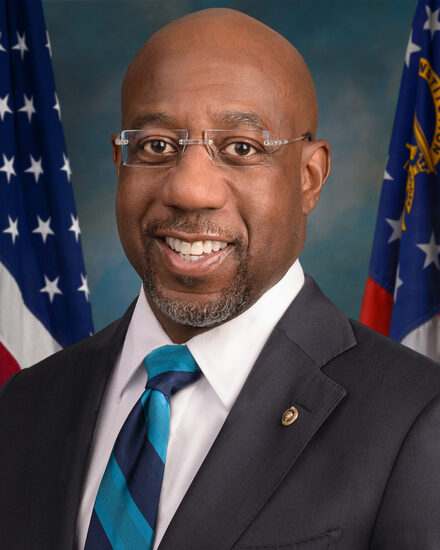
Senators Reverend Raphael Warnock and Ron Wyden are calling on the Trump administration to withdraw a policy that imposes strict Medicaid eligibility requirements on Americans seeking to obtain and maintain coverage Senator Warnock is a leading proponent of Medicaid expansion and has long championed efforts to increase access to affordable health care About 1.75 million fewer kids were enrolled in Medicaid this January, a year after Congressional Republicans cut $1 trillion from the program Senator Reverend Warnock, colleagues: “Implementing this rule will worsen Americans’ overall quality of health, waste millions of dollars on administrative red tape, and cause preventable health emergencies for all Americans” Washington, D.C. – U.S. Senators Reverend Raphael Warnock (D-GA), Ranking Member of the Finance Subcommittee on Trade, Customs, and Global Competitiveness, and Ron Wyden (D-OR), Ranking Member of the Senate Finance Committee, led 47 of their Senate colleagues in demanding the Trump administration rescind new Medicaid work reporting requirements that would severely limit access to lifesaving health care coverage for millions of Americans. “We urge CMS to withdraw this rule to ensure that Medicaid can continue its mission of providing health coverage to low-income Americans. Implementing this rule will worsen Americans’ overall quality of health, waste millions of dollars on administrative red tape, and cause preventable health emergencies for all Americans,” wrote Senator Warnock and his colleagues. “States are not prepared to implement the agency’s onerous, subjective requirements. It is families who will suffer, especially the sickest Americans, like those with mental health and substance use disorders, cancer, and diabetes, who most urgently need the health care Medicaid provides.” In the letter to Centers for Medicare & Medicaid Services (CMS) Administrator Mehmet Oz, Senator Warnock and his colleagues underscore that unnecessary restrictions on Medicaid eligibility would increase costs for millions of Americans already struggling with the ongoing affordability crisis. Senator Warnock is a leading proponent of Medicaid expansion and has long championed efforts to increase Georgians’ access to affordable health care. Last year, he released a report titled “Healthy People, Healthy Economy,” which found that investing in Medicaid stimulates economic growth and promotes access to employment. In June , Senator Warnock forced a vote pushing for the release of data surrounding Medicaid coverage loss nationwide. The Senator’s effort to release the data was blocked by Senate Republicans. A copy of the letter can be found HERE and text is below: Dear Administrator Oz, We write to urge you to withdraw the Administration’s interim final rule (IFR) implementing the Medicaid work reporting requirements passed by Congressional Republicans and signed into law by President Trump last year in H.R. 1. These policies will not increase employment and will instead lead to millions of Americans needlessly losing their health coverage. We support full repeal of all of H.R. 1’s Medicaid cuts. In the absence of Congressional action, CMS must delay implementation. States are not prepared to implement the agency’s onerous, subjective requirements. It is families who will suffer, especially the sickest Americans, like those with mental health and substance use disorders, cancer, and diabetes, who most urgently need the health care Medicaid provides. This rule transforms Medicaid from a health care program into a bureaucratic maze that will fail eligible Americans. It will strip coverage not because people are not already working or refuse to work, but because they cannot navigate a complex web of forms, passwords, and deadlines. Implementing ineffective, exclusionary work reporting requirements will create costly administrative barriers and deny Americans access to health care, resulting in poorer health, higher mortality, and reduced financial security. This rule does little to mitigate anticipated harms and makes exceptionally cruel and arbitrary choices with regard to medical frailty, significantly subverting the Congressional intent of this particular exemption. Nearly all adults with Medicaid (92%) are already working, going to school, caregiving, or have a disability. Moreover, an extensive body of evidence demonstrates that work reporting requirements do not promote employment but rather increase medical debt, delay care and contribute to poorer health outcomes. In its assessment of H.R. 1, the Congressional Budget Office (CBO) projected an estimated 5.3 million enrollees will lose coverage by 2034, not accounting for the IFR’s even more stringent and burdensome requirements concerning the medical frailty exception. This evidence was not considered in the drafting of the IFR. Similarly, the IFR fails to acknowledge or account for states’ ineffectual and costly experiences implementing work reporting requirements. When Arkansas implemented similar requirements, 18,000 people lost coverage in just five months. They didn’t lose their Medicaid coverage because they suddenly found jobs with health benefits; they lost it because they didn’t have internet access, never received the notices, or couldn’t log into a glitchy state website. Michigan was poised to implement these work reporting requirements but paused the programs when they received astronomical coverage loss projections of 80,000 enrollees (33 percent of participants). In Georgia, the state spent $91,000,000 in taxpayer dollars to build a “work requirement” tracking system that often experienced technical failures. This translates to $13,000 per enrollee in administrative costs – almost five times higher than total spending on health care benefits for enrollees. Further, a recent study looking at these requirements in Georgia added to the body of evidence that they do not increase employment. CMS’ Onerous Definition of Medical Frailty Subverts Congressional Intent H.R. 1 includes explicit exemptions for individuals who are determined to be medically frail, including those with disabling mental disorders, substance use disorders, disabilities, or complex medical conditions. In including these exemptions, the statute provided protections for some of the most vulnerable Americans, while preserving states’ flexibility to determine how medical frailty should be defined and operationalized. However, the IFR impermissibly adds extra-statutory restrictions and requirements to this statutory exemption, limiting it to individuals whose disability or condition significantly impairs their ability to comply with the work reporting requirement. By attempting to rewrite the standard from the existence of a condition to its demonstrated impact on an individual’s ability to work, the IFR establishes a much narrower pathway to the exemption than H.R. 1 permits. CMS asserts authority for this expansion through the statutory phrase “as defined by the Secretary,” but a limited delegation to define specific conditions is not authority to override the categorical structure Congress enacted. This is legal overreach, not a policy choice. And this legal overreach, if maintained, will have devastating consequences for millions of Americans, states, and health care providers. States will face significant challenges operationalizing this narrower definition of medical frailty, and individuals will face challenges showing they meet the definition. The new standard will force the Medicaid program to take on completely novel responsibilities that are more akin to workers’ compensation than health insurance. States will not be able to rely on automation nor implement the law in a way that protects individuals with health needs, likely needing to revamp information technology (IT) systems; add new eligibility staff and call center support; modify applications, renewal forms, and educational materials; and train health care providers on how to assess and document whether someone’s condition “significantly impairs” their ability to work, a task that will be brand new to many providers. The IFR forces vulnerable Americans to quite literally prove they are “sick enough” to deserve health care. In practice, a person in the middle of a mental health crisis or a course of cancer treatment, or someone managing severe substance use disorder, will be forced to secure explicit provider attestations linking their illness to their capacity to work. If they cannot jump through this hoop, the penalty is severe: they are cut off from the very medical care they need to survive. Unfair Medical Frailty Verification Requirements Burden Sick Patients and Providers In addition to the limitations imposed by the medical frailty definition put forth by this rule, the verification and self-attestation requirements impose infeasible expectations on individuals. Beginning in 2028, the rule directs states to implement a stricter documentation verification regime that will drive up administrative costs, overwhelm already-stretched eligibility staff, and push people off coverage. The verification requirements in 2027 compared with 2028 function as a bait-and-switch: to the extent that implementation looks potentially manageable in the first year, then procedural barriers and coverage losses spike when the documentation default kicks in. In particular, the rule holds people who should qualify for the medical frailty exemption to a higher standard of evidence than for all other eligibility requirements or exemptions/exclusions (e.g., caregiving, being a veteran, or being incarcerated), requiring significant documentation that goes well beyond self-attestation starting in 2028. Year-Round Paperwork Requirements Will Exacerbate Coverage Loss There is a long-standing requirement for states to process an application within 45-days as a patient protection, so people are not waiting for their coverage to kick in. The IFR creates a new exception to this timeliness standard, effectively permitting states to process applications on longer timeframes. In providing this exception to states, CMS is acknowledging that states are unlikely to meet the standard patient protection because of increased paperwork burdens, an implicit recognition of the harm to come. This exception is even more harmful to beneficiaries when combined with the H.R. 1 policy that requires states to reverify eligibility for individuals in the expansion group and comprehensive 1115 waivers every six months, in addition to the fact that the law provides States the option to conduct more frequent verifications of compliance with the work reporting requirement. CMS acknowledges that the IFR creates a nearly impossible timing problem and offers no solution while barreling on with ill-advised and devastating policies. By combining the six-month eligibility renewal requirement with ongoing work-reporting checks, this rule ensures that families are never not in the process of signing up for health care, effectively setting a structural trap. The red tape gauntlet Americans will have to contend with to maintain health insurance coverage will be constant. A family will barely finish submitting documents for one review cycle before the state triggers the next, creating hurdles that are particularly burdensome for hourly workers with volatile schedules, single parents, and individuals with fluctuating health conditions. The Rule Requires State and Local Taxpayers to Foot the Bill for Costly System Upgrades The IFR creates even more administrative barriers and paperwork hurdles for individuals attempting to enroll in or keep their Medicaid coverage than the statute permits. This manifests in both more costly and onerous technology requirements for states as well as unnecessary hoops for individuals to jump through. In H.R. 1, Congressional Republicans provided a total of $200 million for all 50 states and the District of Columbia in FY 2026 to support the system upgrades they will need to comply with the law. However, in the IFR, CMS itself estimates that each state will spend approximately $15 million on systems changes, totaling nearly $700 million for the 44 states that are required to implement these changes, nearly four times the amount provided to states in the law. Recent reporting shows that state estimates of the costs to implement these requirements are significantly higher; North Carolina, for example, expects it will need to spend an estimated $31.2 million annually to enforce these requirements. While CMS announced in January 2026 that the agency secured deep discounts for states on implementation costs, no details have been released about these arrangements. As the price tag of Medicaid work reporting requirements continues to rise, every dollar spent by states to implement this new red tape is a dollar that could have instead been used to provide health care to vulnerable Americans. We urge CMS to withdraw this rule to ensure that Medicaid can continue its mission of providing health coverage to low-income Americans. Implementing this rule will worsen Americans’ overall quality of health, waste millions of dollars on administrative red tape, and cause preventable health emergencies for all Americans. This rule does not strengthen Medicaid; it dismantles it, turning a program designed to protect vulnerable Americans into a system that systematically denies them care. ### Title and affiliation are provided for identification purposes only. A pastor and social justice advocate, Senator Reverend Raphael Warnock was elected to the United States Senate in 2021 and reelected for a full term in 2022. The Senator serves on the Senate Agriculture, Banking, and Finance committees, as well as the Senate Aging Committee.
b4851afb-e357-4a34-ad75-84f48bc9dea7Issued within 24 hours
Other senators' releases published in the day before or after this one.